

In 1931, Winston Churchill predicted that someday humanity would “escape the absurdity of growing a whole chicken in order to eat the breast or wing.”
It took more than 80 years for that idea to start looking like a venture-backed industry. By 2015, startups were forming around the promise of cultivated meat: actual meat at a cellular level, grown from animal cells without raising or slaughtering an animal. The proof of concept had already arrived, expensively: in 2013, a Dutch researcher had produced the world’s first lab-grown burger, at a cost of $325,000, eaten in a much-publicized London taste test.
That moment caught Silicon Valley’s attention, and the industry that followed attracted founders motivated by sustainability, animal welfare, food safety, and the possibility of rethinking protein production altogether.
But the science was only part of the challenge.
Who regulates cultivated meat?
A startup can have the right technology, the right investors, and the right market opportunity, and still run into a question it cannot answer on its own: Who regulates this?
Cultivated meat didn’t fit the existing categories. Its cellular makeup was identical to slaughtered meat, the USDA’s domain. But it was grown using cell-culture techniques closer to biotechnology, which fell to the FDA.
Similar oversight fights have created headaches for cryptocurrency, telemedicine, and artificial intelligence. For cultivated meat startups, it has been one of the defining challenges in building an industry.
That regulatory puzzle became a case study for Alicia DeSantola, Foster School of Business Assistant Professor of Management and Organization and the Helen Moore Gerhardt Faculty Fellow in Entrepreneurship. DeSantola studies how entrepreneurial ventures grow, organize, and navigate uncertainty as they build new markets. She was recently named a Fulbright U.S. Scholar for 2026-2027 for Ireland, where she will continue investigating innovation and entrepreneurship in the food sector. The research that came from that case study is forthcoming in Administrative Science Quarterly.
How the regulatory fight came into view
The industry drew DeSantola and her co-authors from different angles. Nina (Gheihman) Guilbeault, then a sociology graduate student at Harvard, encountered the earliest cultivated meat nonprofits while studying veganism. DeSantola and Cheng Gao of the University of Michigan were interested in the strategic challenges companies face when building entirely new industries.
Together, they were looking beyond the science itself to the people and organizations gathering around it: founders, nonprofits, investors, regulators, and incumbent companies all trying to decide what this new industry would become. Their study followed seven organizations chasing very different proteins: chicken, pork, beef, and seafood.
“We did not set out at all to study this question of regulatory uncertainty or regulatory jurisdictional uncertainty,” DeSantola says. “We entered the field sort of open-minded.”
Because the team members were studying the industry as it developed, they saw the regulatory fight unfold in real time.
The uncertainty over which agency had oversight was not just a bureaucratic inconvenience. Some early entrants in the cultivated meat industry perceived landing under sole USDA jurisdiction as a potential existential threat. The agency carries a dual mandate to both regulate and promote conventional agriculture, which companies feared would put them at a permanent disadvantage. The FDA, by contrast, was seen as the far more favorable regulator. But favoring one agency meant betting on an outcome no one had decided.
Before any of the ventures had a product close to market, two nonprofit organizations began doing the unglamorous work of bringing people together: convening industry conferences, drawing incumbent meat companies into the conversation, and quietly building relationships with regulators.
In separate research that has been conditionally accepted in the Strategic Management Journal, DeSantola and her co-authors explored how nonprofits help orchestrate emerging industries. In cultivated meat, that groundwork helped the industry gain enough credibility to attract the regulatory attention it needed.
And that is where the classic startup playbook began to cause problems.
The unexpected cost of sounding disruptive
In startup culture, “disruptive” is usually a compliment. Founders are encouraged to move fast, challenge incumbents, and make the old way of doing things look obsolete.
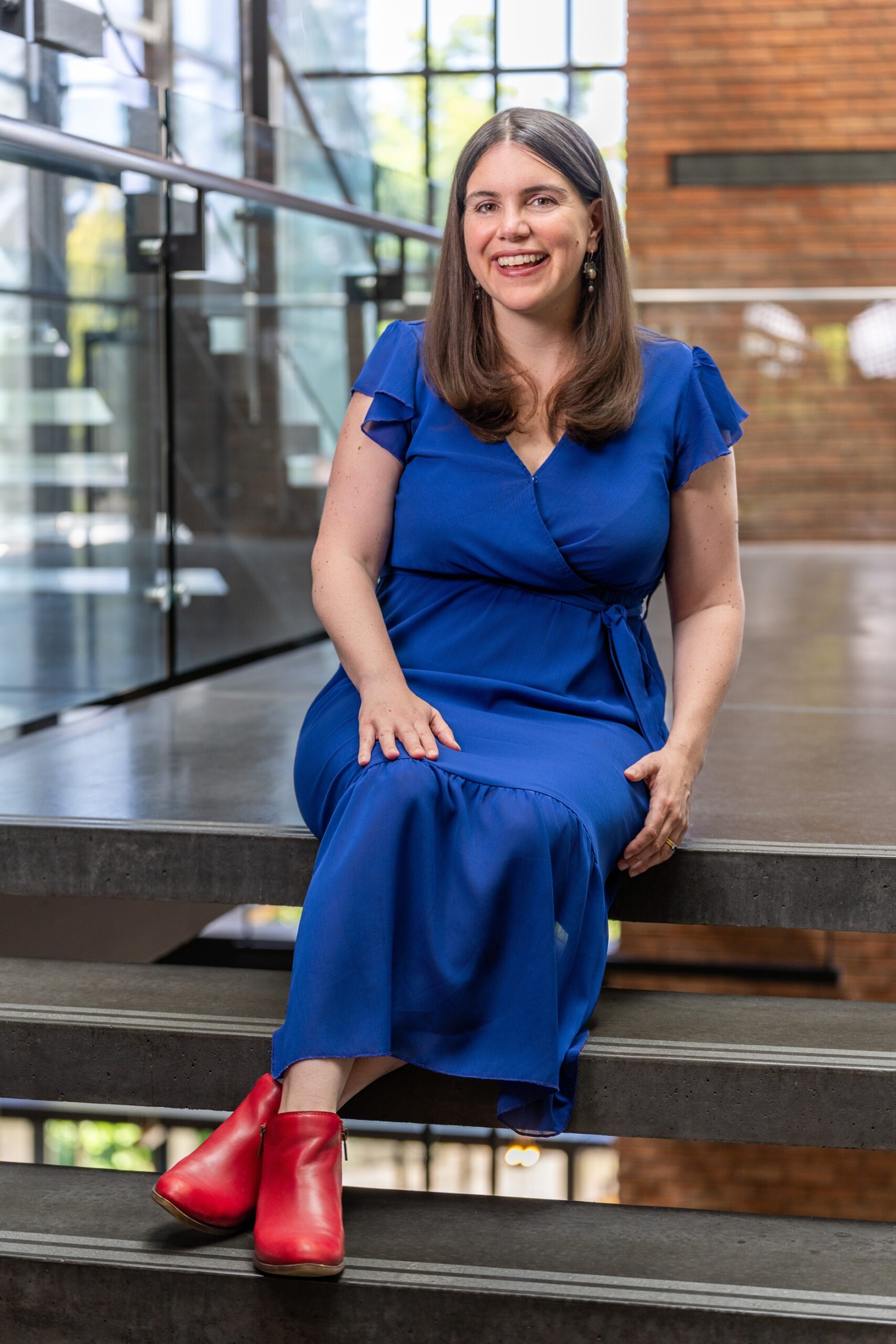
“Regulation, in some ways, is a collective good because once a regulatory pathway has been established, all companies benefit from having a clear pathway to market.”—Alicia DeSantola
For cultivated meat companies, that instinct could backfire.
DeSantola and her co-authors found that companies took two broad approaches. Some leaned into the classic startup posture, framing cultivated meat as a replacement for a broken food system. Others took a more complementary approach, presenting their products as additions to the existing meat industry rather than threats to it.
The difference mattered. Companies that positioned themselves as partners were more likely to draw favorable regulatory attention. They engaged meat-industry players as potential allies, signaled their intent to work within established systems, and helped regulators see cultivated meat as a credible new category.
Companies that leaned harder into disruption, by contrast, drew suspicion and provoked parts of the conventional meat industry to push back. In one case, that approach prompted an incumbent ranchers’ association to send a petition to the USDA, kicking off the very turf war the industry was trying to avoid.
“Framing around disruption might help you get market traction,” DeSantola says. “That strategy may be less effective in attracting regulatory attention, or in situations where you need the buy-in or cooperation of incumbents.”
The clearest example came when a cultivated meat startup reached out to a powerful conventional meat trade association. Rather than treating the meat industry as a single opponent, the company saw that not every part of the industry had the same stake in the fight.
Ranchers who raise livestock had reason to see cultivated meat as a direct threat. But meat processors — the companies that package and sell finished products — could imagine working with a new source of protein.
That distinction opened the door to an unlikely alliance. The startup and the trade group eventually sent a joint letter to the White House proposing a shared regulatory framework involving both the FDA and USDA. Regulators later credited that letter with helping accelerate the path toward a formal agreement.
The speed of that resolution surprised DeSantola. By 2019, the FDA and USDA had signed a formal agreement dividing oversight between the two agencies. In the world of federal regulation, that is fast.
“We were surprised at how quickly this outcome happened,” DeSantola says. “To see these regulatory jurisdictions and questions resolved so quickly, it was really remarkable.”
A classroom lesson for uncertain terrain
DeSantola brings the cultivated meat case into her entrepreneurial strategy courses at Foster, where it serves as a blend of a business school case and a live experiment.
That is partly because the industry’s story is still unfinished. Cultivated meat has moved well beyond science fiction, including a Seattle connection: Wildtype, which produces cultivated seafood from fish cells, partnered with a local restaurant to feature its cell-cultivated salmon. But the industry has not yet reached the grocery store shelves that early backers predicted, and real technological and commercial bottlenecks remain.
For Foster School of Business students, that uncertainty is the point. They cannot look up the ending and work backward. Instead, they have to think like founders making decisions with incomplete information, which is exactly what one of DeSantola’s classroom exercises asks them to do. Students must decide which protein they would cultivate and why, weighing the strategic trade-offs between a premium product like bluefin tuna and a commodity like chicken. There is no right answer, only a set of trade-offs to reason through.
That exercise leads to one of the central lessons in DeSantola’s entrepreneurship courses: good decisions and good outcomes aren’t the same thing.
“You can be making great decisions with the information that you have available and have bad outcomes,” she says, “or you can have great outcomes while making really poor decisions.”
Practical Takeaways for Founders
For founders navigating their own uncertain terrain, DeSantola’s research points to two practical takeaways.
First, finding the piece of an industry that shares your interests can matter more than winning over the whole.
Second, the right strategy often depends on timing: Speaking with one unified voice helped the industry finalize its regulatory agreement, but that same consolidation, attempted earlier, might have shut down the experimentation that let the industry discover what worked in the first place.
The case also points to a broader lesson about entrepreneurship in emerging industries: Sometimes, helping create the rules is part of the work.
As DeSantola puts it: “Regulation, in some ways, is a collective good because once a regulatory pathway has been established, all companies benefit from having a clear pathway to market.”
Alicia DeSantola is an Assistant Professor of Management and Organization and the Helen Moore Gerhardt Faculty Fellow in Entrepreneurship at the University of Washington Foster School of Business. She teaches entrepreneurship and strategy courses across the Foster School’s undergraduate, MBA, and Master of Science in Entrepreneurship programs. She also serves on the advisory board of the Arthur W. Buerk Center for Entrepreneurship. DeSantola was recently named a Fulbright U.S. Scholar for 2026-2027 for Ireland.