

Alicia DeSantola, assistant professor of management and organization at the University of Washington Foster School of Business, has been selected as a Fulbright U.S. Scholar for the 2026–27 academic year. She will spend time in Ireland conducting research on entrepreneurship, innovation, and emerging food technologies while collaborating with faculty at University College Cork. The Fulbright is among the nation’s most prestigious international academic exchange programs, supporting scholars whose work advances research, teaching, and cross-cultural collaboration.
DeSantola, who serves as the Helen Moore Gerhardt Faculty Fellow in Entrepreneurship, studies how entrepreneurs build new industries and navigate uncertainty while addressing complex societal challenges. At Foster, she teaches entrepreneurship and strategy courses across the undergraduate, MBA, and Master of Science in Entrepreneurship programs. She also serves on the advisory board of the Arthur W. Buerk Center for Entrepreneurship.
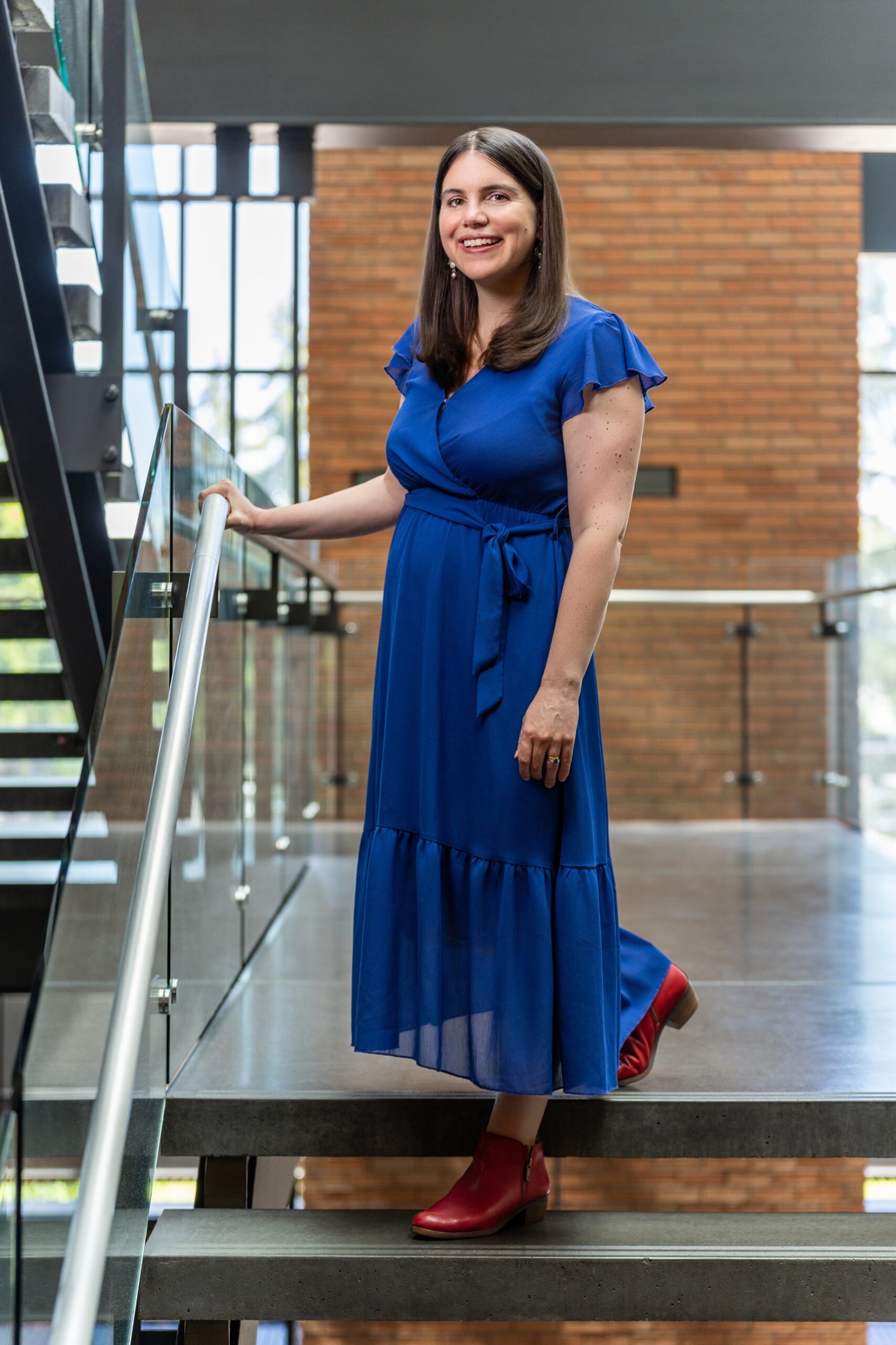
How do new industries take root? Alicia DeSantola’s research explores how entrepreneurs build markets around emerging technologies, with a focus on the food sector and solutions to sustainability challenges.
“I am deeply grateful to have been selected as a Fulbright Scholar to Ireland,” said DeSantola. “I am especially excited about the opportunity to build a collaborative network between scholars at the Foster School of Business and Cork University Business School who share an interest in how entrepreneurship can help tackle pressing global challenges.”
Investigating Nascent Industries
DeSantola’s Fulbright project will explore how entrepreneurship and innovation in the food sector can help address global challenges related to sustainability, food security, and public health. Working with researchers at Cork University Business School, DeSantola will investigate why certain food technology industries have emerged and scaled differently. Her work will also examine how entrepreneurs communicate novel technologies to regulators, investors, consumers, and other key stakeholders.
The project builds on a growing body of research examining the emergence of the cell-cultivated meat industry. In recent work, DeSantola and her collaborators studied how companies developing laboratory-grown meat from animal cells navigated regulatory uncertainty and incumbent dynamics as they sought to establish an entirely new market.
During her Fulbright appointment, DeSantola will investigate how institutional factors—including regulation, investment ecosystems, and cultural attitudes toward innovation—shape the development of emerging food technologies. She will also collaborate with Irish scholars focused on entrepreneurship education and sustainable business, creating opportunities for future research partnerships between the University of Washington and University College Cork.
Entrepreneurship as a Force for Change
“Professor DeSantola’s impactful research is a great example of how Foster faculty bring to life our purpose statement to better humanity through business,” said Frank Hodge, the Orin & Janet Smith Dean of the Foster School of Business. “The Fulbright Award validates not only the global importance of her work, but also its relevance to improving communities around the world. We are so proud she is a member of the Foster faculty.”
For DeSantola, the opportunity aligns closely with both her research and teaching. By studying how entrepreneurs pursue solutions to large-scale challenges across different national contexts, she hopes to generate insights that can inform scholars, policymakers, and business leaders alike.