

As finance roles become more technical—shaped by data, AI, and global markets—early-career professionals are under growing pressure to build specialized expertise from day one. In response, the University of Washington Foster School of Business has launched a Master of Science in Finance (MSF) degree, a STEM-designated, full-time graduate program that prepares students for analyst-level roles across corporate finance, investments, financial markets, and fintech. The first cohort will begin classes in September 2027.
The MS in Finance is a pre-experience program built for recent college graduates who want to build finance expertise as an immediate next step after completing their undergraduate degree. It is designed to bridge the gap between broad undergraduate study and the highly technical demands of modern finance roles.
The program runs across three quarters (approximately ten months) on the University of Washington campus in Seattle. It combines a rigorous finance curriculum with applied learning experiences and embedded professional development throughout.
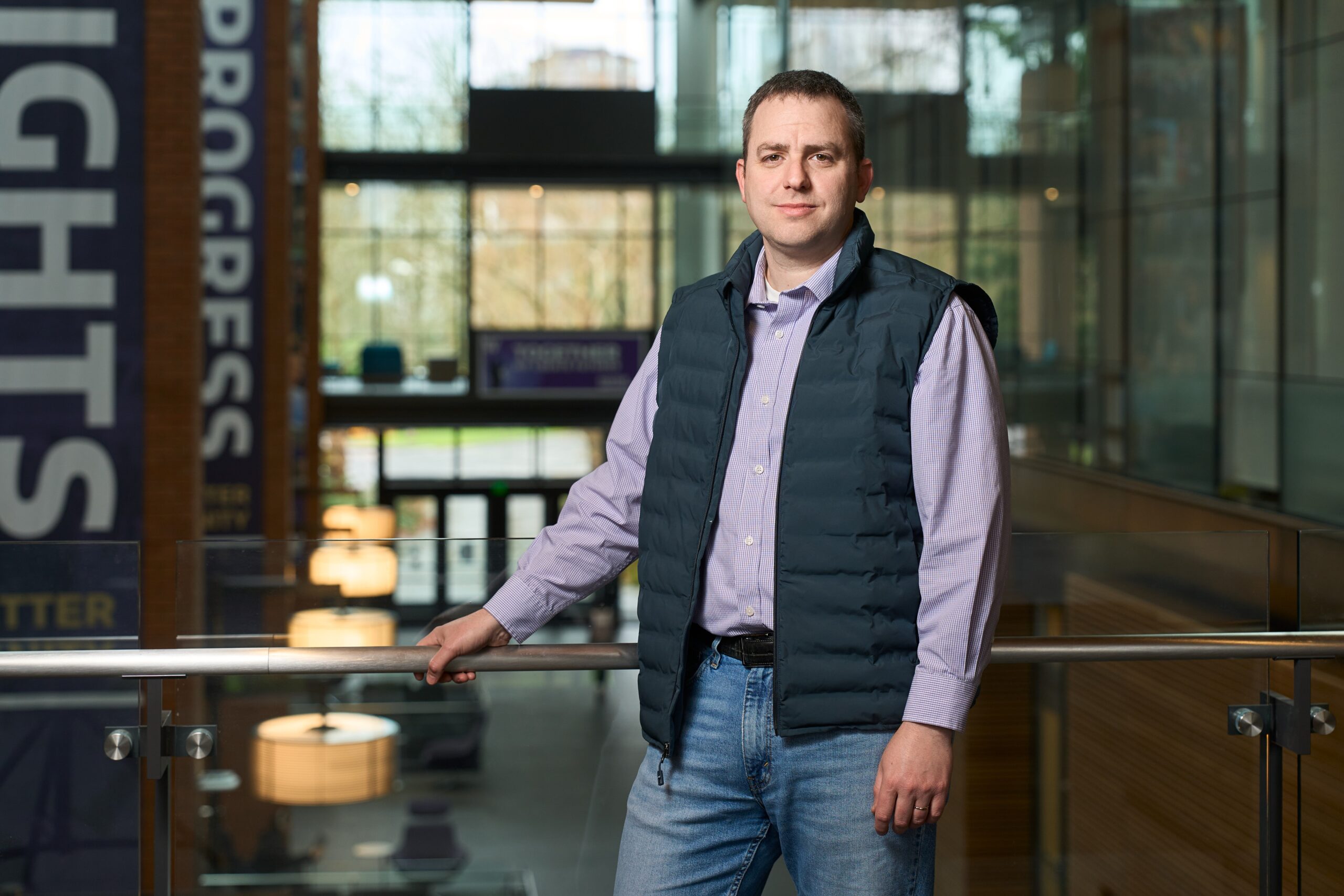
As Faculty Director of the MS in Finance, Doron Levit is focused on preparing students for the intersection of finance, AI, and innovation.
A finance curriculum built for today’s economy
Foster’s MS in Finance curriculum is built around core finance disciplines: corporate finance and valuation, investments and asset management, banking and financial systems, and data analytics in finance. It includes elective specializations that allow students to go deeper in areas shaping the future of the profession, including machine learning and AI in finance, fintech and blockchain, behavioral finance, sustainable finance, real estate finance, and global markets.
“Our new MS in Finance program is designed to give students a rock-solid foundation that helps them ask deep, probing questions—the kind that are essential to framing difficult problems,” says Frank Hodge, Orin & Janet Smith Dean of the Foster School of Business. “Asking insightful questions is required of the most advanced technologies and is a key skill employers look for in new hires.”
Foster’s finance faculty, world-renowned researchers and expert teachers, lead the MS in Finance, bringing deep expertise across corporate governance, asset management, financial markets, fintech, and more into the classroom.
“Our master’s students will learn all the tools, but more importantly, they will learn why we use them,” says Jordan Nickerson, Associate Professor of Finance and the Peter and Noydena Brix Endowed Faculty Fellow.
That emphasis on “why” reflects a broader approach: grounding students in core financial principles while preparing them to apply those principles in a rapidly evolving, technology-driven environment.
Rather than chasing short-term trends, the program is structured to help students build skills that remain relevant as technologies evolve.
“We are in the middle of an AI revolution, and the Master of Science in Finance program helps students adapt to whatever comes next,” says Doron Levit, Faculty Director of the MS in Finance and the Marion B. Ingersoll Professor of Finance. “The program is centered around making sure Foster students have a deep understanding of fundamentals that are timeless.”
Yang Song, Associate Professor of Finance and the Norman J. Metcalfe Endowed Professor in Finance, will teach the program’s core investments and financial markets course.
“Analytics and AI are a key component across our Master’s in Finance curriculum,” Song says. “We’re integrating AI and machine learning into most courses in the program, including my own.”
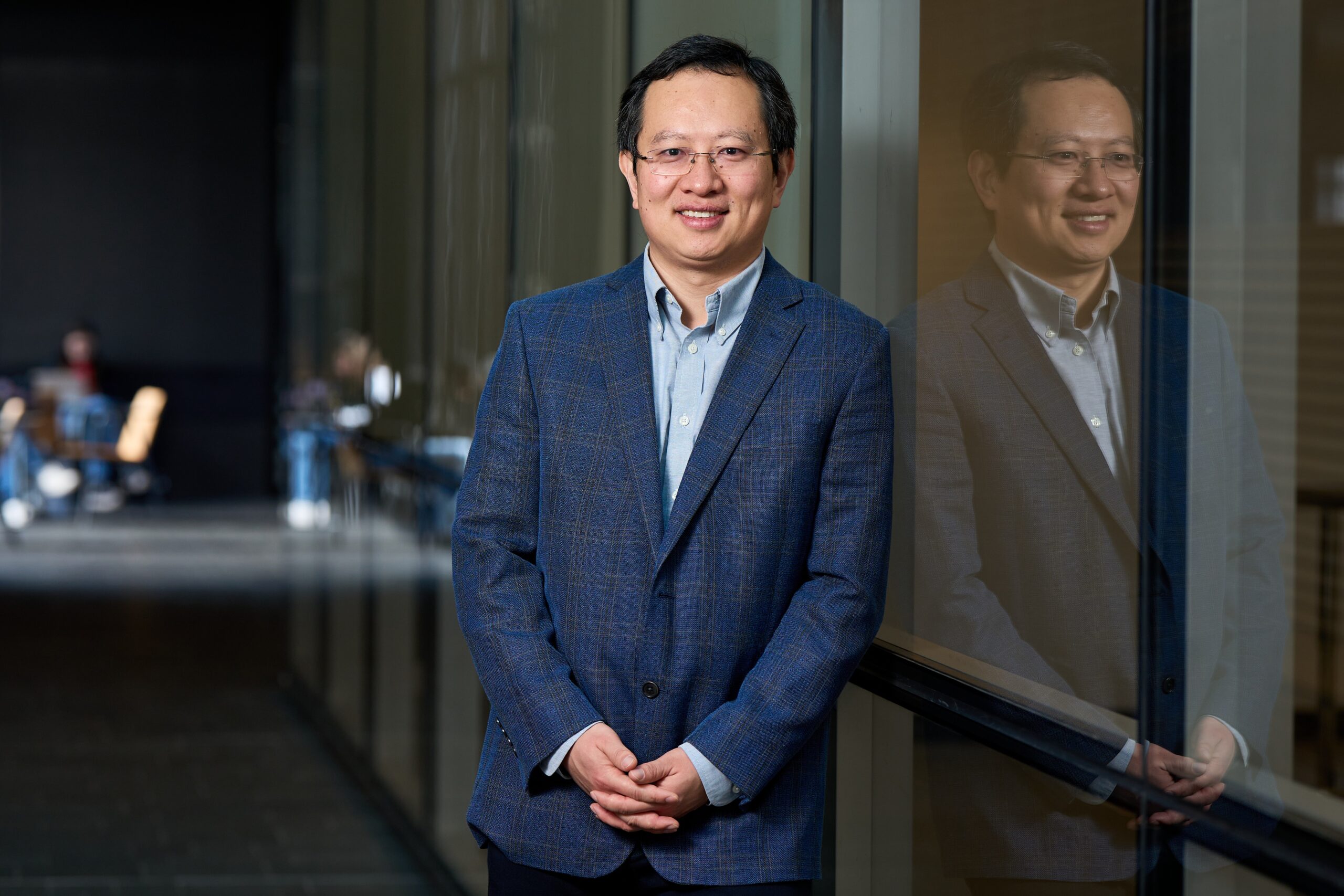
For Yang Song, the next generation of finance professionals must be fluent in both financial theory and emerging technologies.
Applied learning and career development
Professional development and career coaching are embedded throughout the program experience, beginning in the first quarter. The goal is not only to prepare students for interviews, but to help them understand how finance operates in practice across industries and roles.
A weekly career development workshop features industry practitioners and leaders who share firsthand perspectives on the challenges and opportunities students will encounter in finance careers. In the second and third quarters, students work in teams on capstone projects with real organizations, applying what they’ve learned to live business problems.
“By the end of the program, students have not only learned the principles and the emerging trends in theory,” Levit says. “Students have also had an opportunity to hear firsthand from practitioners and finance industry leaders about what they’re currently facing, and then actually engage with them on real problem-solving exercises.”
The Seattle advantage
Located in Seattle, the program draws on Foster’s and the University of Washington’s Pacific Northwest connections and network. The University of Washington College of Engineering and the Paul G. Allen School of Computer Science—ranked among the top in the world—sit adjacent to Foster, creating opportunities for students at the intersection of finance and technology. Students study next door to companies shaping the future of finance, from global tech firms to investment and fintech startups—creating opportunities for direct industry exposure.
“The Foster School brings something unique to the table for finance students,” Levit says. “Students have top-notch finance education combined with the Seattle tech and innovation scene, and the engineering and computer science schools here at the University of Washington. That creates a lot of opportunities for anyone who wants to place themselves at the intersection of finance and technology, whether that’s in payment systems, trading platforms, or somewhere else entirely.”
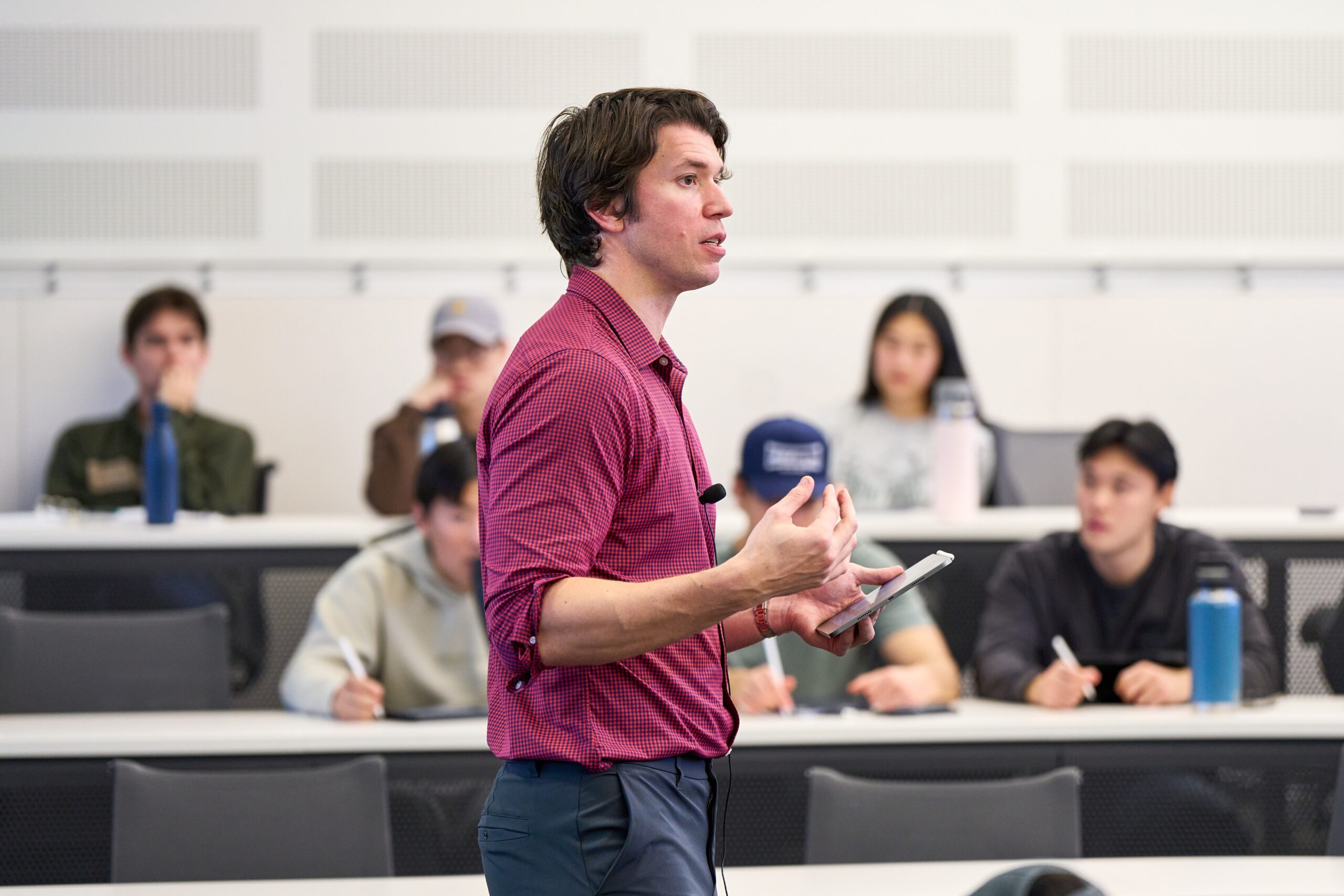
For finance professor Jordan Nickerson, understanding the “why” behind financial decision-making is what prepares students for long-term success.
A Master’s in Finance designed for early-career candidates
Foster’s Master’s in Finance is designed for analytically driven candidates who want to build deep expertise in finance, regardless of their undergraduate major. Students with backgrounds in economics, mathematics, engineering, computer science, and data science are especially well-positioned, but the program also welcomes candidates from other disciplines with strong quantitative foundations. No prior finance coursework or professional experience is required.
Levit describes the program as built for students who “perhaps took a different path in their undergraduate studies, realized they want to specialize in finance, and want to bring their background from a different discipline to the financial system.”
That interdisciplinary perspective is a feature, not a barrier, reflecting the field’s evolving intersection of finance, technology, and data.
At Foster, the MS in Finance is grounded in the belief that students who master core financial principles can apply them across contexts, whether in traditional markets or in emerging, technology-driven areas of the field.
The Master of Science in Finance at Foster is a STEM-designated, full-time, in-person program. The anticipated first cohort begins September 2027.
Learn more and join the interest list for the Master of Science in Finance.