

Before a new technology product ever reaches customers, someone has to decide whether it’s worth the investment—and what the company may have to give up to build it.
Those are the kinds of questions Yinka Sado (MBA ’18) helps answer. As a director of finance at Microsoft, she works alongside engineering teams on the company’s security products, weighing decisions around product development, pricing, infrastructure, and where to put limited resources.
“We’re in the room from day one,” Sado says. “You have to think through that resource allocation decision even as you’re developing the product.”
Her path from investment banking to marketing, earning a Full-Time MBA at Foster along the way, and ultimately to finance roles at Amazon Web Services and Microsoft shows just how varied a career in finance can be—and how much it can draw on skills beyond numbers.
As finance becomes more closely intertwined with technology, AI and business strategy, Sado’s career offers a glimpse into both what the field looks like today and where it’s headed.

Yinka Sado (MBA 2018), director of finance at Microsoft, says today’s finance professionals need more than technical expertise; they need business judgment, creativity and tech fluency.
A career that didn’t take a straight line
Sado studied economics as an undergraduate and, like many of her classmates at the time, assumed her options came down to investment banking or a government role. She chose banking, drawn in partly by the same Wall Street mythology that shapes many outsiders’ ideas about finance. Her first job had her writing research reports, analyzing companies and their filings to form a view on whether they were good investments.
But that was just a starting point. “Over time, I started feeling a need to further understand those companies, from an even deeper perspective than just writing about them,” she says.
Her curiosity led her into a brand marketing role, where she gravitated toward the business analysis and forecasting parts of the job. As she discovered more about her true interests, she pivoted again. This time it was a role she would build a career around: corporate finance.
But it wasn’t finance in the way most people picture it. Sado’s role is embedded as a business partner within another function, rather than sitting apart from it in a traditional finance department.
Within technology companies, she says, that partnership can extend into the product itself. “You’re deeply involved in investment decisions, product strategy, pricing the product, working with engineering teams, even in product design,” Sado says. “Finance has a true seat at the table within tech.”
That approach has become especially important as technology companies make enormous investments in AI infrastructure, often well before the full return is known. Decisions about what to build are inseparable from questions about what those products will cost, how they will be priced and where companies should direct limited resources.
“Finance has to be part of the conversation from the start,” says Sado.
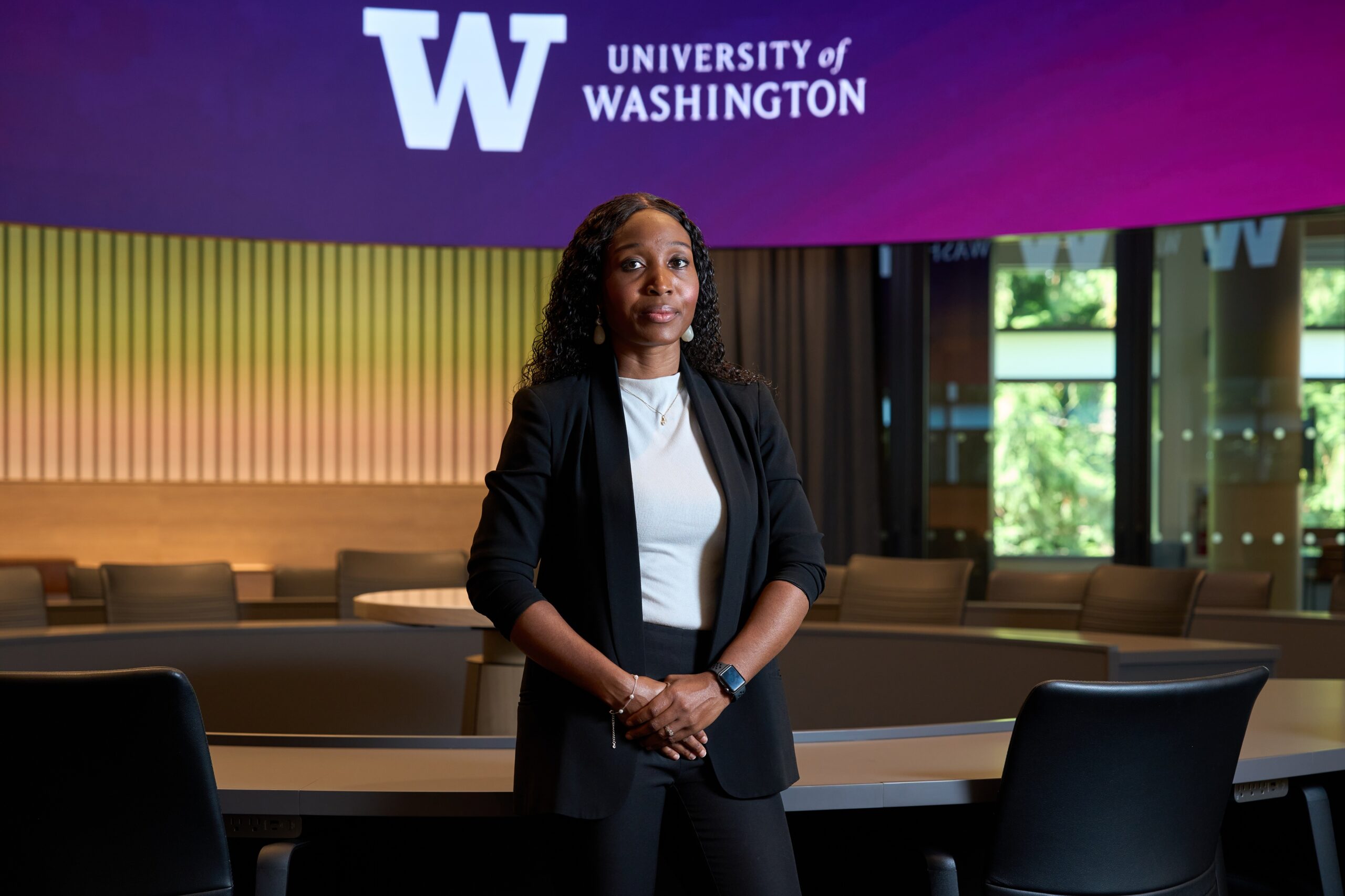
Sado credits her Foster MBA with helping build the skills and relationships that continue to shape her career, including an alumni connection that helped lead to her current role at Microsoft.
What people get wrong about finance jobs
Sado pinpoints three common assumptions she hears about finance roles.
First, people think that finance exists primarily to say no. “I think most people also think that finance is the function that’s just there to say no, and to put up gates,” she says. “But now we’re finding that finance can be as collaborative as any other function. Our goal is not to say no. Our goal is to make sure business leaders are making the right investment decisions in the right places.”
Second, they think there’s no place for creativity within finance. “I used to think I wasn’t creative, and that I would just go to a role where I can use my numbers, because numbers are black and white,” she says. “But that’s not true.”
In practice, she notes, solving complex business problems requires creativity precisely because the answers aren’t always obvious. “Finance can be very creative, especially when you’re solving complex business problems that are changing all the time,” she says. “You have to think outside the box. It’s not just a straight shot.”
And then there’s the third assumption: that finance is only for people with an extensive math or quantitative background. Sado disagrees. “It’s a good foundation to have a sense of math, but it’s not a requirement. And it’s not going to be enough for you to be successful in finance these days.”
Instead, Sado says a successful finance career involves skillful collaboration, creative problem solving, and a well-rounded background.
What AI changes in finance, and what it doesn’t
Sado describes how AI is reshaping both what finance professionals work on and how they do the work. As AI takes on more forecasting, variance analysis and other routine tasks, she sees finance professionals spending more time interpreting information, generating business insights and exercising judgment.
The pace is changing, too. “The expectation is to keep up in a fast-changing world,” she says. “There’s always something new coming up. There’s a pivot around the corner.”
While she says AI fluency is increasingly important for finance professionals, Sado is equally emphatic about what hasn’t changed. “There’s a danger with AI, where people think you can BS your way through important topics and use AI to answer a finance question quickly,” she says. “That approach would only take you so far.”
Finance professionals still need training to understand the fundamentals, including how a profit-and-loss statement works and concepts such as return on invested capital, net present value, and payback period.
“Those principles have not changed,” Sado says. “How we work has changed, but the fundamentals haven’t.”
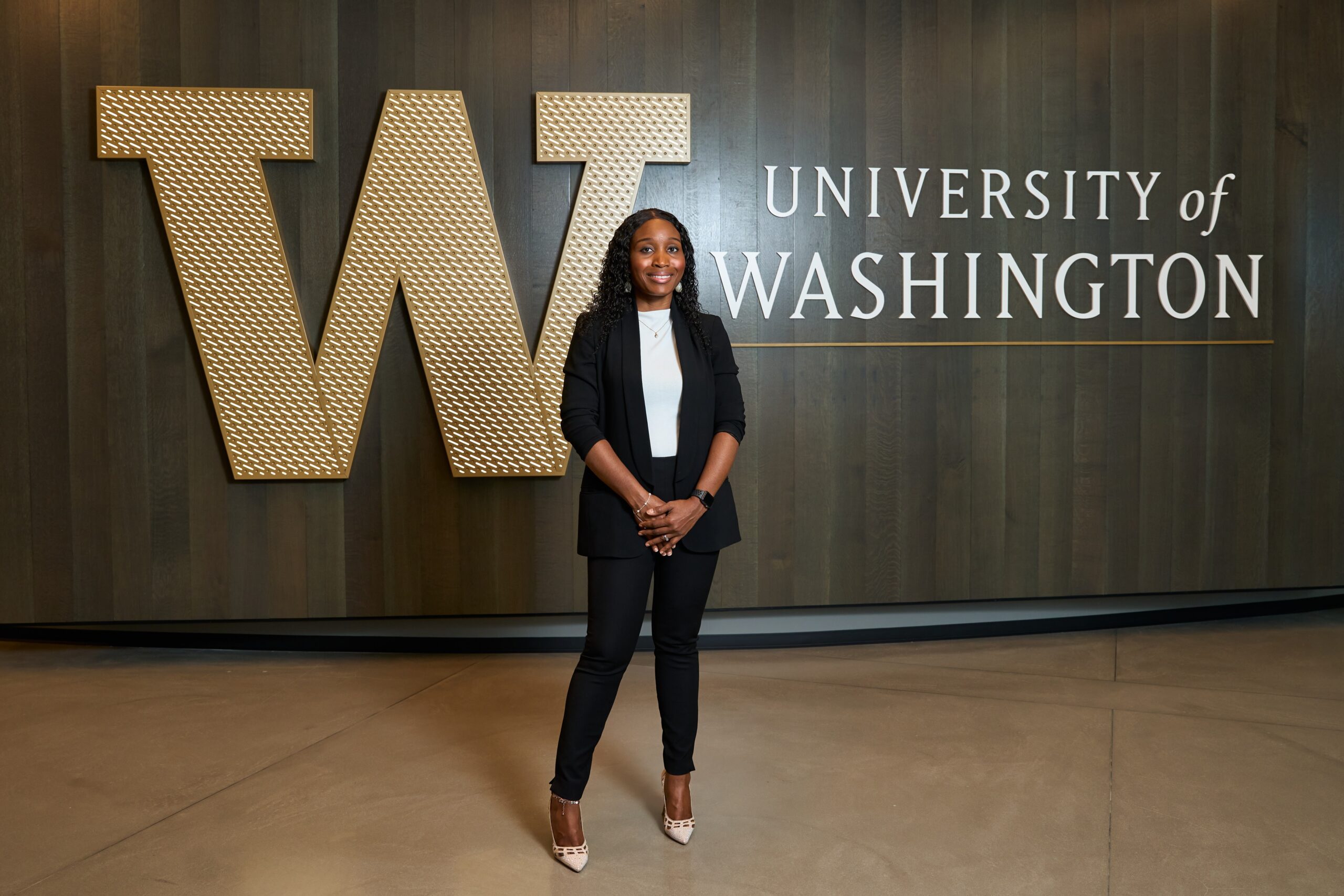
At Microsoft, Yinka Sado works alongside engineering teams on product development, pricing, infrastructure and investment decisions. “Finance has a true seat at the table within tech,” she says.
Creating the right foundation from the start
Sado credits much of her own career, including the job she holds today at Microsoft, to a foundation that extends beyond technical finance skills.
The relationships she built during her two-year, full-time MBA from the Foster School of Business have continued to shape her career. A fellow Foster alum ultimately referred her to the hiring manager for her current role.
“The decision to go to Foster and earn an MBA was the first step that determined the rest of my career,” she says. “In addition to the degree, the connections I made—even being hired for my current job—are ROI that continues.”
For students considering finance, Sado sees education as the starting point, but not the end goal. The professionals who thrive will be able to pair finance fundamentals with broader business skills and the ability to adapt as the work changes.
“The future of finance is not just about understanding numbers,” she says. “It’s about combining finance expertise, business judgment, technology and resilience to help organizations make better, long-lasting decisions.”
And for someone intrigued by the field but unsure whether they fit the traditional image of a finance professional, Sado’s advice is simple: “If you’re thinking about it, you should go for it.”
Explore MBA and Specialty Masters programs at the Foster School of Business.