

At the Foster School of Business, Full-Time MBA students interested in climate and sustainability often find each other through the Net Impact club, where they organize events, connect with industry leaders, and share ideas for building careers that combine business with impact.
Some students arrive with scientific or engineering backgrounds, thinking about how to scale new technologies. Others come from policy or nonprofit work, looking to expand their influence through business. Increasingly, they meet in the same place: the MBA classroom.
For Full-Time MBA students Margaret (Margi) Merline (Class of 2027) and Will Barror (Class of 2026), who met in the Net Impact club, that convergence has shaped how they approach climate challenges, bringing together different perspectives to explore the role of business in driving change. Merline and Barror have also been awarded ClimateCAP Fellowships, a national program that brings together MBA students from leading business schools to advance climate leadership in business.
Their work is supported by faculty who help students turn interests into action, including Foster professor Elizabeth Stearns, faculty advisor to the Net Impact club, who works closely with students as they explore how business can intersect with broader societal challenges.
To learn more about the intersection of climate and the MBA experience, we asked Merline and Barror to share how they are approaching climate challenges, not just through science or policy, but through business.
Editor’s note: Will Barror completed the ClimateCAP Fellowship in 2025. Margaret (Margi) Merline is currently participating in the ClimateCAP Fellowship.
What led you to pursue an MBA and why Foster?
Margi Merline: “I reached a point where I realized that solving climate challenges isn’t just a technical hurdle; it’s a commercial one. I needed the business toolkit to understand how to move capital and scale operations. I chose Foster specifically to be in Seattle long-term, given the city’s unique position as a hub for both major tech and environmental innovation.”
Will Barror: “Post-college, I spent three years working at an environmental nonprofit leading climate policy for a rural community in Colorado. After a while, I realized the business sector is best positioned to act on climate, more so than the government or nonprofit sectors, because it has greater access to capital and stronger motivation to act. I chose to pursue an MBA to complement my sustainability/climate skills with a business toolkit, allowing me to break into corporate climate action.
I chose Foster because of the location in Seattle, small class sizes, and the people. Seattle has a robust climate scene with numerous environmentally conscious companies, and importantly, it is also close to my family. Foster’s small class sizes allow for a deep connection with my peers and professors. Finally, I knew Foster was the right choice after the accepted students weekend, where I met really great people who I now call friends.”
Many people who care about climate pursue science or policy careers. What drew you to business?
Margi Merline: “Policy sets the stage, but business is the engine that actually does the work. I think an MBA is a great tool for someone in climate, if they are ready to be the architect of their own experience. You get the foundational skills in finance and strategy, but you have to be the one to apply them to the climate space. It’s a degree that rewards people who are highly self-directed.”
Will Barror: “Business has access to the capital markets and the motivation (profit motive) that is lacking in many government and nonprofit settings. Businesses are the largest polluters and climate culprits, but they also have the most influence and the greatest opportunity to act. Reframing climate and sustainability efforts as risk-mitigation allows it to be translated into language that encourages corporate action and is politically-agnostic.”
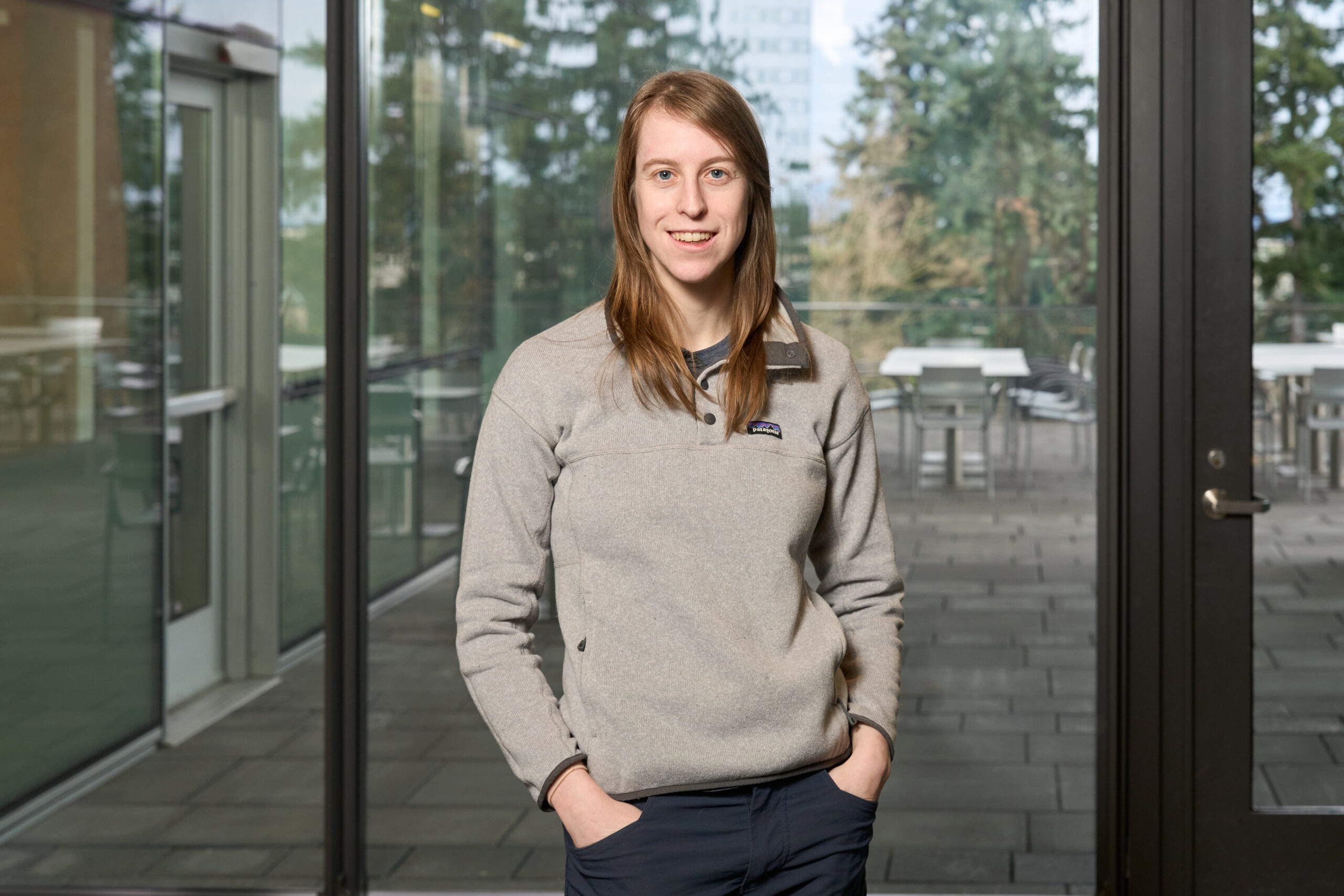
“Policy sets the stage, but business is the engine that actually does the work.”—Margaret (Margi) Merline, Full-Time MBA Class of 2027
Margi, what interested you in the ClimateCAP Fellowship?
Margi Merline: “I’m most excited to connect with other MBA students from across the country who are just as obsessed with solving climate challenges as I am. It’s a rare chance to share ideas and see how people at other schools are approaching the same problems. The experience actually started when I was inspired by a climate startup emerging from the University of Washington’s Atmospheric Sciences department. It showed me the potential for local research to have a massive commercial impact. From there, I reached out and chatted with Will, the previous fellow, to get the lay of the land.”
Will, what was your ClimateCAP experience like last year?
Will Barror: “The ClimateCAP experience was fantastic! Between the mentorship, other students, and frequent guest speakers, it was an experience I’d recommend to any MBA student interested in climate. The other fellows were an inspiring, incredibly smart group with wide-ranging interests at the intersection of sustainability and business. Some were trying to find ways to close the financing gap, others wanted to launch startups, and several were working on disaster-mitigation and resilience projects in their home countries. The collaboration, feedback, brainstorming, and opportunity to learn from each other were highlights of the Fellowship.”
Foster’s Net Impact club brings together students interested in climate. What role does that community play within the MBA experience?
Margi Merline: “The community is really about the peer-to-peer connection. It’s where you find the other students who are navigating the same challenges and trying to pivot into impact-heavy roles. That network is often where the most helpful resource-sharing happens.”
Will Barror: “Foster’s Net Impact club offers one of the only opportunities for students interested in sustainability and social impact to learn from leaders in the space and develop skills to secure climate and social impact jobs. The club brings in outside speakers, takes students to sustainability case competitions, hosts learning sessions, and runs Service Corps, where MBAs are matched with local nonprofits to work on consulting projects.”
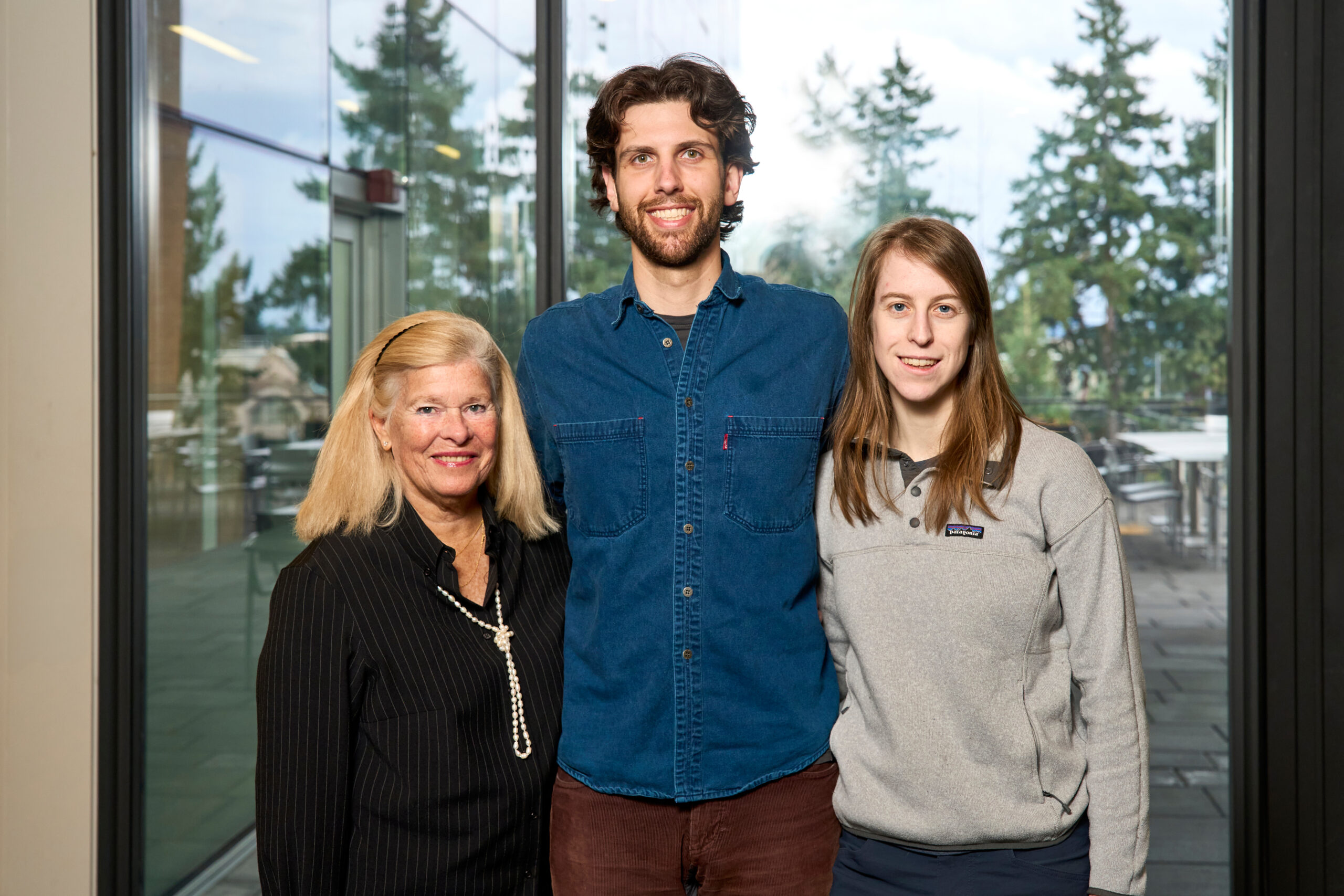
Foster MBA students Margaret (Margi) Merline and Will Barror with Associate Teaching Professor of Marketing Elizabeth Stearns (left), faculty advisor to Foster’s Net Impact club. Stearns’ leadership supports student-driven exploration and helps connect business education with real-world challenges.
Have any University of Washington faculty and staff been particularly supportive?
Margi Merline: “The staff at the Program on Climate Change [Miriam Bertram, PhD] and the Graduate Certificate in Climate Science were incredibly supportive. They were instrumental in my application for ClimateCAP and provided the specialized guidance that I really needed to bridge my engineering goals with my business education.”
Will Barror: “Foster Professor Phillip Bruner, founder of the UW Climate Risk Lab, has been incredibly helpful throughout this process. He connected me with numerous people (local government officials, community organizers, etc.) who answered my questions and provided guidance on the project. The UW Climate Risk Lab also published my final ClimateCAP deliverable on its website.”
Are there any MBA classes that have influenced how you think about environmental challenges?
Margi Merline: “The Venture Capital class taught by James Newell was a huge standout for me. James was fantastic and really shaped how I think about the way early-stage climate tech gets funded. Understanding the mechanics of how investors evaluate risk and scalability is essential if you want to bring any environmental solution to life. I’ve also found a lot of value in my work on economics and market structures, especially when it comes to pricing tiers and sizing the market for new technologies.”
Will Barror: “Phillip Bruner’s Climate Risk & Innovation course reframed my thinking about sustainability and business by introducing the idea of climate risk as a lens for viewing these problems. Instead of thinking about metric tons of CO2 to reduce, companies should focus on how to reduce or mitigate their exposure to climate risk. This reframe inherently forces corporate action on climate without the political baggage.”
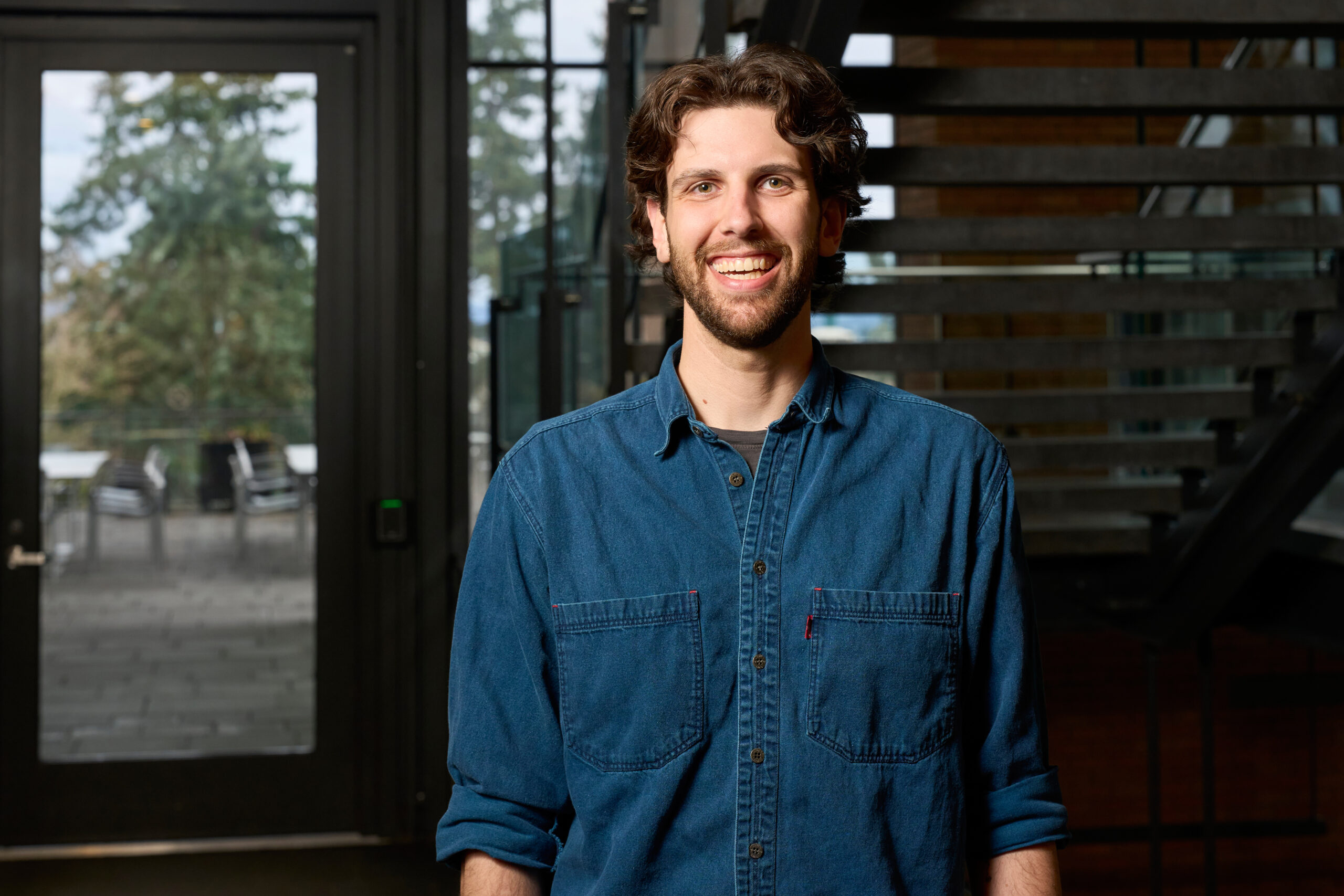
“Reframing climate as risk mitigation allows it to be translated into language that encourages corporate action.”—Will Barror, Full-Time MBA Class of 2026
What advice would you give to someone considering an MBA who hopes to work on climate or sustainability challenges?
Margi Merline: “Don’t wait for the program to hand you a roadmap. If you want to work in this space, you have to be proactive. Reach out to the climate science departments, find the professors who are doing the real work, and treat the MBA as a platform to build your own specialized path.”
Will Barror: “I’d recommend taking advantage of all the experiential learning opportunities you can get access to, whether that be a school-facilitated consulting project, summer internship, fellowship, or another sort of project. Climate/sustainability is a hard field to break into, so the more demonstrated experience you have, the better your odds will be.”
What originally sparked your interest in climate work?
Margi Merline: “My background is in mechanical engineering, so I’ve always been drawn to the physical reality of how things are built and powered. I started focusing on climate because I saw a massive gap between having a great technical solution and bringing it to market at scale. I wanted to be part of the bridge that turns engineering breakthroughs into viable products.”
Will Barror: “My interest in sustainability stemmed from a summer spent backpacking in New Mexico while I was in high school. The beauty of the natural world was inspiring and motivated me to want to protect it. It wasn’t until undergrad at Western Washington University [in Bellingham, WA] that I realized you don’t need a STEM degree to protect the environment. Sustainability blends my interests in business, policy, social science, and the environment, allowing me to have a purpose-driven career that protects people and the planet.”
Behind each Foster MBA student’s path is a broader network of support that helps students turn interest into action, through faculty, staff, and student-led communities that encourage exploration across disciplines.
For students like Merline and Barror, that environment has created space to connect different ways of thinking—engineering, policy, and business—and apply them to complex challenges. Their paths reflect a broader shift in how climate work is taking shape: not within a single discipline, but across them. They are building careers that evolve alongside the problems they’re trying to solve, using business to bring solutions into practice.
Learn more about the Full-Time MBA at the Foster School of Business at the University of Washington.