

When the University of Washington launched the Pacific Rim Bankers Program in 1976, the banking industry looked very different from what it does today.
The program was championed by the late Dr. Kermit O. Hanson, then dean of what is now the Foster School of Business, around a straightforward idea: banking is central to economies, and developing stronger leaders and connections across the industry benefits everyone.
Over the decades that followed, banking was reshaped by consolidation, globalization, financial crises, regulatory change, and rapid technological advancement. The program evolved alongside the industry, expanding well beyond its original Pacific Rim focus and eventually becoming the UW Global Banking Program.
the UW Global Banking program: an experience that evolves and endures
In 50 years, more than 2,700 banking and financial leaders from 49 countries have completed the program, building a global alumni network that spans markets and institutions. In the last decade, participants came to the Foster School of Business in Seattle from countries including Argentina, Australia, Canada, Chile, China, Colombia, Germany, Hong Kong SAR, India, Indonesia, Panama, the Philippines, Singapore, Taiwan ROC, Thailand, the U.K., and Vietnam.
Today, the intensive two-week program combines learning from Foster faculty and industry experts with timely exploration of the forces reshaping banking and the opportunity to exchange ideas with experienced peers from across the global financial system.
Jean Choy, Associate Dean of Executive Education and International Initiatives, has worked with the Global Banking Program since 2003, helping guide it through nearly half of its 50-year history. As the program prepares to mark this milestone at a 50th Anniversary event in Manila, Choy reflects on why it has endured, what participants gain from learning alongside their peers, and how it continues to evolve with the banking industry.
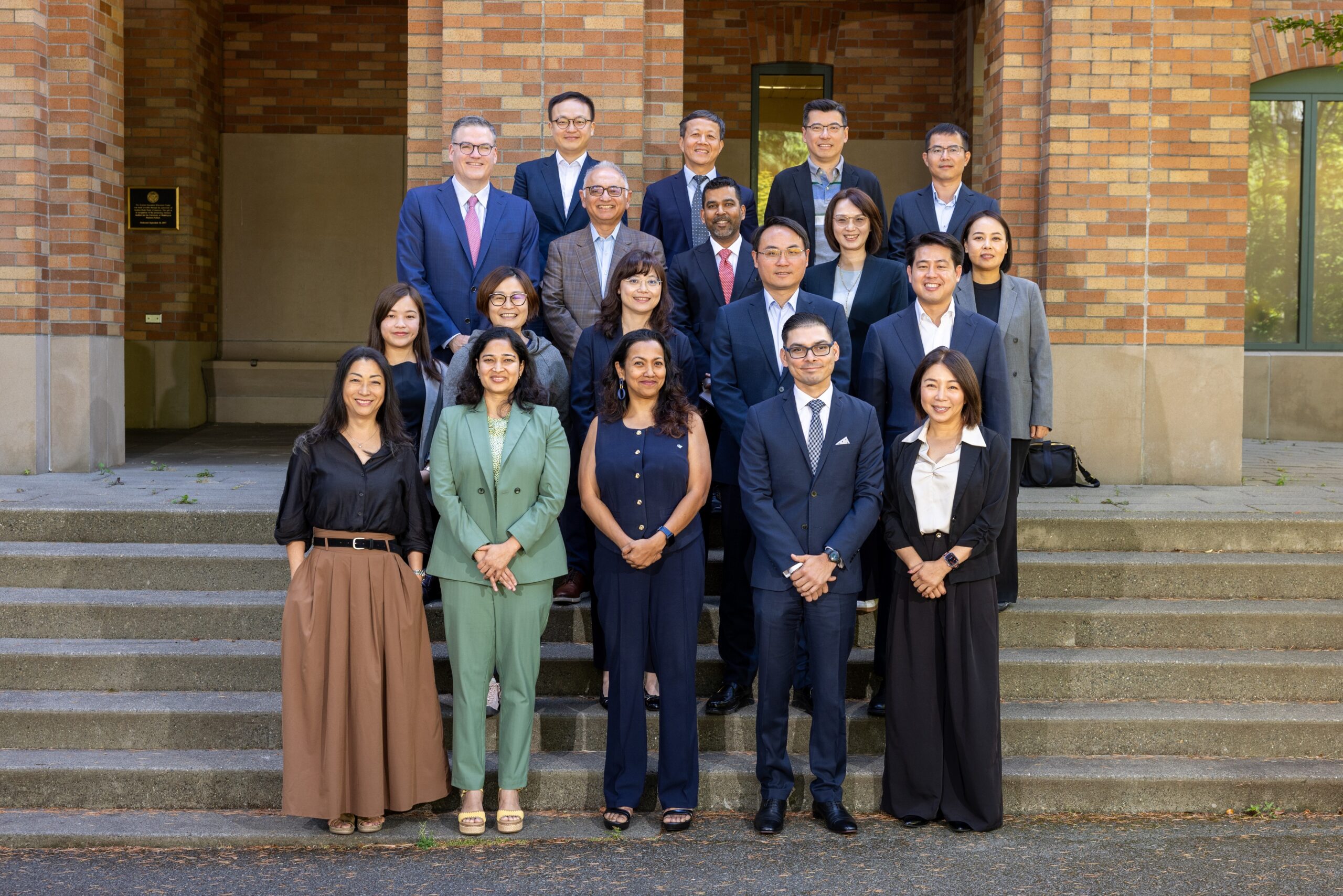
Jean Choy (front row, first from left) together with the Global Banking Program Class of 2026.
What has allowed the Global Banking Program to offer value through 50 years of change?
Jean Choy: The program has remained valuable because it stays connected to what banking leaders need. The industry has changed enormously, but the need for strong global leadership hasn’t. Leaders still need to make good decisions, influence people, manage teams, and build relationships across organizations and cultures.
What has changed is the environment in which bankers are doing that work. The program has evolved to reflect the challenges financial institutions are navigating now, whether that’s global liquidity, new payment systems, changing financial markets, supply chain disruptions, or managing organizational change. We want participants to connect what they’re learning here directly to the issues they’re facing in their organizations.
One of the defining features of the Program is its ability to bring together leaders from different institutions. What does that add to the experience?
Jean Choy: Ultimately, banking is interconnected. The Global Banking program brings together leaders from traditional banks, central banks, and organizations that work closely with the financial industry. Put them in the same room, and they can look at the same issue from very different vantage points. A central banker can hear directly about the challenges financial institutions face, while banking leaders can gain a better understanding of the thinking behind policies and regulations, and how they may need to prepare.
The global mix makes that exchange even richer. Participants can compare how financial leaders in different markets are responding to similar challenges and learn from approaches outside their own systems.
Banking is always changing. How do you keep the program relevant?
Jean Choy: The pace of change in banking means we can’t assume today that we know exactly what leaders will need to discuss a year from now. We want the program to reflect the issues participants are confronting when they arrive in Seattle. That’s why we intentionally leave part of the curriculum open until just a few months before each program. There are foundational areas that Foster faculty cover consistently, but we also reserve space for the issues shaping banking at that moment.
About three months before the program, we ask our board, “What are you hearing? What issues are your organizations dealing with? What should we be talking about?” Their industry perspective helps us identify timely topics and subject-matter experts who can bring additional expertise to the program.
Geopolitics became a major focus as global tensions intensified. More recently, AI and cybersecurity have taken on greater importance. The goal is to combine the foundational learning global banking leaders need with the issues they need to understand right now.
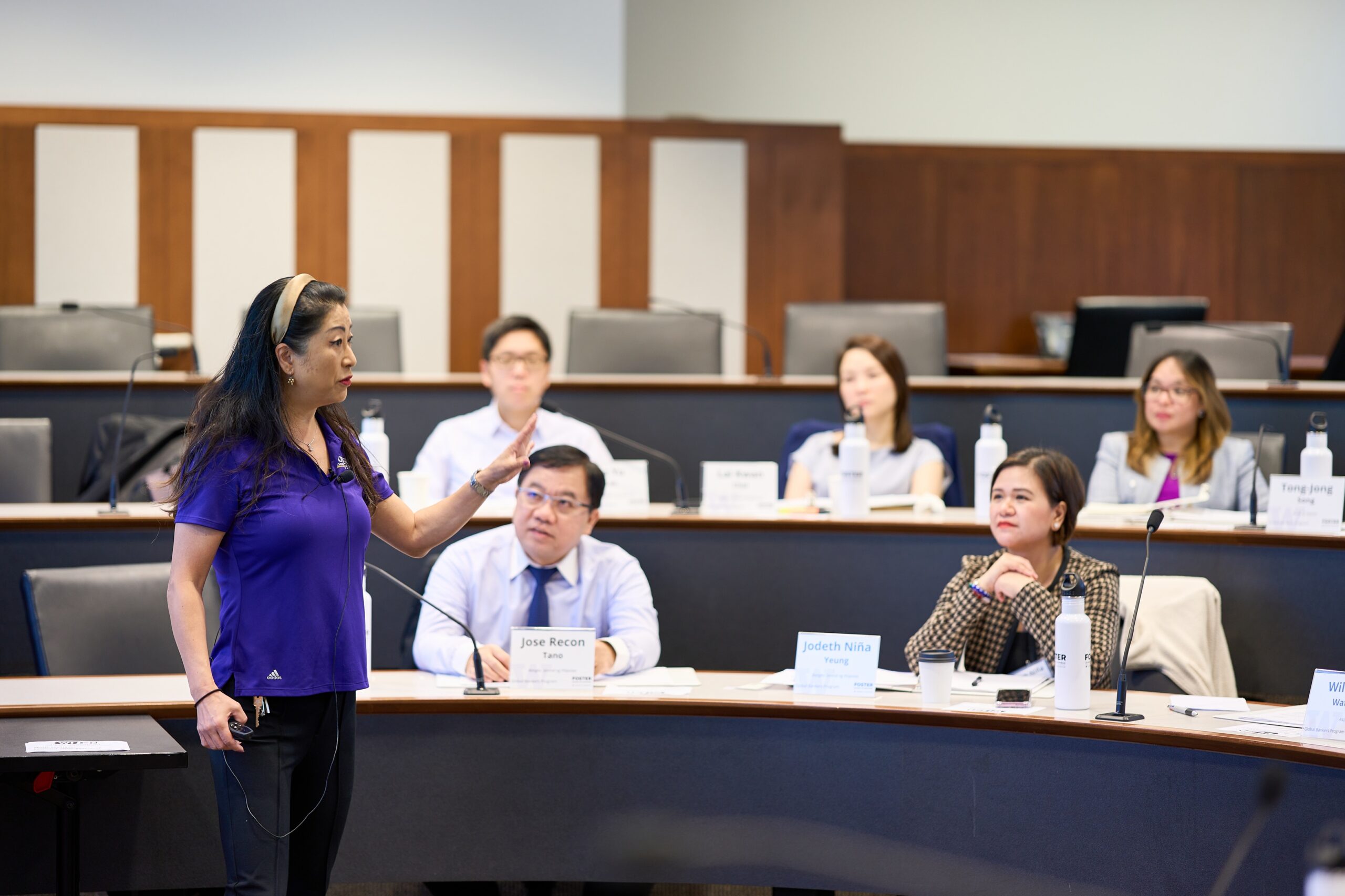
Jean Choy in the classroom with Global Banking Program participants on the University of Washington campus.
How have the demands on banking leaders changed?
Jean Choy: Banking leaders are operating in a much more complex and fast-moving environment. Technology is advancing rapidly, the workforce is changing, and leaders are being asked to navigate challenges that look very different from those faced by previous generations.
Technology is one example. Leaders don’t need to be technical experts, but they do need to understand new technologies and their implications. With AI, they need to understand how it can be used, how it may affect their organizations, and how to lead people through that change. The same is true of cybersecurity: they need to understand the risks and know the right questions to ask.
Managing people has changed, too. In many international banking markets, it was once common for someone to join an institution after university and spend an entire career there. That’s no longer the expectation. Attracting and retaining talent is harder, and leaders have to understand what different generations expect from their organizations and from their managers.
However, some capabilities have only become more important. Banking remains a highly relational business. Whether you’re working with customers, employees, peers, regulators, or other stakeholders, leaders need to communicate effectively, build trust, and manage relationships across organizations and cultures. Those fundamentals endure even as the environment around them changes.
After nearly 25 years with the Global Banking Program, what have you seen that demonstrates its lasting impact?
Jean Choy: The proof is the alumni. Over the years, Global Banking Program participants have gone on to take on increasingly significant responsibilities, leading major initiatives, moving into senior leadership roles, and being tapped to build or lead operations in new markets. Their organizations continue to send new generations of leaders through the program, which is another important measure of its value.
The impact also extends beyond individual career progression. The program has created a global network that participants continue to draw on long after they leave Seattle. For example, one of this year’s participants from Asia, is leading their bank’s entry into the Canadian market. They connected with several Canadian bankers in the program and gained firsthand perspectives on the market. Alumni from different years and institutions also connect through their shared experiences and help one another navigate challenges in their respective markets.
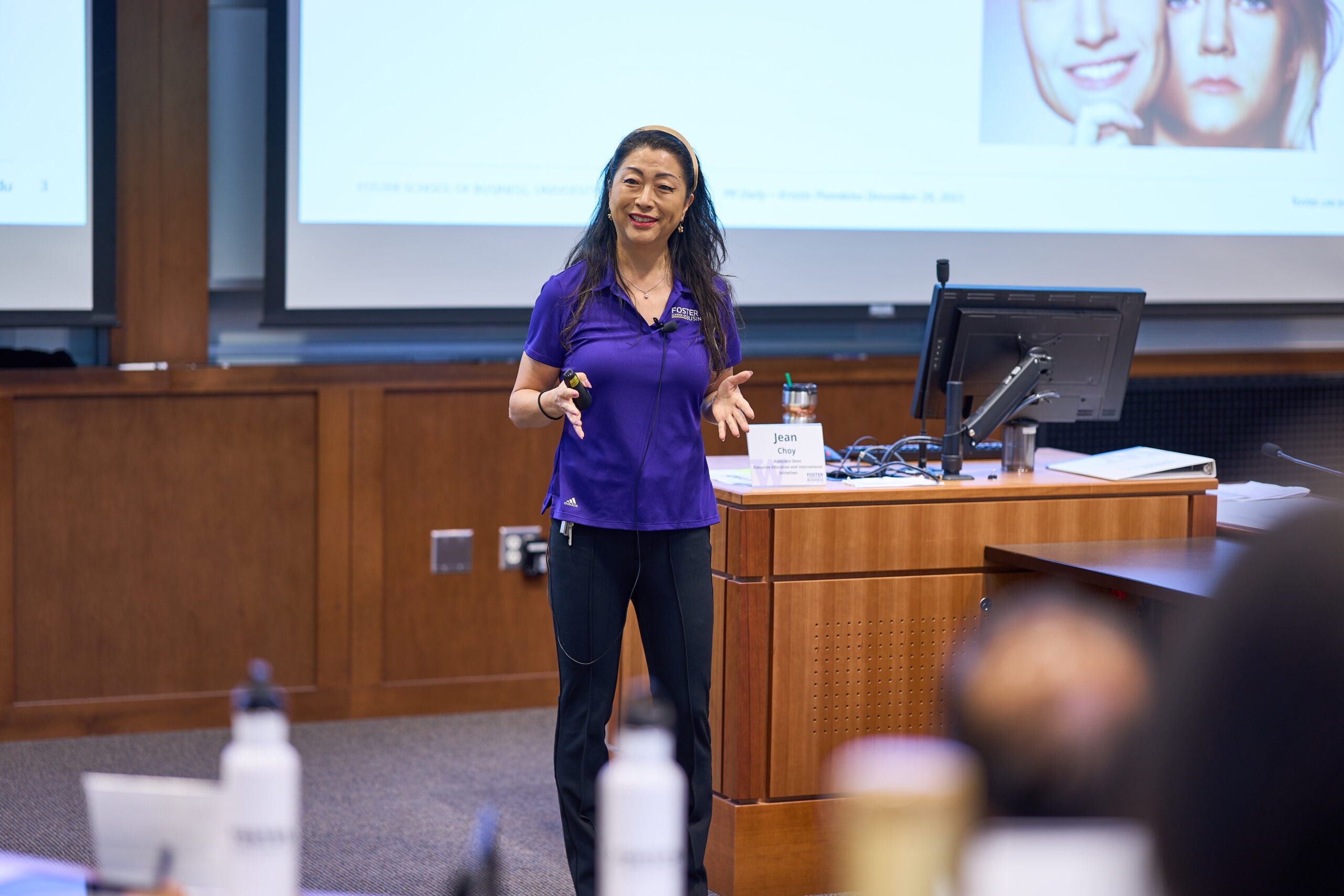
Global Banking Program leaders take on today’s industry challenges in the classroom with Jean Choy.
As the Program enters its next 50 years, what will be important to its continued success?
Jean Choy: We don’t know what the banking industry will look like 10 or 20 years from now, or what challenges the next generation of leaders will be facing. The issues we’re discussing today will evolve and new ones will emerge.
What has served the program well is staying closely connected to the industry through our board, alumni, sponsoring organizations, and financial leaders in different markets. Those perspectives help us understand what leaders are facing and ensure that participants engage with issues relevant to their organizations and to what may be coming next.
At the same time, the relationships participants build with one another remain just as important. They leave with connections to experienced financial leaders, and we’ve seen those relationships continue long after the two weeks are over.
Learn more about the 50th Anniversary celebrations of the UW Global Banking Program.