

Yang Song didn’t set out to build a career in finance. Instead, he followed his curiosity and his talent for mathematics, and they pointed him toward the field where both could thrive.
Song is a Professor of Finance and the Norman J. Metcalfe Endowed Professor in Finance at the University of Washington Foster School of Business, and one of the faculty members shaping its new Master of Science in Finance.
That same curiosity—and the appetite for learning that comes with it—runs through his research and shapes the way he teaches.
Math + finance = a natural fit
Song grew up studying mathematics, earning his undergraduate degree in China before heading to Stanford for a master’s in math. There, working through dense, complicated equations, he felt a strong pull to put his aptitude to practical use. He began taking PhD-level finance courses and later transferred fully into the doctoral program.
But crossing from math into finance took more than mathematical talent. What carried him was the same curiosity that first drew him to numbers, and it’s the first thing he looks for in a student.
Teaching finance in the age of AI
Song currently teaches courses in Investments and Asian Capital Markets, and will teach the MS in Finance’s first required investment course. He’s building it around gaining AI fluency, starting with himself. Before he brings the tools into the classroom, Song spends time developing his own proficiency.
He wants students to see a tangible payoff. For example, he’ll show them how to take an academic finance paper and use AI to turn its ideas into a working trading strategy in a matter of minutes. “In the past, a student might need 24 or 48 hours to read a paper and replicate it,” he says. “Now it can take three minutes.”
Song treats AI as a force multiplier rather than a shortcut, and he’s blunt about why AI fluency matters so much. “I have a very secure job,” he says, “but if I don’t keep up with how AI is developing, I’ll fall behind. I want our students to have that same mindset.”
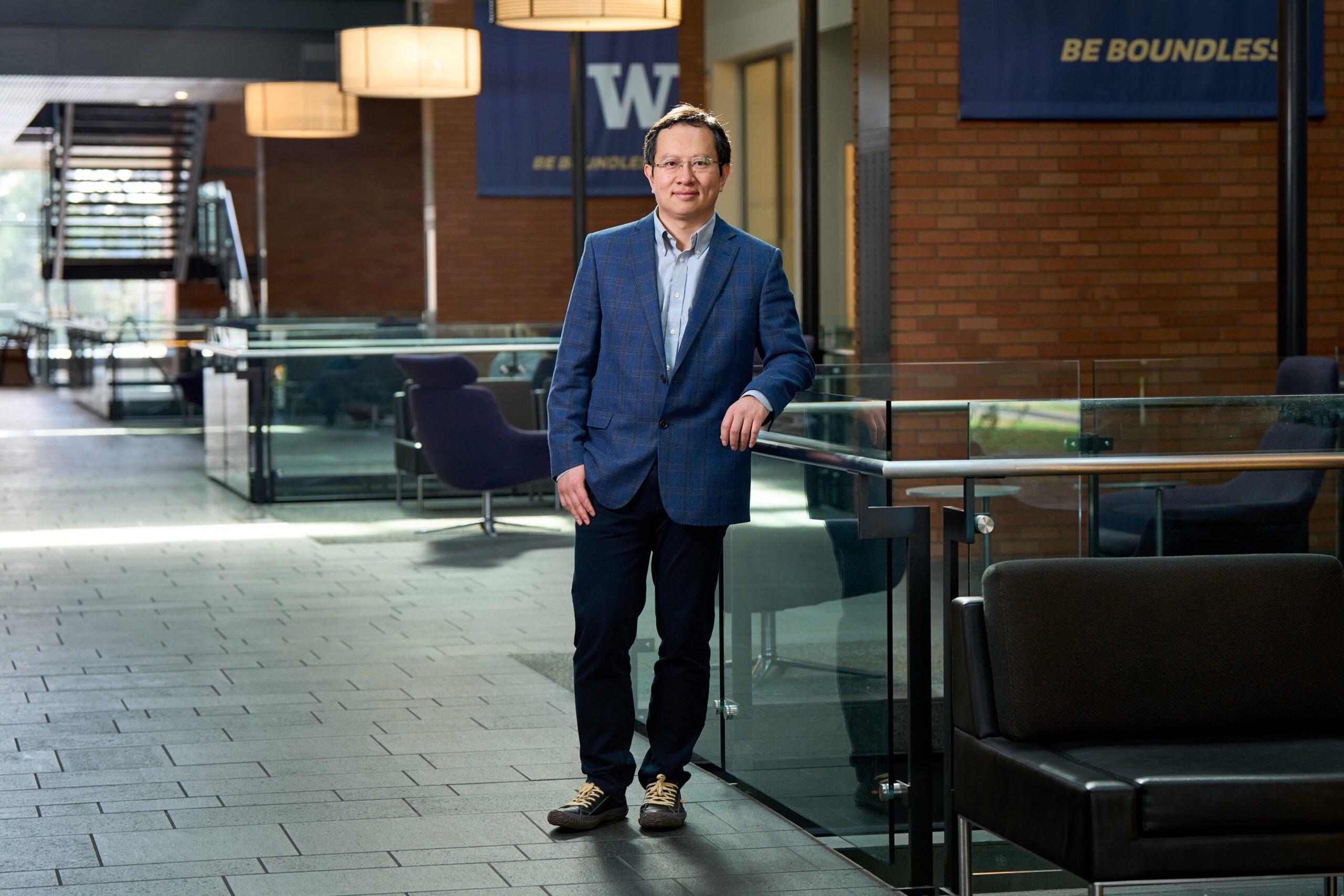
As one of the faculty members shaping Foster’s new Master of Science in Finance, Yang Song is helping students develop expertise in AI, investments, and global financial markets.
Theory, tools, and how markets really work
AI is one piece of a larger design. Song describes the MS in Finance program as grounded in three pillars: a solid understanding of theory, fluency with advanced tools, and practical institutional knowledge. “We want students to know how markets actually work,” he says. “Who the players are, what the rules are, and where the strengths and weaknesses lie.”
The goal is for students to understand how the principles they learned in their last lecture apply to real-world scenarios. For example, MS Finance students will have the opportunity to take Song’s course on Asian capital markets, with a particular focus on China. Then they can deepen that understanding by joining the immersion tour he leads and travel with him to China, where they’ll connect with investors, government officials, and local institutions across a wide range of financial services.
He also points to a habit he asks of his own doctoral students as a small example of the mindset: read the Wall Street Journal and the Financial Times first thing, every day, and keep your eyes on what the market is actually doing.
Looking out for the everyday investor
That same attention to how markets really work drives Song’s own research. It starts from a deceptively simple question: what happens when people move their money? It’s the kind of question that sounds abstract until you remember that nearly anyone with a 401(k) has a stake in the answer.
His research examines how the asset management industry really works: who moves money, how they move it, and what that means for ordinary investors. When ordinary investors buy and sell through mutual funds and retirement accounts, those moves can quietly nudge prices in ways that end up working against us. When the largest institutions move far bigger sums, they’ve built careful systems to do it almost invisibly. “When big institutions move their money, they leave almost no footprint in the market,” Song says.
The gap between those two experiences is what he’s trying to close. “Most of us have our money in those everyday vehicles,” he says. “I want to understand the difference and figure out how to improve things on the retail side.”
Seattle roots open doors with big tech and beyond
Keeping finance connected to the real world is a program-wide priority at the Foster School of Business, and its Seattle location gives it a natural advantage. Home to many of the world’s major tech and supply chain companies, Foster puts students close to the people and the pace driving the industry forward.
“Every time I talk with friends at the big tech companies, I’m shocked at how fast things are advancing. For our students, being surrounded by that is a real privilege,” Song says.
That proximity shows up in the classroom. Faculty stay actively connected to industry, and they build those connections into the coursework. Song’s colleague Thomas Gilbert, who is also an Amazon Scholar, teaches Foster students a version of the AI-for-finance work he does at Amazon. A finance capstone project pairs students with local firms to tackle real business problems, turning coursework into hands-on experience before students ever graduate.
Song points out that the regional opportunity extends beyond the tech industry. “There are plenty of opportunities here beyond big tech firms,” he says. The major banks have offices in Seattle, consulting firms are well represented, well-established multinationals range from aerospace to retail, and large asset managers like Russell Investments are headquartered in Seattle. For students who want to stay in the Pacific Northwest, the open doors are real.
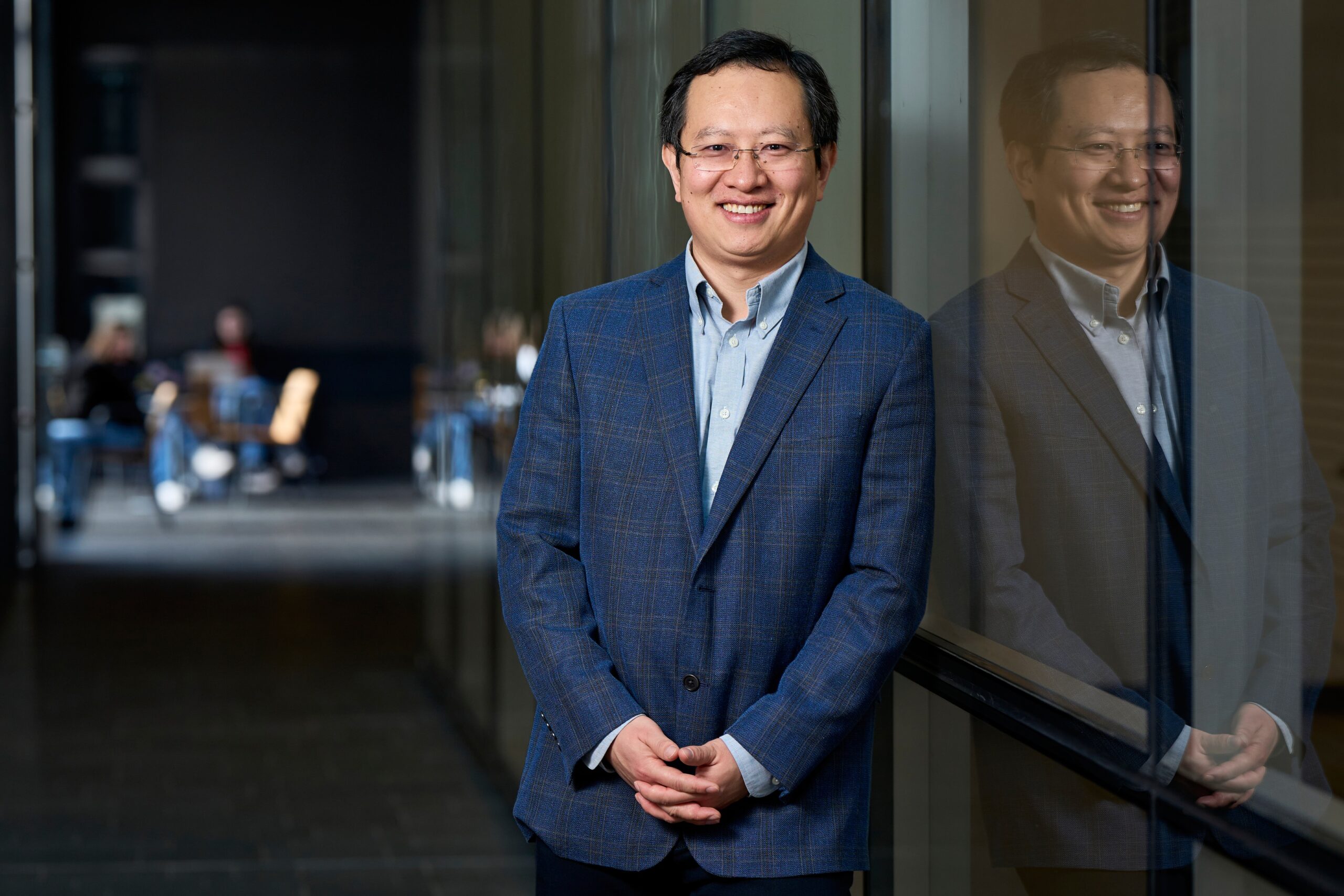
As Foster’s new Master of Science in Finance takes shape, Yang Song is helping prepare students for a profession where continuous learning is essential. “I want our students to have that same mindset,” he says. “If you don’t keep up with how AI is developing, you’ll fall behind.”
The one prerequisite that matters most
Song’s own background gives MS in Finance students a sense of what helps. “Academic finance is very quantitative now,” he says. “If you’re comfortable with formulas and abstract symbols, that’s a real advantage.” But he doesn’t consider those skills the most important requirement.
Instead, when Song talks about who will thrive in the program, he describes a disposition. “Be eager to learn,” he says. “That means being eager to keep your skills updated and eager to build the kind of expertise people are glad to pay for. That’s the mindset I want our students to have.”
His advice to incoming students? Attend every lecture because the curriculum was deliberately built, course by course. And take advantage of the whole university—explore the cutting-edge research happening across engineering, medicine, earth sciences, and beyond, and the interdisciplinary environment that surrounds the business school.
It’s solid advice, given how he got here. Song is, after all, living proof that following your curiosity can take you somewhere well worth going.
Learn more about the Master of Science in Finance at the University of Washington Foster School of Business.
Yang Song is a Professor of Finance and the Norman J. Metcalfe Endowed Professor in Finance at the Foster School of Business at the University of Washington. He will teach in the school’s new Master of Science in Finance program.