

Maybe you’ve been there: It’s 11 p.m., you open TikTok for “a few minutes,” and the next time you look up, it’s past midnight. What just happened? You didn’t consciously decide to keep scrolling. You just … couldn’t stop.
That experience, it turns out, is not a personal failing. TikTok is designed to suck you in and keep you there, and new research shows just how well it works — especially at night when you’re supposed to be sleeping.
The study by Uttara Ananthakrishnan, Associate Professor of Information Systems and Evert McCabe Endowed Fellow at the University of Washington Foster School of Business, and co-author Saharsh Agarwal of the Indian School of Business, is the first to causally link TikTok adoption to changes in overall screen time and sleep behavior, largely among the platform’s heaviest users.
That causal distinction matters because much of the debate over social media and well-being has relied on surveys and self-reported screen time. This study instead uses passive smartphone data from users who opted in to share phone activity, allowing the researchers to observe app sessions, timing, and screen-off periods before and after TikTok adoption. The paper is forthcoming in Management Science.
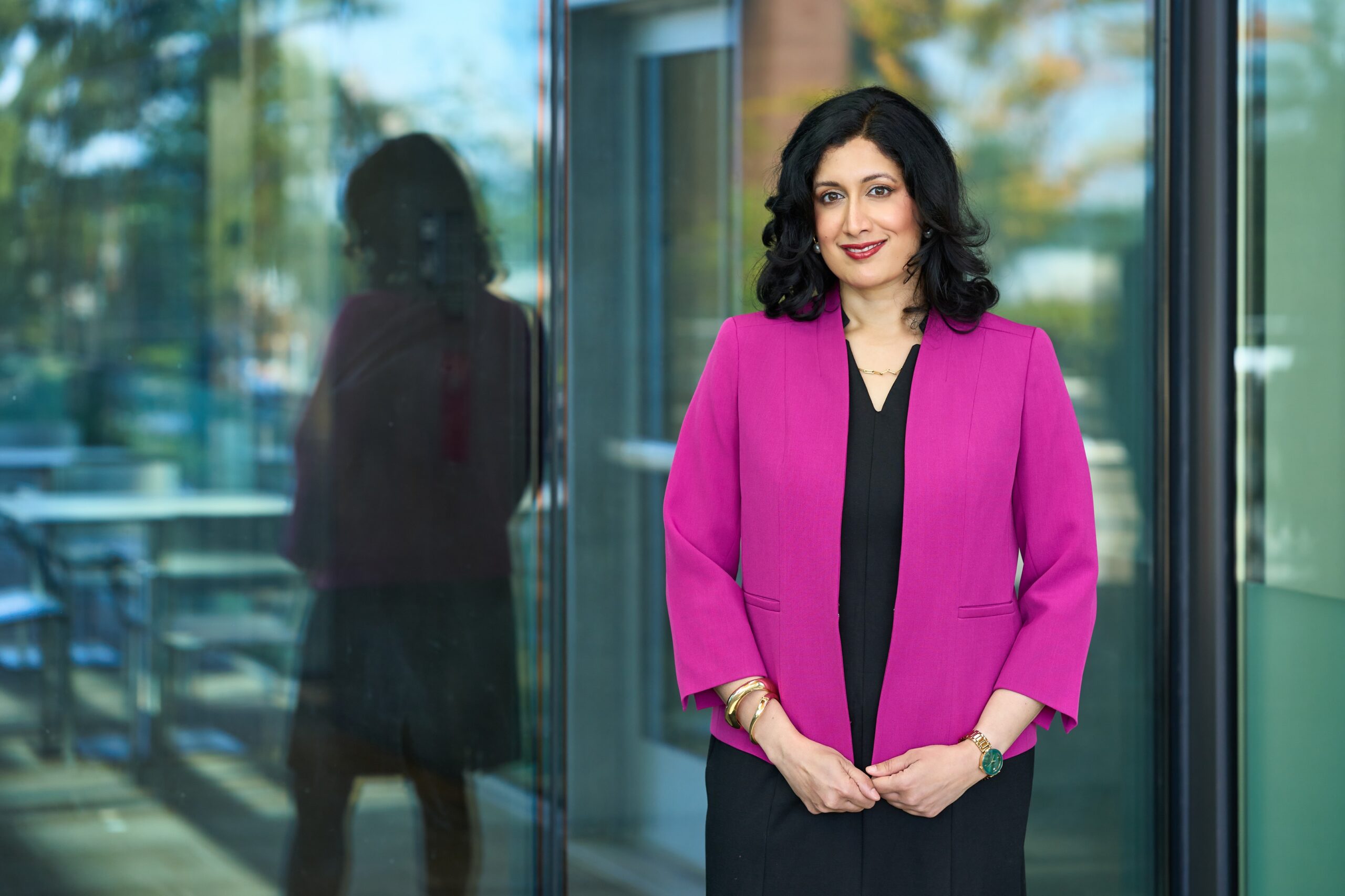
Uttara Ananthakrishnan studies how digital platforms are designed to capture attention—and what happens when user engagement comes at the expense of well-being.
More than a swap between platforms
The most intuitive assumption about TikTok is that people are simply trading one screen activity for another. More TikTok, less Instagram. Net effect: a wash.
That assumption, the research shows, is wrong.
Using granular smartphone data from nearly 7,000 TikTok adopters in the U.S., Ananthakrishnan and Agarwal tracked every app opened, every session duration, and every period of screen-off time, measured to the millisecond, from before and after users downloaded TikTok. Their analysis confirmed that yes, TikTok does displace other apps. Social media use dropped. Gaming dropped. But the time that came back from those reductions was vastly outpaced by what TikTok added.
For the heaviest users, those spending more than 30 minutes a day on the platform and comprising roughly the top 10% of adopters, overall screen time increased by an average of 221 minutes per week. Every minute they cut from Facebook or games, TikTok more than made up for it.
“What surprised me was the nature of the engagement,” Ananthakrishnan says. “If you’re spending time on TikTok, it’s not just displacing other stuff. You are genuinely spending more total time on your phone.”
The midnight problem
When the researchers broke screen time down by hour of day, the pattern was unmistakable. TikTok use spiked sharply between 9 p.m. and 1 a.m., precisely when there are few external forces to pull someone away. No colleague pinging them. No obligation on the horizon. No one at the door.
“It’s almost like it’s absorbing you at a time when there is less likelihood of something else happening to snap you away from the rabbit hole,” Ananthakrishnan says. “That’s the thing about nighttime. The external stopping cues just aren’t there.”
For heavy users, TikTok was quietly cutting into sleep. Bedtime shifted by an average of 84 minutes per week, about 12 minutes per night. Wake time shifted later too, but not enough to compensate: The net reduction was about 35 minutes per week.
Of course, the researchers didn’t know for sure when people were asleep. They used smartphone screen-off time as a proxy, identifying each user’s longest uninterrupted screen-off period each day and treating that as their primary sleep window. It’s an imperfect measure, but in some ways a more honest one than the alternatives. Sleep labs and wearables can change the very behavior they’re trying to capture. Self-reported sleep diaries are vulnerable to memory and guilt.
The measure held up well under scrutiny. Bedtimes shifted on weekends, dropped on election night 2020, and moved with daylight saving time, giving the researchers confidence that they were tracking something real.
“If you’re spending time on TikTok, it’s not just displacing other stuff. You are genuinely spending more total time on your phone.”—Uttara Ananthakrishnan
A different kind of engagement
For heavy users, the number of daily phone pick-ups actually decreases after TikTok adoption. That might sound like a good thing, but it reflects something else. TikTok replaces the quick, notification-driven “check” of traditional social media with something longer and harder to escape.
“Traditional social media has a notification-based system,” Ananthakrishnan explains. “You check something, you see who liked your post, and then you put it down. If you’re on TikTok, it’s just that idea that you can stop anytime. It’s just one more video. And you’re in your bed. And it’s so hyper-personalized that it sucks you in even more.”
The platform’s design, combining short videos, autoplay, infinite scroll, and an algorithm tuned to individual viewing patterns, works as an integrated system. No single feature is responsible; the combination eliminates natural stopping points in a way no prior platform quite managed. The study compared TikTok adoption with that of other platforms and found this pattern distinctive. Heavy Netflix adoption, for example, had no measurable effect on sleep. TikTok’s combination of net screen time increase and sleep reduction was unique.
“What TikTok has done is basically take the worst of every possible architecture and bundle it,” Ananthakrishnan says. “Together, they all work extremely efficiently.”
Ananthakrishnan says platforms could and should build in what she calls “friction-in-design”: hard stops that require users to actively choose to continue, rather than soft nudges they can scroll past. Pagination instead of infinite scroll. A prompt requiring users to actively load the next batch of videos. Defaulting autoplay off. Shifting to chronological rather than algorithmic feeds during late-night hours. Some of those features already exist inside TikTok — session timers, parental controls, screen limits — but none are on by default. And in that gap, its architecture wins.
The cost of over-engagement
When Ananthakrishnan teaches product management and digital transformation in Foster’s Master of Science in Information Systems (MSIS) program, she puts findings like these directly in front of the people who will one day build platforms like TikTok.
“There is no incentive right now to optimize on the wellness of your users,” she says. “But we have enough literature now to say that engagement can get very engaging, and it has to be thought out at the beginning of the design process.”
Her message to future product leaders: Don’t just ask how this could go right from a product design standpoint. Ask what happens two years from now if it goes wrong for users. Poor PR, regulatory fines, lawsuits, users who feel trapped and eventually leave — the costs of over-engagement land somewhere. Better to design for them early than manage the fallout later.
As regulatory frameworks like the EU’s Digital Services Act and the UK’s Online Safety Act increasingly require platforms to take responsibility for user well-being, the business case for that kind of thinking is getting stronger.
Ananthakrishnan is clear that TikTok has real value too. She learned phonics techniques from it that she used to teach her son to read. People learn how to negotiate a raise, find communities, and discover things they wouldn’t have found otherwise.
“It’s not like every person who touches TikTok becomes a zombie,” she says. “But 10% of a billion users is still a lot of people. And these are the more vulnerable ones.”
Uttara Ananthakrishnan is an Associate Professor of Information Systems and the Evert McCabe Endowed Fellow at the University of Washington Foster School of Business. Learn more about her research into addictive behaviors and online sports betting.