

The cobalt in your EV battery may have come from a mine in the Democratic Republic of Congo, where child labor abuses have been widely documented. Most consumers never make that connection — or the thousands of others linking everyday purchases to distant people, places, and decisions. Shi Chen is an expert in the field that connects it all: supply chain management.
Chen is the Marion B. Ingersoll Professor of Operations Management at the Foster School of Business. He has studied supply chains since he was an undergraduate, drawn to a field that requires thinking not just about individual organizations but about entire systems: the conflicts, incentives, and interdependencies that emerge when many companies and interests collide.
Why disruptions keep coming
Most people didn’t think much about supply chains until they couldn’t find toilet paper. The pandemic brought mass awareness to something supply chain managers had always known: These networks are vulnerable at every step. A customs delay, a new tariff, a factory fire, a port strike, a war. Chen argues that the pandemic’s greater significance lay in what it exposed about how those networks are built.
“A global supply chain connects everyone across different regions, across different countries — that was the idea of globalization,” he says. “But because of the many geopolitical tensions and issues, now they are talking about decoupling or de-risking from certain countries or certain regions. This is a fundamental conflict with how global supply chains are organized.”
For years, the prevailing logic was efficiency: find the lowest-cost source, the fastest route, the leanest inventory. Now, resilience matters just as much.
The question isn’t just how to run a supply chain cheaply. It’s how to keep it running when things go wrong. The list of things that can go wrong keeps growing: regional wars and their economic consequences (including volatile energy prices), weather events and disasters, the chip shortage that rippled out of pandemic-era factory closures.
The most common response Chen hears from business owners is the “China plus one” strategy: Rather than sourcing only from China, companies are identifying at least one other country as a backup so they’re not entirely dependent on a single source. It’s a reasonable instinct, but Chen says it often misses something important.
The problem, he explains, is that companies usually know the businesses they buy from. They know far less about where those businesses get their own materials. Move your direct supplier out of China, and you may still be exposed if that supplier’s supplier is Chinese.
“Even though you believe that your supply chain is safe, actually it’s not as safe as you can imagine,” Chen says. “If there is a heightened tension between China and the U.S., it could actually affect this second-tier or third-tier supplier, which turns out to be in China again.”
Cobalt is a timely example. Much of the world’s cobalt supply is concentrated in one place, creating both strategic and ethical risks.
The human cost hidden in supply chain
Most EV batteries depend on cobalt, and much of that cobalt comes from those mines in the Democratic Republic of Congo. The abuses documented there became the subject of a U.S. federal lawsuit against several major tech companies whose end products use cobalt. The court ultimately dismissed the case, finding that purchasing cobalt through a global supply chain did not amount to legal participation in the labor violations.
Chen researches sustainability and social responsibility alongside supply chain operations, and he notes that many companies that market their brand image as responsible or sustainable may tell a very different story when you trace their supply chains further back.
Another stark example is the 2013 Rana Plaza collapse in Bangladesh, in which 1,129 people lost their lives. In its aftermath, consumers learned that many international brands had been sourcing from facilities where labor conditions and safety were severely inadequate.
Chen argues that the court’s decision in the cobalt case didn’t settle the moral question for consumers.
“For everyone who cares about sustainability and social responsibility, they kind of feel that these big companies are responsible,” he says. “You cannot just turn your head and pretend nothing happened.”
But he doesn’t let consumers off the hook either.
“If we blame the companies, we as consumers should also be blamed.”
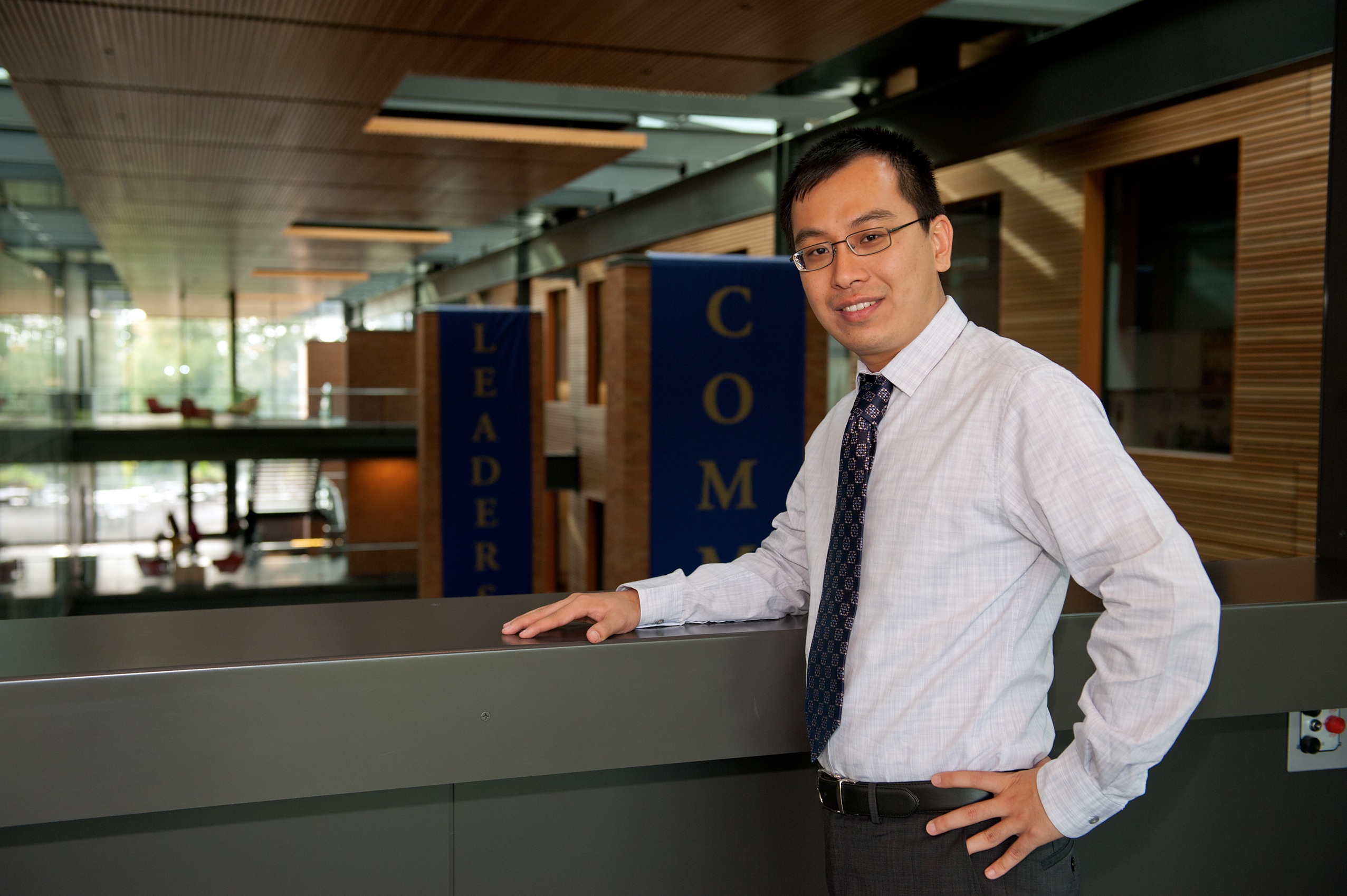
According to global supply chain expert Shi Chen, “Even when you think your supply chain is safe, it’s not as safe as you imagine.”
Sharing expertise in the foster classroom and beyond
Supply chain disruptions have always given Chen material for his classroom at the Foster School, but he says recent years have been particularly rich.
“I love bringing real-life examples to students,” he says. “Students like to see the connection between the headlines from the media coverage and what we learn in the classroom.”
Chen brings that same expertise to audiences beyond his students. He recently presented to a group of small and medium-sized businesses (SMEs) as part of the Washington State Department of Commerce’s International Trade Talk Series, a webinar series focused on export assistance. The questions from that audience reflected the pressures many Washington State manufacturers are facing right now: concern about tariffs, anxiety over volatile commodity prices, and uncertainty about how to plan when so many inputs keep shifting.
When asked about AI, Chen offered a view that runs counter to the current hype. Most small and midsize businesses aren’t being held back by technology, he says. They’re being held back by fundamentals.
“The gap is not about the technology itself,” he says. “The gap is they don’t have the structured thinking and the analytical capabilities.”
Before AI can help, businesses need clean data, clear workflows, and a basic understanding of where decisions break down. In Chen’s view, AI works best when it improves a well-defined process — not when it is asked to substitute for one that doesn’t exist yet.
How a career in supply chain shaped personal philosophy
Studying supply chains has changed how Chen moves through the world. He can’t walk through a Costco without wondering where the products came from, what their key components are, and where those materials began.
But the field has also shaped how he thinks about conflict, cooperation, and incentives. Supply chains function when self-interested parties can find arrangements that make the larger system work.
Chen believes the same principle applies beyond business.
“I deeply believe that we should always look for a win-win solution,” he says. “I don’t believe that international relationships or international trade relationships are a zero-sum game.”
Shi Chen is the Marion B. Ingersoll Professor of Operations Management at the University of Washington Foster School of Business.