

In today’s data-driven business landscape, the ability to extract meaningful insights from raw data isn’t just a technical skill; it’s a strategic imperative. At the heart of this capability lies SQL, the programming language that allows professionals to query, manipulate, and analyze data stored in databases. For students in Foster’s Master of Science in Business Analytics (MSBA) program, mastering SQL means learning to bridge the gap between data and decision-making.
Mingwen Yang, who teaches Data Management and SQL in the MSBA program, brings this connection to life in her classroom. Her approach goes beyond teaching syntax and queries to help students develop the analytical mindset and communication skills that transform data professionals into strategic business partners.
Through real-world datasets, hands-on projects, and a focus on translating technical results into business value, Yang prepares students to tackle the messy, complex data challenges they’ll encounter.
We spoke with Yang about her teaching philosophy, what makes Foster’s MSBA program distinctive, and the skills that help analytics professionals stand out in today’s competitive job landscape.
What MSBA course do you teach, and what do you love most about teaching the topic?
Mingwen Yang: I teach BUS AN 512: Data Management and SQL in the MSBA program. This course focuses on foundational database concepts and developing strong SQL skills to manage, query, and analyze real-world business data.
I love teaching this class because data is at the heart of modern business decision-making, and SQL is one of the most powerful and widely used tools in analytics. It is incredibly rewarding to see students gain confidence in turning raw data into meaningful insights that drive strategic business value.
How do you bring real-world business problems into the classroom?
Mingwen Yang: I incorporate in-class exercises and homework using real-world datasets from diverse business contexts, enabling students to practice SQL on authentic data and draw meaningful, actionable insights similar to what they will encounter in industry.
Students also work on hands-on projects that mirror real business scenarios—cleaning messy datasets, designing queries to uncover insights, and presenting data-driven recommendations. My goal is to help students connect technical skills to strategic thinking and see how data empowers better business outcomes.
What makes Foster’s approach to teaching business analytics unique?
Mingwen Yang: Foster’s approach to teaching business analytics is uniquely experiential and industry-connected, combining rigorous analytical training with real-world applications, hands-on projects, and close engagement with business partners in Seattle’s vibrant tech and innovation ecosystem.
The Foster MSBA curriculum emphasizes not only technical proficiency but also strategic thinking and communication skills that empower students to translate analytics into meaningful business impact.
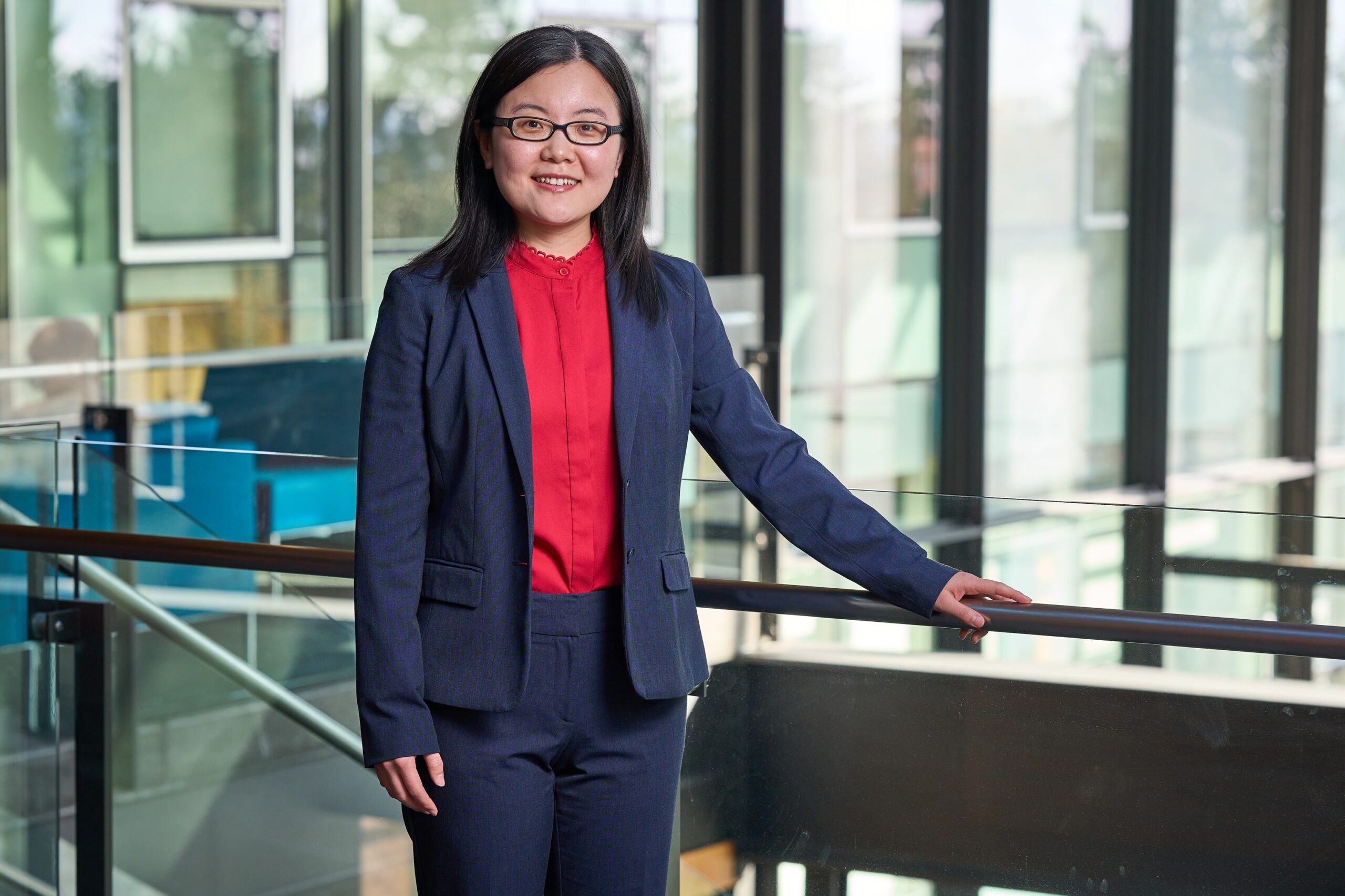
“A growth mindset coupled with intellectual curiosity sets students apart in the analytics field—those who consistently ask ‘why’ and ‘what does this mean for the business?’ go beyond technical execution to deliver strategic value.”—Mingwen Yang
What’s one skill or mindset that helps students stand out in the analytics field?
Mingwen Yang: A growth mindset coupled with intellectual curiosity sets students apart in the analytics field—those who consistently ask “why” and “what does this mean for the business?” go beyond technical execution to deliver strategic value. The ability to clearly communicate data insights is equally essential, turning analytical results into decisions and impact.
What do you enjoy most about working with MSBA students?
Mingwen Yang: I truly enjoy working with MSBA students because they come from diverse academic and professional backgrounds and bring unique perspectives to data-driven problem-solving. They are incredibly motivated and eager to learn, which creates an energetic and collaborative classroom environment. It is especially rewarding to watch them grow rapidly over the course and gain confidence in applying analytics to real business challenges.
What’s one thing your students might be surprised to learn about you, plus one thing you love about being part of the Foster MSBA?
Mingwen Yang: One thing students may be surprised to learn about me is that I deeply enjoy blending research and teaching in my career—I find just as much joy in discovering new ideas as in helping students grow. What I love most about the Foster community is its warm, collaborative, and supportive culture. It’s inspiring to be part of a community that values curiosity and impact.
What advice would you give to someone considering the MSBA program?
Mingwen Yang: I encourage prospective students to come with curiosity, an open mind, and a willingness to roll up their sleeves and learn by doing. The MSBA program is fast-paced and rigorous, but immensely rewarding—be ready to practice, experiment, and continuously build both technical and business skills.
Remember that analytics is not just about coding; it’s about asking the right questions, interpreting results thoughtfully, and communicating insights effectively. If you embrace the journey, you’ll leave with the tools and confidence to make a meaningful impact in any data-driven role.
Congratulations on YOUR TWO RECENT AWARDS. What career growth tips would you share for early-career professionals?
Mingwen Yang: Thank you very much. For early-career professionals, I believe growth comes from staying curious, taking initiative, and being open to feedback and learning opportunities. Don’t hesitate to step outside your comfort zone, whether that means exploring new areas, building new skills, or collaborating across disciplines. Most importantly, stay persistent and patient; meaningful progress takes time, but dedication and a positive mindset will carry you far. (Read more about Yang’s awards, the INFORMS Information Systems Society Gordon B. Davis Young Scholar Award and the Association for Information Systems Early Career Award.)
Learn more about the MSBA at the University of Washington Foster School of Business.