

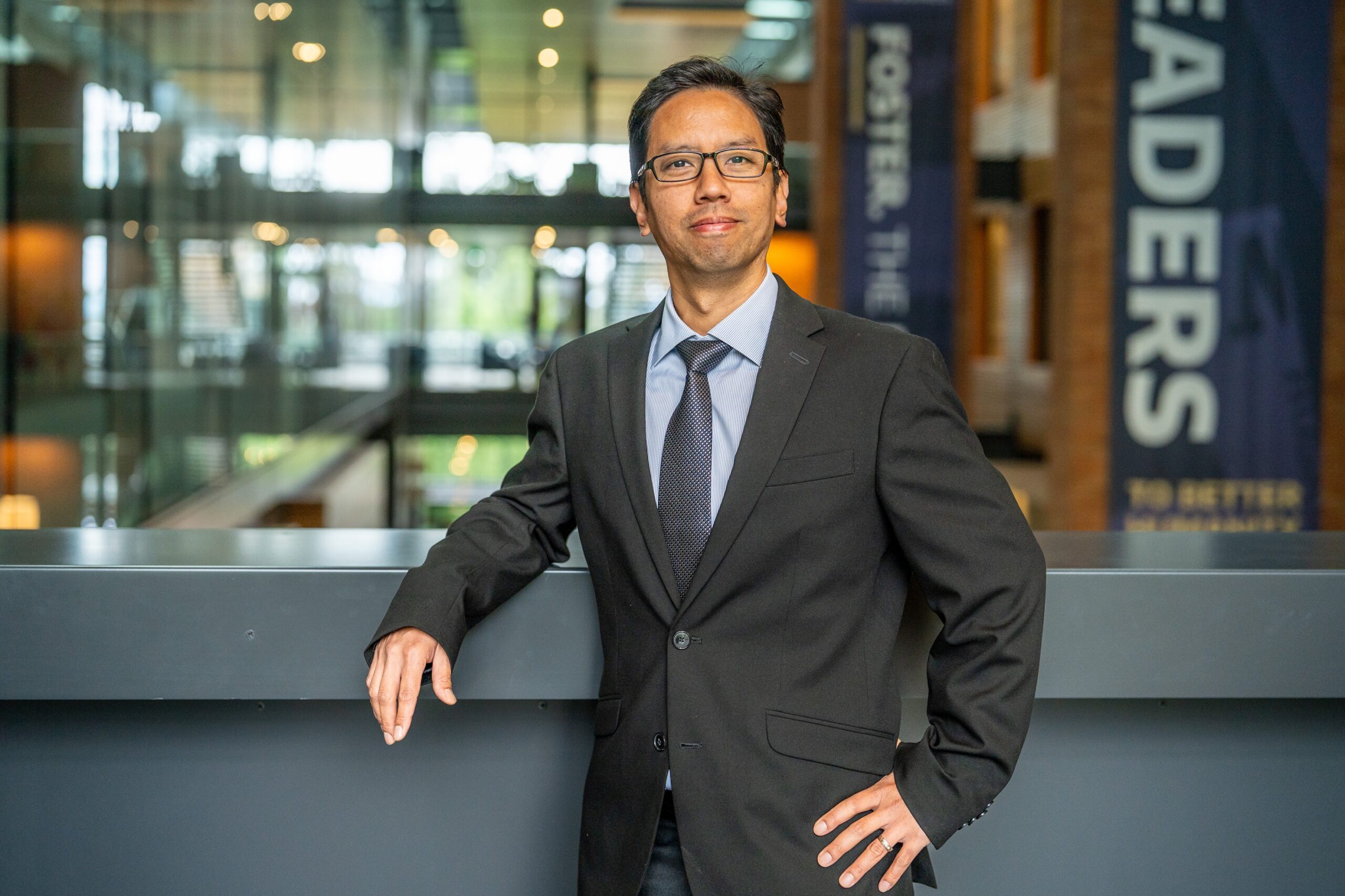
For MSBA students at the Foster School of Business, stepping into Issariya Sirichakwal’s Probability and Statistics course means stepping into the real world of analytics—where theory matters, fundamentals guide decisions, and uncertainty is something you learn to navigate with confidence.
“I love helping students connect theory to real-world business problems,” says Sirichakwal, Associate Teaching Professor of Operations Management. Sirichakwal teaches in Foster’s 12-month Master of Science in Business Analytics (MSBA) program.
“It’s exciting to see that moment when the concepts really click for MSBA students,” he shares. Watching students shift from memorizing techniques to thinking like working analysts motivates his teaching. “Once students grasp the fundamentals, they can stay agile and adapt in a fast-changing analytics world,” he adds. “It’s incredibly rewarding watching students grow into confident thinkers who make data-driven decisions and navigate uncertainty.”
Issariya Sirichakwal Teaches Analytics for the Real World
Sirichakwal often shares analyses from his past work as an analyst to show MSBA students what real projects look like—and why analytics is never a clean or perfectly linear process. “These examples highlight the trade-offs, limitations, and imperfections inherent in analytics,” he explains. “They demonstrate that data is rarely clean, models are never perfect, and decisions often require balancing competing priorities.”
But his lessons extend beyond strategic and technical execution. “Organizational dynamics, stakeholder alignment, and change management can significantly influence project outcomes,” he says. Showing students these practical realities helps them develop the critical thinking and adaptability employers expect.
Turning Fundamentals into Practical Analytics Skills
This real-world grounding mirrors the evolution of the program at Foster. “The MSBA evolves through continuous collaboration with industry partners and alumni to address skill gaps and incorporate emerging tools and practices,” Sirichakwal says. At the course level, that means giving students hands-on exposure to “the latest technologies, data, and tools they’ll actually use on the job.” He also encourages students to think not just about today’s analytics challenges, but about what’s ahead. “Staying ahead of a rapidly changing field is essential.”
“Technical skills are essential, but the ability to translate analytics into actionable business insights is what truly sets MSBA students apart.”—Issariya Sirichakwal
Preparing MSBA Students for Analytics Careers
Seattle’s environment amplifies the MSBA learning experience. Sirichakwal sees the city as an ideal place for students to immerse themselves in analytics. “Seattle sits at the heart of a thriving tech and innovation ecosystem,” he says. With Amazon, Microsoft, Salesforce, Costco, Boeing, PACCAR and multiple Fortune 500 companies, a thriving startup community, and industries ranging from healthcare to aerospace and from energy to wine, students have “amazing opportunities for networking and internships.” Seattle’s diversity and professional community also create an environment where students can thrive personally and professionally.
Inside his Foster classroom, the energy students bring keeps Sirichakwal inspired. “Students come in eager to learn, unafraid to ask questions, and willing to try new ideas,” he says. Their unique individual backgrounds and experiences enrich discussions and help them learn from one another as much as from the curriculum. “That mix of passion, adaptability, and professionalism creates a unique environment that makes teaching rewarding every single day.”
Advice for Prospective MSBA Students
Sirichakwal warmly encourages prospective MSBA students to talk with Foster alumni and current students to understand the culture, workload, and career outcomes. “Research whether the program truly aligns with your goals,” he says. “These conversations often reveal things you won’t find on a website and help ensure that the program supports your long-term aspirations.”
To help students succeed in the business analytics field, Sirichakwal emphasizes what truly defines an effective analyst: “Technical skills are essential, but the ability to translate analytics into actionable business insights is what truly sets students apart.” It’s a philosophy that prepares MSBA students for what employers actually expect: analysts who can do the work, explain their thinking, and deliver insights that drive real results.
The MSBA program at the Foster School of Business combines technical training in data science and machine learning with strategic business thinking. Learn more here.