

Most professors teach from their past experience. Ben Jones teaches from the present tense.
As he guides students through Data Visualization and Storytelling in the Foster School of Business Master of Science in Business Analytics (MSBA) program, Jones is simultaneously navigating those same challenges as co-founder of Data Literacy, a training and education company that helps organizations build their analytics capabilities. His team is using data and AI to grow a small business during one of the most turbulent periods in the field’s history.
“I have a unique opportunity to teach and train people on analytics topics in both my company and in my classroom,” Jones says. “I love being part of other people’s ‘light bulb moment,’ and I’m continually finding new and more effective ways to do that with both my clients and my students.”
His team at Data Literacy is using data and AI to navigate the same evolving landscape his students will enter, nurturing and growing their small business during what Jones describes as “a very dynamic time.”
“I get to discuss current situations and industry trends that are affecting us as much as [the students],” he says. “It really enhances the learning experience when you can directly relate to the material and apply it in real-time.”
It’s an unusual vantage point that brings an immediacy to his teaching. When Jones talks about the rapid evolution of analytics tools, he’s not speaking hypothetically. When he emphasizes adaptability as the critical skill for success, it’s because he’s watching the landscape shift beneath his own feet. And whether he’s in a Foster classroom or leading a Data Literacy training session, the goal remains the same: creating those breakthrough moments when data suddenly makes sense.
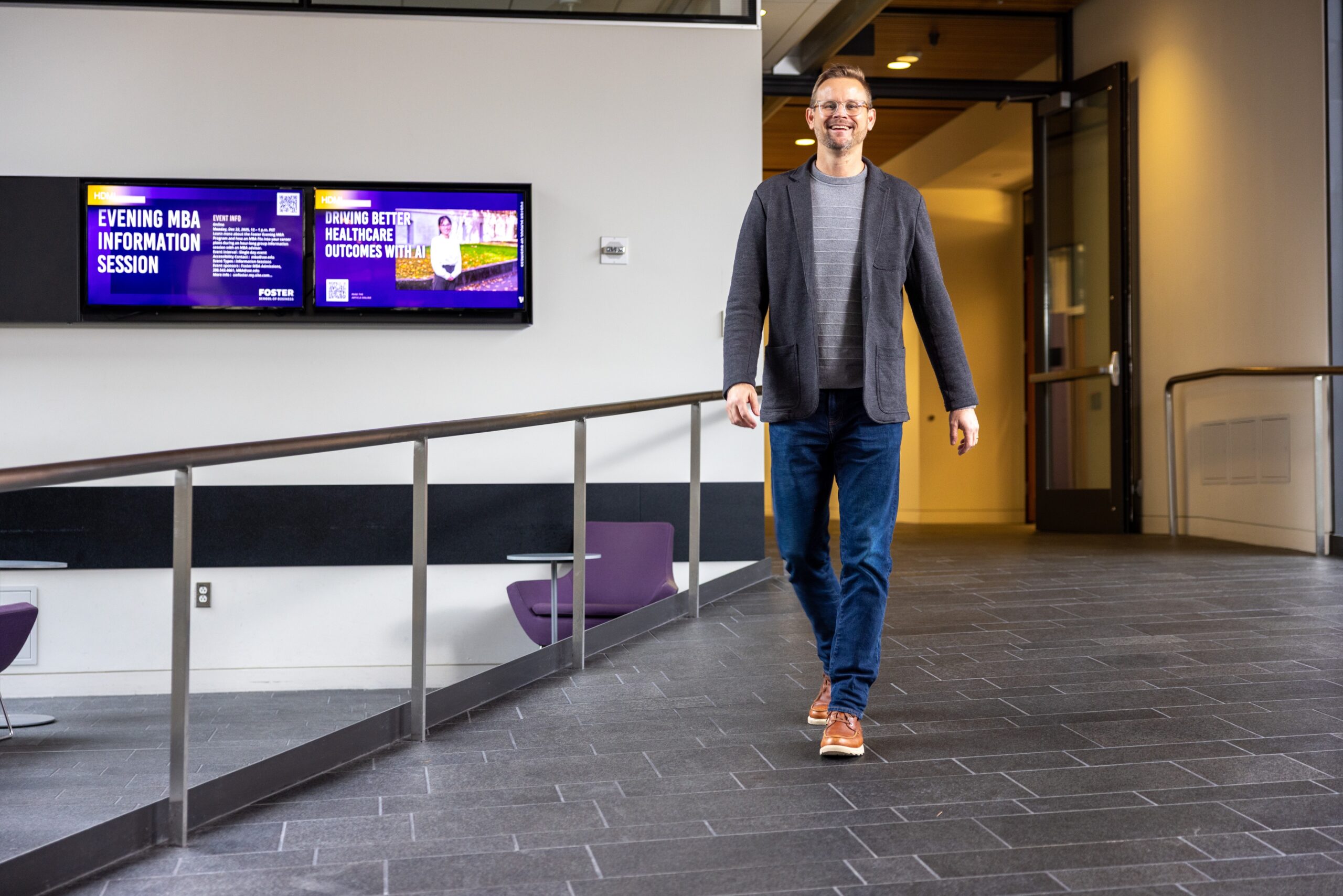
“I love being part of other people’s ‘light bulb moment,’ and I’m continually finding new and more effective ways to do that with both my clients and my students.”—Ben Jones
Learning analytics that bring data to life
Jones’s approach to Data Visualization and Storytelling centers on something that sets it apart from more technical analytics courses: the human element.
“What I love most about teaching these topics is that they allow us to bring data to life, and they involve the human element,” he says. “I get to see how the students turn raw, boring data sets into clear and compelling presentations, complete with charts, maps, and dashboards.”
The course sits at the intersection of technical skill and human communication, teaching students how data drives strategy while focusing on the transformation that happens when analysis becomes insight. Students learn to create the kinds of deliverables they’ll produce in their careers, where the ability to communicate complex findings clearly can determine whether insights lead to action or get filed away.
Jones also emphasizes adaptability as critical for students who are learning analytics.
“As the deep learning revolution continues to expand, the techniques and tools of the trade are evolving,” he observes. “Now is the time to learn as much as we can about the intersection of AI and business intelligence, and those who do will become indispensable leaders in our field in the coming years.”
When The data gets real
Jones brings a clear philosophy from his professional experience into the classroom: an insistence on authenticity. From his years leading the Tableau Public platform, where he worked with countless real-world datasets, he developed a teaching approach built on genuine problems.
“I got to work with so many rich and interesting data sets about the world we live in,” he recalls. “This experience made me a big believer in the power of real-world data sets for in-class examples and assignments. They’re so much more interesting than fake company data, or made-up scenarios.”
It’s a choice that mirrors the MSBA program’s broader philosophy and takes advantage of Seattle’s unique position as a hub for data-driven companies. The city offers both inspiration and opportunity for students willing to engage with it.
“Seattle is such a diverse and growing city,” Jones notes. “It’s the home of some of the world’s largest and most influential companies, like Amazon, Microsoft, Boeing, and Starbucks, and it also has a thriving startup scene. This environment is the perfect place to study business, in my opinion, because there are lots of great case studies all around us, and plenty of valuable networking opportunities for students who dive in.”

For Ben Jones, effective teaching starts with dialogue and real-world perspective. (Here, Jones chats with University of Washington student Kya Baker.)
Career advice that sticks
Those networking opportunities stand out to Jones as one of the most important things MSBA students should focus on while in the program.
“Make sure to find and join interesting tech meetups or software user groups in Seattle while you’re going through the University of Washington program,” he says. “The MSBA is an intense year of study, but it goes by fast. You want to make as many great connections in the analytics world as possible while you’re going through your studies.”
It’s advice born from understanding that technical proficiency alone won’t sustain a career in analytics. The field moves too quickly for anyone to go it alone. Success requires community, ongoing learning, and the kind of professional network that forms when people tackle common challenges together.
MSBA students who show up ready to engage find themselves in good company.
“The students in the MSBA program at UW Foster are top notch,” Jones says. “They tend to be incredibly bright and motivated, and their desire to learn and grow is infectious.”
The human side of a data-driven life
For all his focus on analytics and business challenges, Jones maintains an unexpected priority. His students discover early on that despite his experience and expertise, he loves nature even more than data.
“The Pacific Northwest provides such a wonderful opportunity to get out into the parks, forests and mountains all around us,” he reflects. “I believe doing so is critical to living a good life.”
It’s a philosophy that grounds his approach to both teaching and entrepreneurship. In a field that can consume every waking hour, Jones models the kind of balance that sustains long careers. That perspective, shaped by navigating the same challenges his students will soon face, gives them a view of analytics that few other programs can offer.
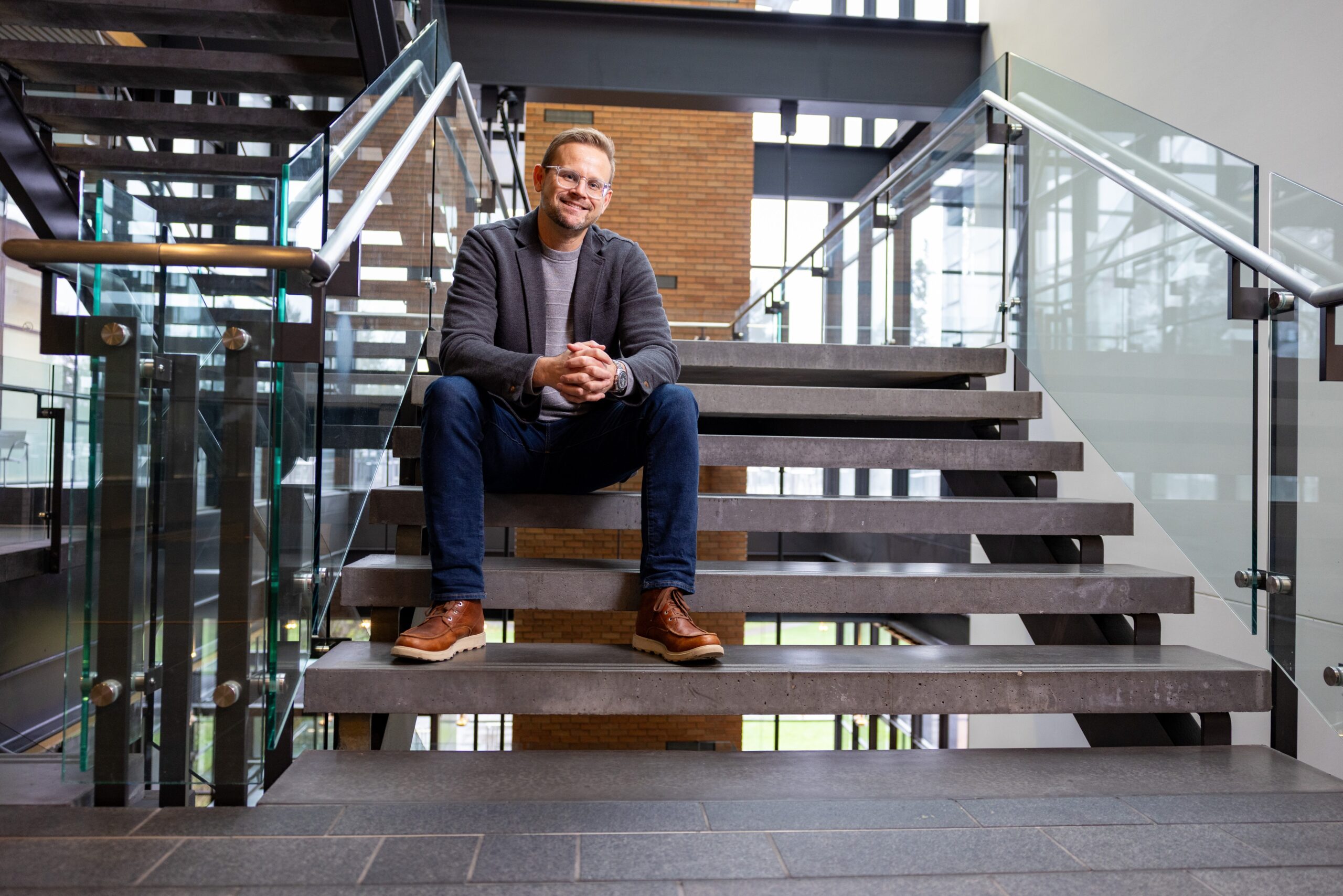
Ben Jones believes balance—including time away from screens—is essential to a career that lasts.
Learn more about the MSBA at the Foster School of Business, which combines technical training in data science and machine learning with strategic business thinking.