
Artificial Intelligence (AI) has moved from buzzword to reality, shaping conversations at home, decisions at work, and headlines around the world. At the Foster School of Business, AI is as much a part of the curriculum as it is part of the conversation.
In Foster’s Master of Science in Business Analytics (MSBA) program, students are learning how to navigate AI and lead this shift. Faculty members like Ben Jones, who teaches data visualization and storytelling, help students gain in-depth knowledge while building confidence in using AI in data analysis. Jones, whose recently published book, AI Literacy Fundamentals: Helping You Join the AI Conversation, offers a practical guide to navigating the future, is working to ensure the MSBA curriculum is at the forefront of the industry.
To get a glimpse into learning AI at Foster, we spoke with Jones about the curriculum and how he’s preparing students for future job opportunities.
How is AI incorporated into your data visualization and storytelling class?
Ben Jones: My goal in teaching MSBA students about data visualization and storytelling is to help them embrace the entire analytics workflow, from question formulation all the way to presentation. They need to understand how to transform, explore, and analyze data to discover and communicate key insights to others.
The reality is that, in today’s business climate, people are using AI tools at every step along the workflow, more and more every year. For that reason, I incorporate AI into my demos, in-class discussions, and homework assignments.
My goal is to teach students how to do the work themselves so they can evaluate AI outputs as subject-matter experts rather than novices. AI is far from perfect, but I feel I’d be neglecting my responsibility as a teacher to ignore its use in data visualization and storytelling.
What tools do students learn?
Ben Jones: Students in my class are tasked with using a range of tools:
- generative AI tools like ChatGPT and Gemini to plan and scope analytics work;
- Copilot tools to augment their use of visual analytics tools like Tableau, Power BI, and Databricks;
- code-generative tools like Cursor and Claude Code to write SQL queries and create interactive charts and graphs for the web.
In addition, the 2026 cohort has received an extra dose of exposure to AI through in-class exploration of brand-new, AI-first analytics platforms such as TextQL, Hex, and Airtable’s Superagent.
Not all of these tools will stand the test of time, but what they’re creating is compelling, and I feel it’s essential for my students to be aware of recent trends in the field.
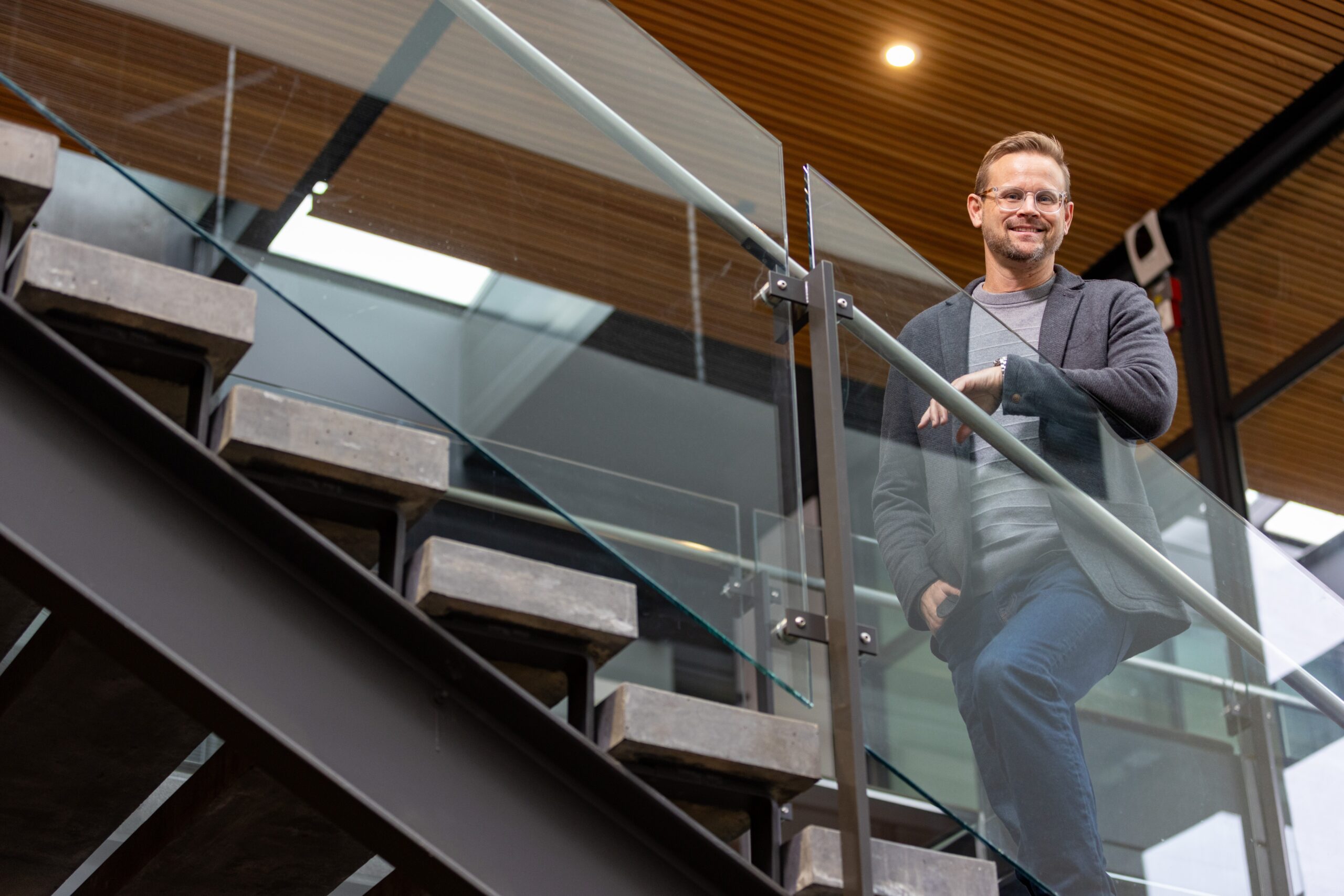
Ben Jones encourages students to build enough expertise to question and evaluate AI, not simply rely on it.
What skills do students gain?
Ben Jones: My students learn how to use AI tools to transform data sets, create charts and graphs, and plan presentations. But more than anything, MSBA students learn how to assess the quality of the outputs that AI generates for them, so that they can differentiate between the good and the bad.
If an MSBA student asked, “How will this course prepare me for an AI-enabled workplace?”—what would you tell them?
Ben Jones: I do my best to expose students to as many AI use-cases as we’re seeing at my company, Data Literacy, where we teach our clients how to leverage data and AI to achieve their goals.
The fact is that the workplace is changing at an incredibly rapid pace right now, so the most important attributes I try to instill are curiosity and the confidence to lean in and learn new technologies as they emerge. To the degree that I’m successful in imparting those skills, then I have prepared my students for an AI-enabled workplace.
Data Visualization and Storytelling in an AI World
In Jones’s MSBA classroom, AI isn’t a shortcut; it’s a tool that demands judgment. Students learn how to push beyond surface-level outputs: to test what AI produces, ask smarter questions, and query outcomes. They learn how to use it to strengthen their thinking, not replace it. With real-world applications built into the coursework, they graduate better prepared for the workforce.
Learn more about the MSBA at the Foster School of Business, which combines technical training in data science and machine learning with strategic business thinking.