

The room buzzed with conversation as current, incoming, and former Fritzky Fellows gathered on the University of Washington campus for the annual Fritzky Dinner. Around the room, Foster School of Business faculty, staff, and local business leaders reflected on a set of questions placed at the center of each table.
- Think of a leader who has positively influenced you. What stood out about them?
- How do we prepare leaders to thrive in a world characterized by extreme change?
- As we adopt artificial intelligence, what qualities become even more important?
Small groups exchanged stories and ideas before sharing their reflections with the larger room. Current Fellows, who are also Full-Time MBA students, spoke candidly about their leadership journeys. Business leaders shared lessons learned. Throughout the evening, conversations returned to the underlying theme of character.
Character in a changing world
For Ally and Scott Svenson, founders of MOD Pizza and Seattle Coffee Company and the 2025-26 Fritzky Chairs, the discussion reflected many of the conversations they had had throughout their year in the Fritzky Leadership Fellows Program.
“We want to engage all of you in a conversation about the future we’re living into and how to best prepare leaders for what lies ahead,” Scott told attendees. “Use tonight as an opportunity to reflect on the intersection between AI and humanity.”
While artificial intelligence was a frequent topic of discussion during their time on campus, the Svensons found themselves increasingly interested in a related question: how do leaders remain grounded in the qualities that make them human?
“In a world where AI will plan and organize for us, the differentiator for future leaders will not be what they know but who they are,” Scott said. “That’s character.”
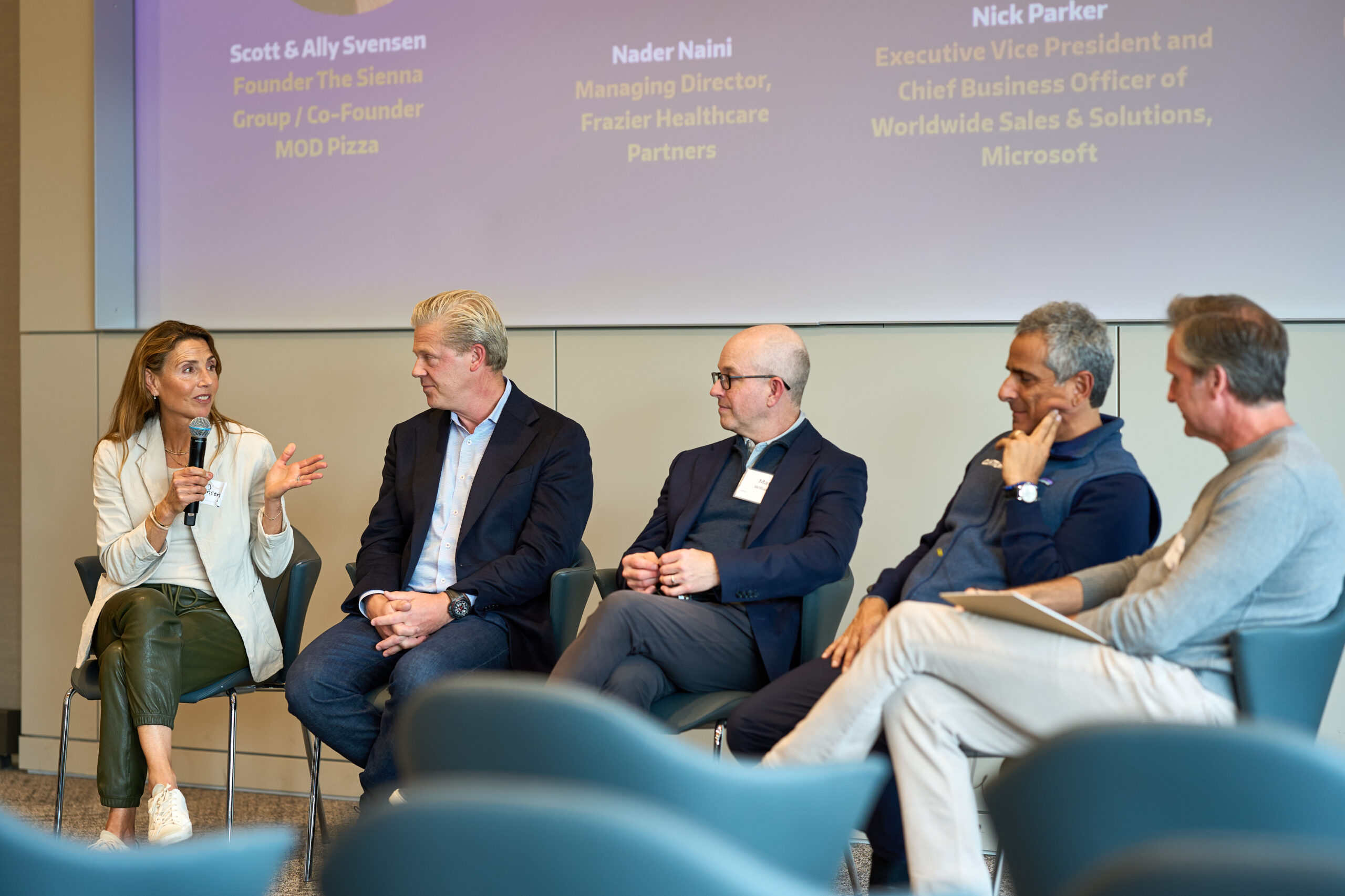
Ally Svenson (left) and Scott Svenson (right) hosting a panel discussion at the Foster School of Business AI Spark Day.
Peers developing peers
Those themes align closely with the mission of the Fritzky Leadership Fellows Program, one of Foster’s most distinctive leadership development experiences. For more than 15 years, the Fellowship has selected a small cohort of Full-Time MBA students to participate in a year-long leadership accelerator focused on coaching, mentorship, self-reflection, and peer-to-peer development.
“Ally and Scott Svenson bring so much value to the Fritzky Leadership Fellows Program,” said Foster School of Business Dean Frank Hodge. “They are successful entrepreneurs who know how to launch and grow purpose-driven companies that change lives and impact communities. Students have so much to learn from Ally and Scott as they consider how to better humanity through business in their own unique ways.”
The program’s philosophy is clear: peers develop peers.
That philosophy comes to life in a very practical way. Second-year MBA students spend the year coaching and mentoring first-year MBA students, helping them work through challenges, reflect on their effectiveness, and grow as leaders. In many ways, the experience creates exactly the kind of environment Ally describes, where mentoring happens not only from faculty to students, but between peers who are invested in one another’s success.
The impact of that work was evident throughout the Fritzky Dinner, where outgoing Fellows welcomed incoming cohorts and alumni returned to share their experiences, reinforcing the sense that leadership development does not happen alone.
For Ally, one of the most impressive aspects of the program is how intentionally that culture is cultivated.
“We’re big on mentoring,” she said. “There’s a lot of mentoring going on up and down, but also sideways. We were schooled by them about how intentional you can be about leadership development.”
When Dean Hodge asked the Svensons to serve as Fritzky Chairs, they were excited about the opportunity to spend more time on campus, engaging with students and faculty. Ally Svenson admits they were a little nervous, too.
“What could we possibly offer?” she recalled thinking. “The Fritzky Fellows is such a special program. There was such an impressive history with the Chairs before us. How could we build on that?”
Dean Hodge knew better. “From the minute I met Ally and Scott, I knew they were ideal candidates for the Fritzky Chair role. They have an unwavering belief that character is what leaders must cultivate, nurture, and grow in order for a company to reach its true potential, to really make a difference in a community. I am so proud of the work they have done.”
Eventually, they decided to look at it as a thrill for “two older entrepreneurs” (their words) to hang out with “cooler, future leaders.”
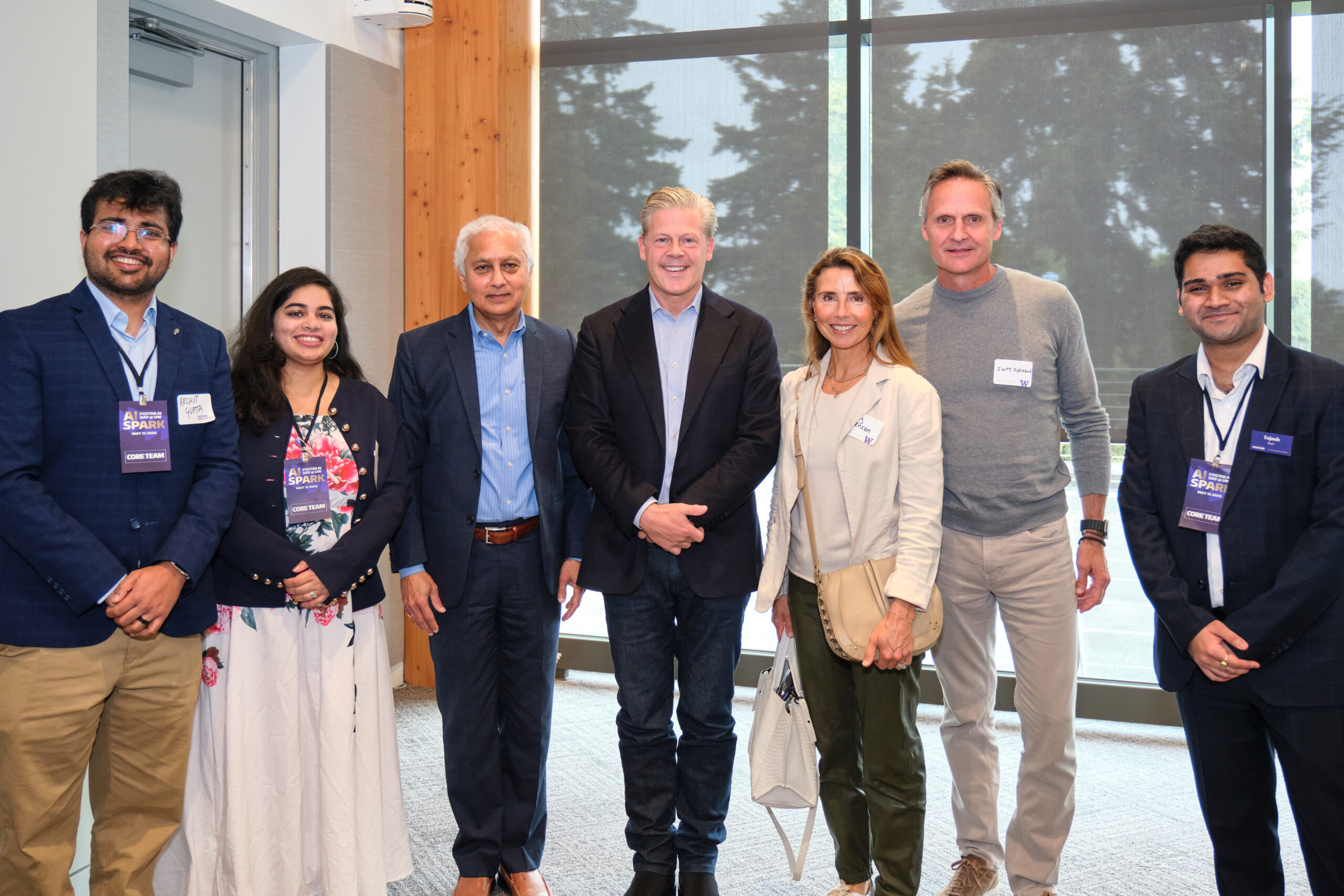
“We were schooled by them about how intentional you can be about leadership development.”—Ally Svenson
Meeting the fellows
Before meeting the MBA students, they reviewed their biographies, which included careers in technology, engineering, consulting, and entrepreneurship. Many Fellows had already established successful careers before returning to Foster to continue developing as leaders.
“They are such an accomplished and experienced group,” Scott said. “Despite that, they came back to school to take their impact to the next level.”
Then came their first lunch together.
“We were in awe,” Ally recalled. “The lunch ended, but we wanted to keep talking to everyone.”
As each Fellow introduced themselves, the Svensons found themselves increasingly impressed not only by what they had accomplished, but by the way they approached learning.
“They were interesting and interested,” Ally said. “Every time we walked away from those meetings, there was a real sense of their hunger and wanting to learn and improve.”
Scott saw the same qualities.
“They weren’t going through the motions,” he said. “They were there and excited. They had a curiosity that was engaging.”
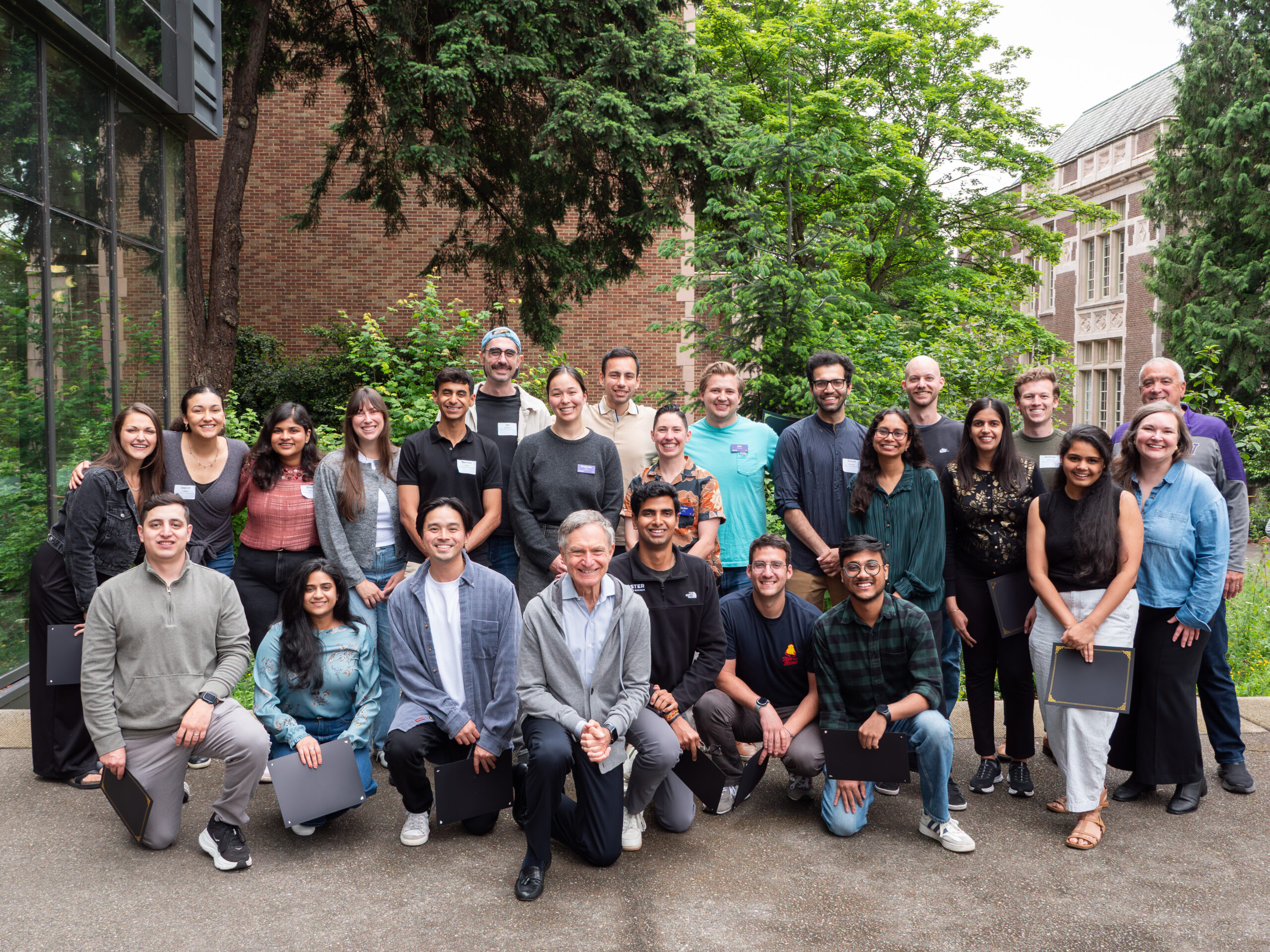
Ed Fritzky (center front) posing with the outgoing 2025 Fritzky Fellows and the incoming 2026 Fellows during the transition meeting.
The human intelligence piece
Those interactions helped shape the Svensons’ perspective on the conversations surrounding AI. When they first arrived on campus, they sensed excitement about emerging technologies, alongside significant uncertainty.
“The AI conversation was clearly a really big focus and a source of anxiety for students,” Ally said. “We’re not tech people, but we understand this is a big topic that’s bubbling up.”
Rather than focusing solely on the technology itself, the Svensons became interested in how people respond to change.
“The change brought about by AI is happening,” Ally said. “We want to learn from it, but what resonated more with us was the Human Intelligence piece.”
“Our biggest focus and challenge is the evolution of humanity, not the evolution of AI,” said Professor Bruce Avolio, the Mark Pigott Chair in Business Strategic Leadership and Executive Director of the Center for Leadership and Strategic Thinking.
These conversations resonated with work already underway within the Fellowship. Through coaching, reflection, and peer development, students are encouraged to strengthen their resilience, curiosity, empathy, and self-awareness.
Scott believes those qualities become even more important during periods of uncertainty.
“There’s so much we’re not in control of,” he said. “The best thing we can do is focus on what we can control. The way we react to the world and the events that impact us. That’s all about character, resilience, curiosity, and perseverance.”
While AI may feel like an unprecedented challenge for today’s students, Scott sees it as the latest example of the uncertainty every generation of leaders has faced. When he and Ally launched their first business, they didn’t have a roadmap or a business education to guide them.
“We jumped into the deep end and tried to figure it out as we went,” Scott said. “When we entered our entrepreneurial journey, we had the same sense of uncertainty.”
Avolio echoed that perspective during the Fritzky Dinner, reminding attendees that change has always been part of the human experience.
“For humanity, there have been so many things we’ve had to deal with,” he said. “This is just one of those things.”
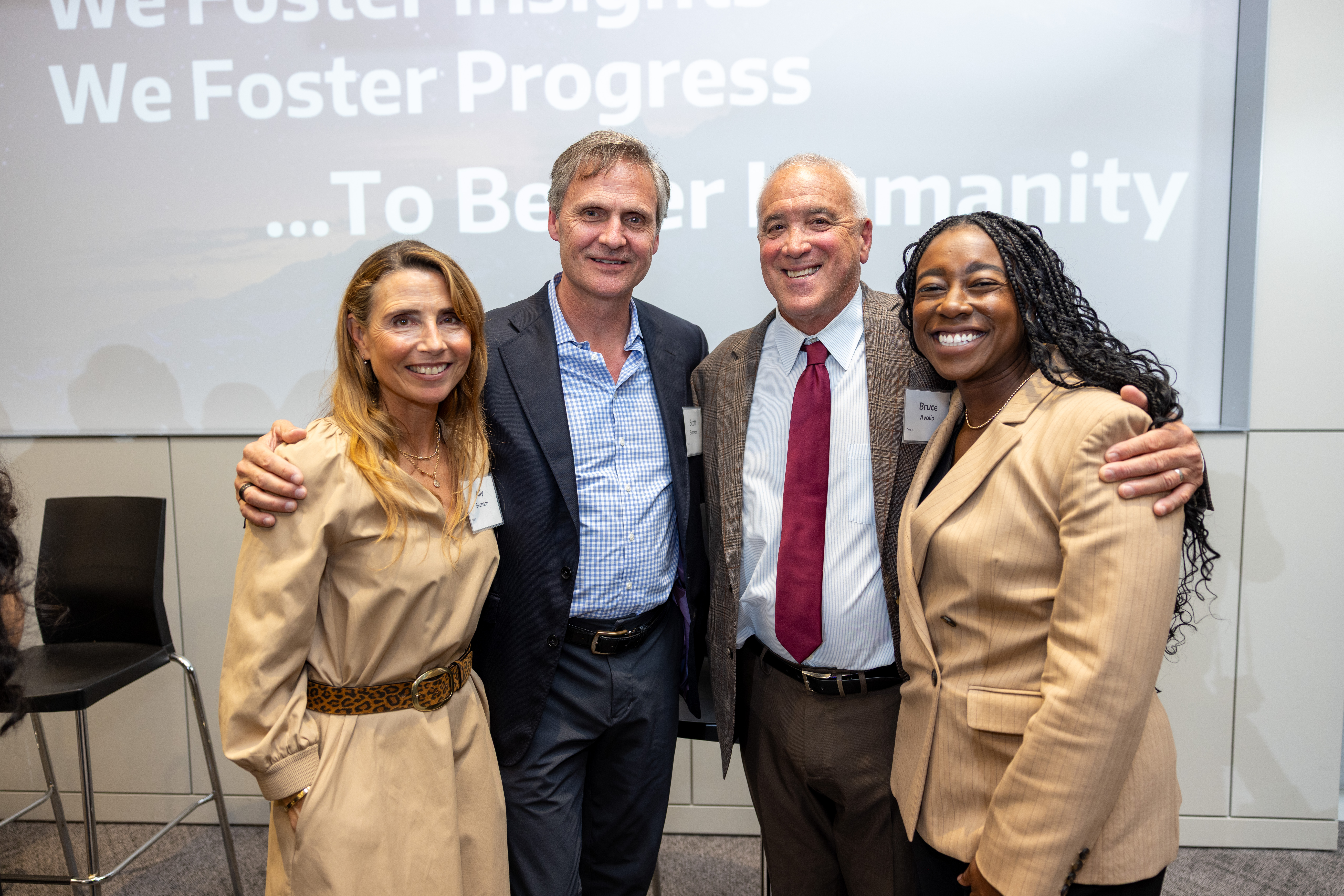
“Our biggest focus and challenge is the evolution of humanity, not the evolution of AI.”—Bruce Avolio. (2nd from right), alongside Ally Svenson, Scott Svenson, and Falesha Johnson (far right)
A reason for hope
Spending time with the MBA students gave the Svensons a chance to see those qualities in action.
“We came in anticipating that there would be a lot of fear,” Scott said. “But the overall energy was that there was so much to look forward to.”
That outlook became a central theme throughout the Fellowship year and culminated in the Fritzky dinner.
“A singular word comes to mind at the end of the year,” Ally said during her opening remarks. “Hope.”
That hope extends beyond the current Full-Time MBA class. Since its founding, the Fellowship has grown into a network of alumni who continue to carry the program’s leadership philosophy into their organizations and communities.
“We can put all the planning and structure we want into the program,” Avolio said. “But it’s the Fellows who inspire the next set of Fellows and create the next generation of leaders.”
Current Fellows benefit not only from the experiences of their own cohort but also from a growing community of Foster alumni who remain connected and invested in one another’s success.
“Now that the program has been around for over 15 years, you have this compounding effect where the network becomes larger,” Scott said. “Students are stepping into the world where they have all of these advocates.”
Speaking at the celebration, Kaeleen Drummey, Co-Director of the Fritzky Leadership Fellows program and Director of the Center for Leadership and Strategic Thinking, reflected on how that network continues to grow: “We now have over 230 Fellows alumni, many of whom continue to stay in touch with each other and connect with current Fellows, particularly as they begin their role as Fellows and again as they are planning their post-MBA careers. The growing community of Fellows is a powerful example of generative leadership, the value of peer-to-peer relationships, and exemplifies the Foster purpose to better humanity.”
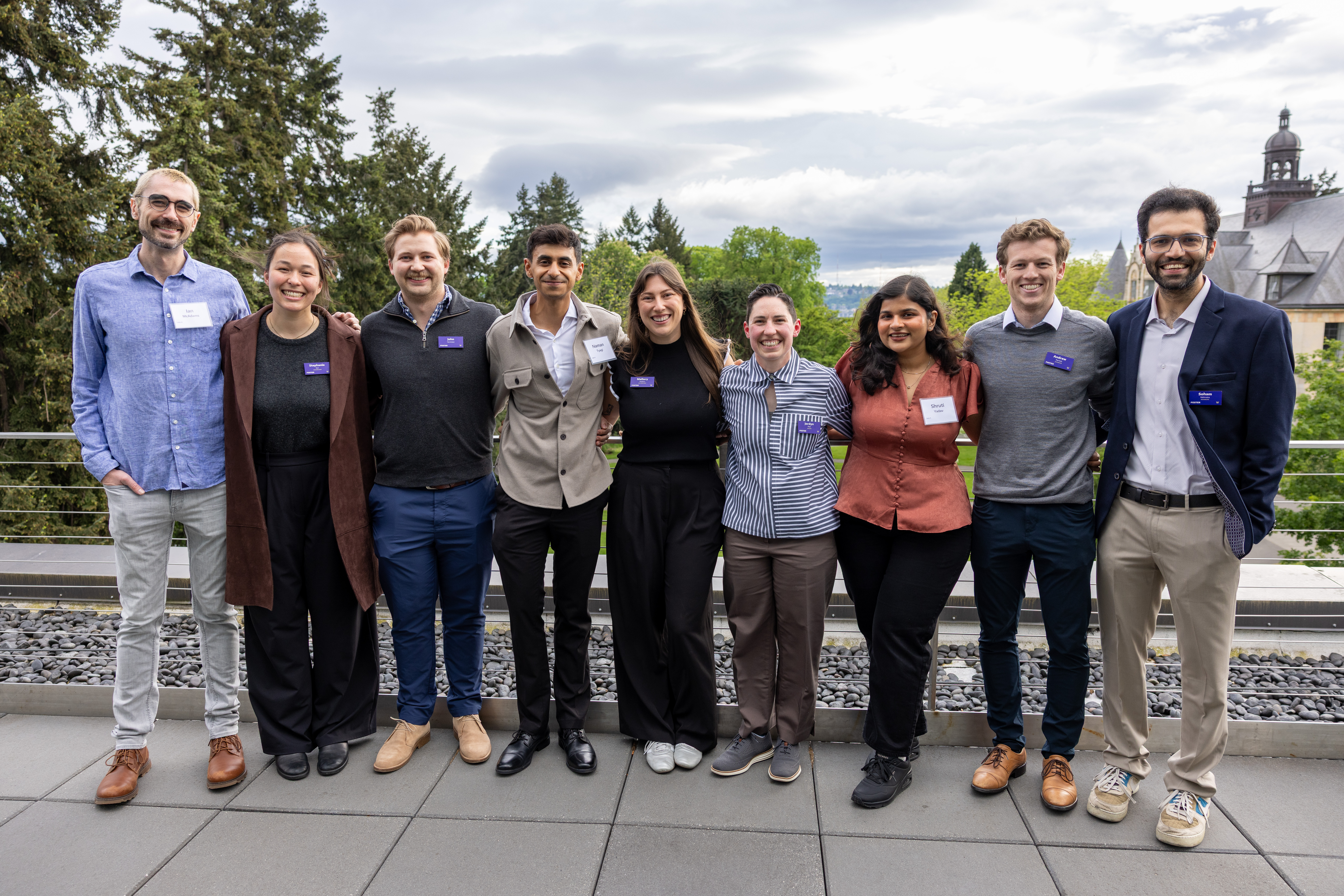
“Peer-to-peer mentorship improves the business community, and through the business community, it improves the world. Ripples that become waves.”—Scott Svenson
The lasting impact of the Fritzky Fellowship
“The ripple effect of that will have an effect on the business community and beyond,” Ally said. “You start to imagine those ripples, and they’ll be impactful in countless ways.”
Scott sees those ripples expanding outward with each new cohort.
“Peer-to-peer mentorship improves the business community, and through the business community, it improves the world,” he said. “Ripples that become waves.”
After a year spent learning alongside some of Foster’s most promising MBA student leaders, the Svensons remain optimistic about what those waves might become.
“We know the world is stressful and uncertain,” Ally said. “But you spend time with the Fellows and leave feeling like we’re all going to be okay.”
As the evening drew to a close, the conversation returned once again to leadership, growth, and the responsibility each generation has to support the next. Outgoing Fellows encouraged incoming cohorts to lean into the experience ahead, while faculty reflected on how much they continue to learn from the students themselves.
For Ally, the lesson she hopes Foster students carry forward is simple.
“Never lose touch with your capacity to care,” she said. “The Fellows care about their impact. They care about developing themselves and developing others. Nurturing your ability to care transcends everything else.”