

“A few days after I teach an accounting concept to Evening MBA students in class, they come back and share how they used that concept at work,” says Professor Suresh Nallareddy.
It’s one of the things Nallareddy, the Durwood L. Alkire Endowed Professor of Accounting at the University of Washington Foster School of Business, enjoys most about teaching in the Evening MBA program. Students bring their professional responsibilities into the classroom and connect what they learn to inform real-time decisions at work.
That approach has made Nallareddy a favorite among Foster MBA students, who have voted him Evening MBA Professor of the Year for three consecutive years. In his classroom, accounting transforms from financial statements and formulas into a tool for understanding how businesses operate and making smarter decisions.
Learning, with an insider’s perspective
Nallareddy often draws on examples from real business transactions to introduce accounting concepts. When he discusses a transaction involving a large public company, he often has students in class who work there and can offer an insider’s perspective on the outcome. Their experiences add context to the discussion and give classmates a chance to consider the same situation from a different perspective.
“Any accounting story or example I bring up, we have people from different backgrounds and experiences who have a unique perspective to contribute.”
That exchange is part of what Nallareddy enjoys about teaching working professionals, who come to class in the evenings. His Evening MBA students bring experience from startups, corporations, nonprofits, and government agencies, making classroom discussions a rich exchange of ideas between professor and students.
Each student brings a different understanding of how businesses and organizations operate, creating opportunities for them to learn from one another alongside the concepts Nallareddy teaches.
“It makes teaching a lot of fun because my job is to present the concepts and topics, and the students bring their unique perspectives, which lead to lively and dynamic classroom discussions,” he says.
For Nallareddy, those conversations are most productive when students feel comfortable contributing, even when they are still working through a concept. He wants the Evening MBA classroom to be a place where students can ask questions and hear perspectives they might not encounter in their own workplaces.
“When people walk into their companies and share their ideas, their colleagues and supervisors are there to judge what they share,” he says. “In the classroom, there is no judgment. I make sure the classroom environment is as open as possible.”
That openness gives students room to work through unfamiliar material without feeling they need to have all the answers at first. Classmates can offer feedback when someone misunderstands a concept or draws a conclusion from inaccurate information, helping them refine their thinking through discussion.
For students, that approach can make a lasting impression. One former student called Nallareddy “the best professor I have ever had,” crediting his passion for teaching with helping them learn “far more than I expected.”
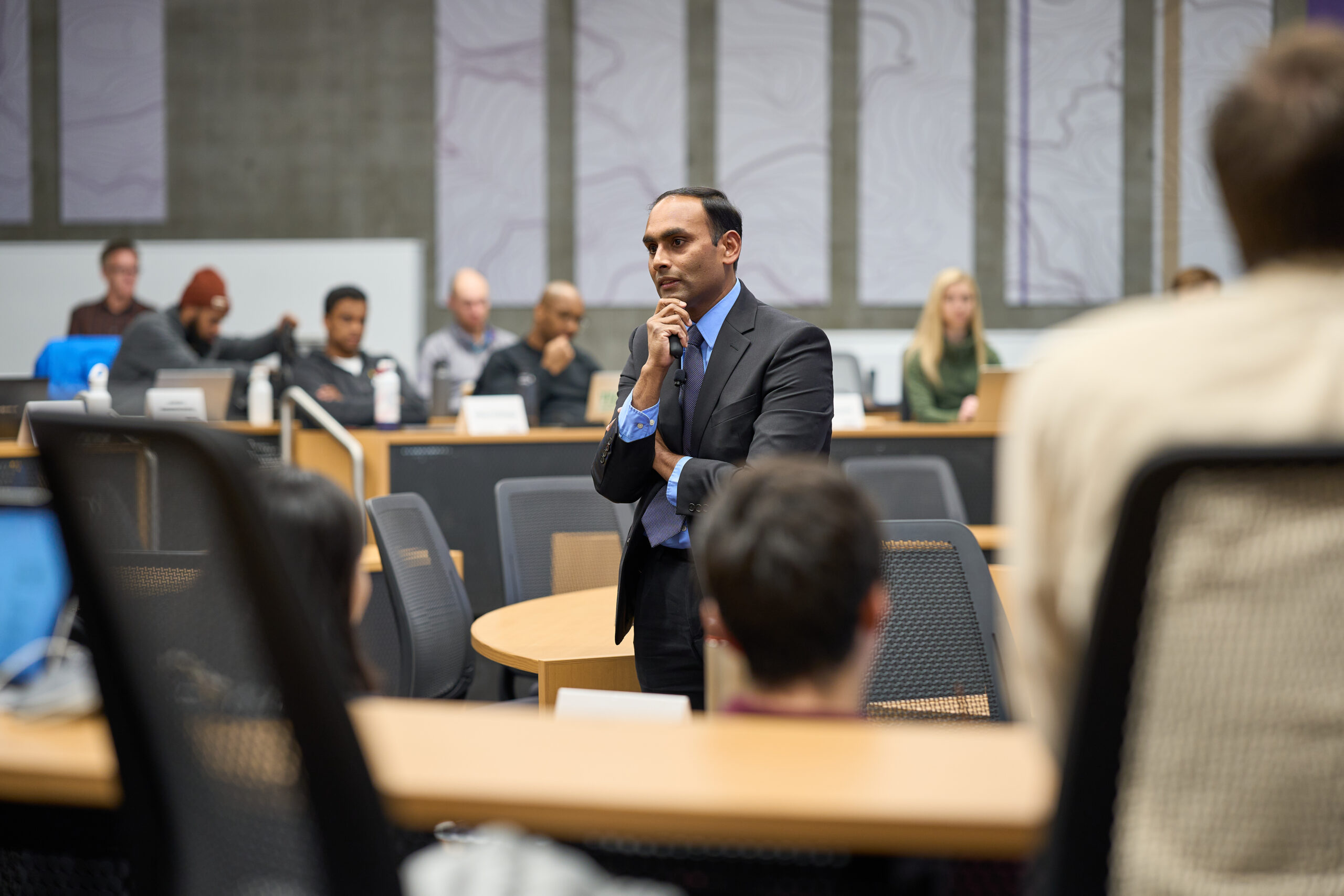
Evening MBA students bring perspectives from their own workplaces into Suresh Nallareddy’s accounting classroom, giving classmates a chance to learn from one another.
Understanding the language of business
An open classroom is especially important when students arrive with different levels of accounting experience. Some have studied the subject before, while others enter the Evening MBA program with little background in it. Many students leave having fallen in love with accounting, even if few arrive feeling that way. Nallareddy says his goal is to show them why it matters, whatever role they hope to pursue.
“Accounting is the language of business,” Nallareddy says. “Regardless of what you want to do in business, you’ll need to know how to speak the language. If you want to run a business or work in any role in a corporation, you need to know accounting.”
Like learning any language, accounting takes time and practice. Nallareddy helps students build a foundation in the language of assets, liabilities, and revenue, then emphasizes that reading financial statements is only part of the process.
“I remind students that they need to be able to understand and evaluate the quality of the accounting information,” he says. “It’s about building their confidence in their ability to make the most informed decisions.”
Nallareddy’s research examines how accounting information relates to the broader economy and influences asset prices. He brings those questions into the classroom, encouraging students to consider how investors use financial information to evaluate companies and anticipate stock performance, and why different measures of financial performance can tell different stories. Those discussions can lead to broader questions about why corporate profits do not always translate into higher employee compensation and what financial statements reveal about a company’s decisions and priorities.
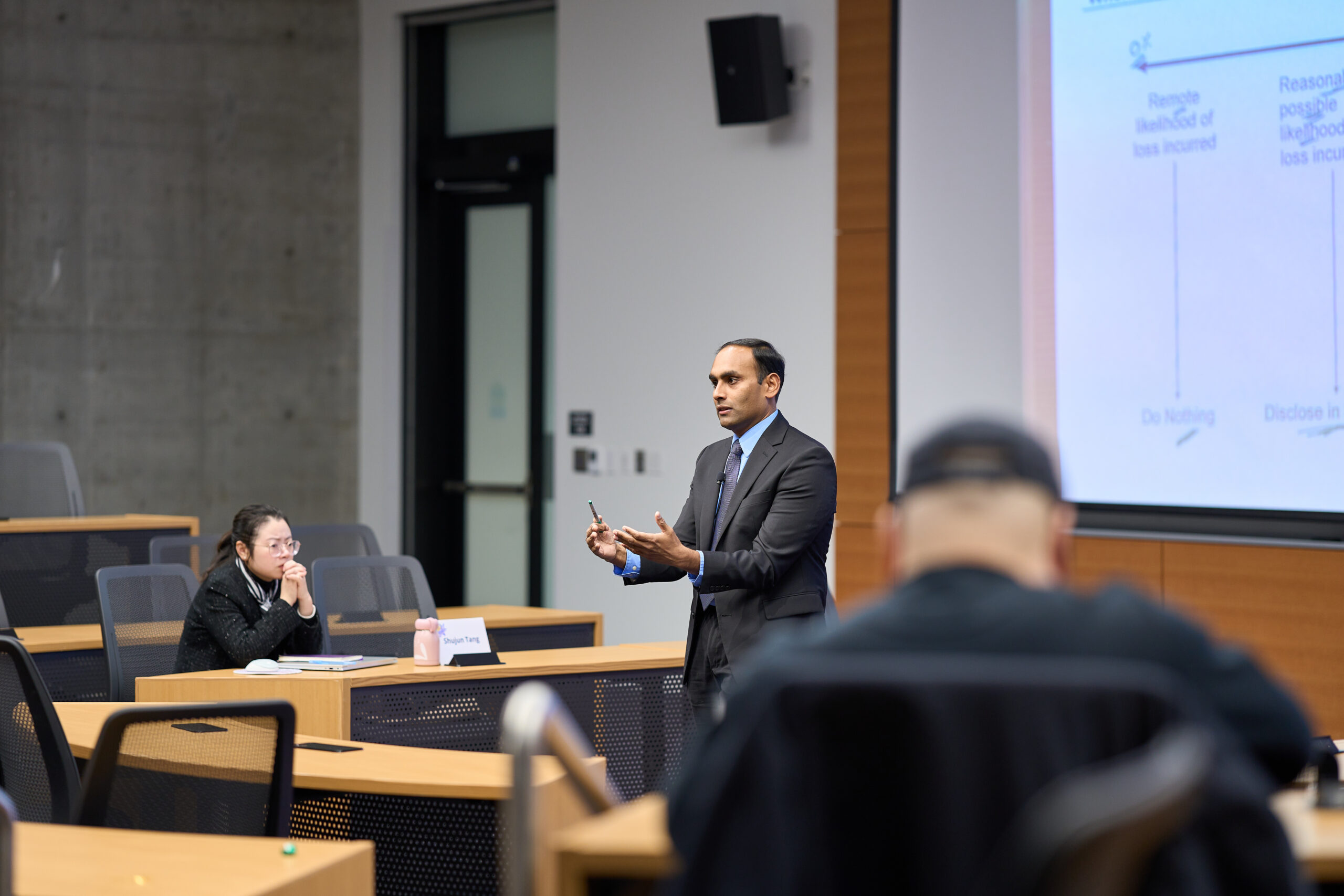
“Accounting is the language of business.” Nallareddy wants students to understand the financial information behind business decisions, regardless of the career path they choose.
Connecting the classroom to decision-making
For Nallareddy, the value of learning accounting lies in preparing students to recognize how the concepts they study can help them assess business situations, weigh decisions, and prepare for greater responsibility and leadership.
Years of teaching Evening MBAs means recognizing that they arrive with different professional goals and expectations. He adapts his approach to make the material meaningful to the people in the room.
“When I go to teach, I’m 100% there with the students. I want every second to be utilized,” Nallareddy says. “I look at the background of my students, and I pick examples and stories that would be most relevant and important to them and the work they’re doing.”
Students recognize that effort. One former student praised Nallareddy for “explaining complex concepts” while “challenging us with practical application,” calling the “engaging discussion” a highlight of the course.
For Nallareddy, that’s what makes teaching rewarding: helping students connect what they learn in class to the decisions they’ll make throughout their careers.
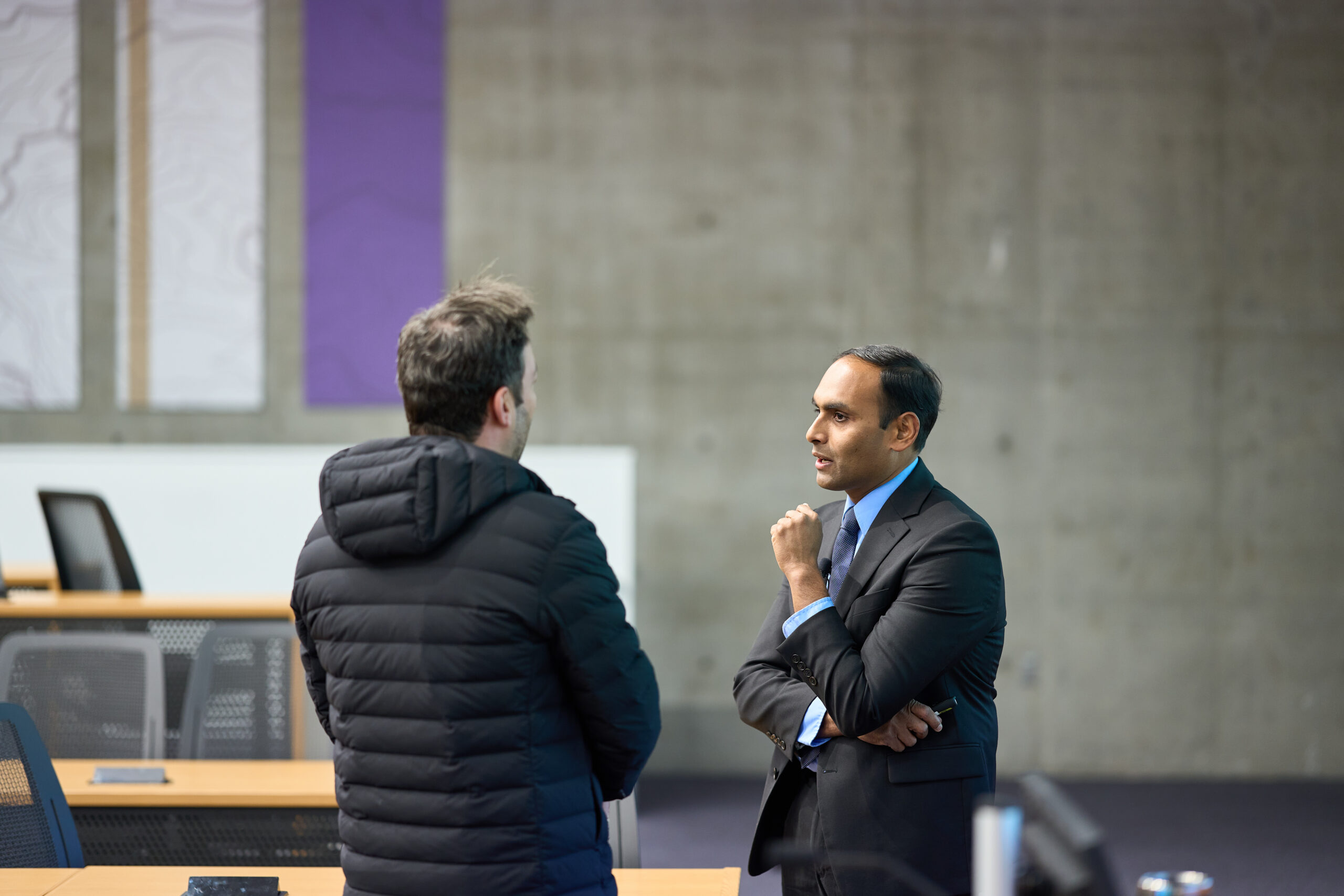
Nallareddy uses examples drawn from his students’ professional backgrounds to connect accounting concepts to the decisions they face at work.
A shared commitment to learning
Evening MBA students have plenty to balance between full-time jobs, rigorous coursework, and the occasional chance to switch off from both. Getting the most out of their MBA experience depends on what they bring to the classroom and how they apply what they learn.
Nallareddy wants students to carry that learning beyond the classroom. A stronger understanding of accounting can help professionals see how different parts of a business fit together and prepare them to take on leadership roles.
“If you want to progress in business, you have to understand business very well,” he says. “If you want to be well-rounded or transition from a technical role into a leadership role, you have to have a strong sense for what’s happening in business: how to interpret what’s happening, make better decisions, and understand what to prioritize.”
Learn more about the Evening MBA program at the Foster School of Business.