

When Charles M.C. Lee learned that Foster School of Business MBA students had selected him to receive the 2026 PACCAR Award for Excellence in Teaching, he was caught completely by surprise.
“It was really touching,” Lee recalls. “It feels great to know that the students wanted to say thank you.”
The honor provided a fitting conclusion to Lee’s time at the Foster School of Business. Established by PACCAR Inc. in 1998, the PACCAR Award is particularly meaningful because Foster MBA students select the winner, a professor they believe exemplifies excellence in teaching.
Lee retires from Foster with a formidable record as both an educator and scholar. Before joining Foster in 2022 as the Kermit O. Hanson Professor in Accounting, he taught at Stanford, Cornell, and the University of Michigan, and spent several years in investment management. His research at the intersection of accounting and finance has helped advance understanding of valuation, market behavior, and how investors process information.
His accolades include the American Accounting Association (AAA) Financial Accounting and Reporting Section Lifetime Achievement Award and, most recently, the AAA’s 2026 Accounting Horizons Best Paper Award.
Reflecting on Lee’s impactful academic career, Frank Hodge, Orin & Janet Smith Dean of the Foster School of Business, commented, “Professor Lee is the ideal academic in that his research is highly valued by both academics and practitioners, while he also excels at teaching complex topics in ways that students value and can apply to their everyday lives. He has given so much to the Foster School. We will be forever grateful.”
But when Lee reflects on Foster, he talks first about people: his students, his colleagues, and the community that brought him to Seattle in the first place. We took the opportunity to meet with him on the eve of his retirement. Here’s a snapshot of that conversation.
You had already built an extraordinary academic career before coming to Foster. Why the University of Washington?
I came to Foster after spending a sabbatical here in early 2019. I liked the scholarly community and the sense of camaraderie.
Foster is a very rare human community. People are candid with each other and interdependent by choice. The default culture is welcoming. On any given day, you’ll have someone from outside your department pop into your office and say, “Hey, come and join us; let’s have a coffee. Or, we’re discussing a specific hot topic, come weigh in with us.” The atmosphere is remarkable.
I was so struck by it during my sabbatical that my wife and I basically said, “I think we’re going to end up in Seattle.”
What have you most enjoyed about teaching Foster MBA students?
Their eagerness to learn.
I teach a quantitative finance course called Alphanomics, and most of my students aren’t going into the buy side of the finance industry. But they approach it with this analytical curiosity that’s really fun. It’s a joy to teach people who want to learn.
Foster MBA students have the quantitative skills to appreciate the material, and they also feel their world expands when they immerse themselves in studying the markets. I think that’s the best kind of student.
To me, so much of the joy of teaching is getting to know the students. One year, I tried to take every student out for at least one meal, and dined out with almost everyone. The first meals were on me, but after we got on a roll, we went Dutch.
You taught both Full-Time MBA and Evening MBA students at Foster. What impressed you about them?
The Foster Evening MBA students are unbelievable. Imagine working all day and then coming in at six o’clock on a Monday night and sitting through three and a half hours of very mathematical, quantitative material (which would be my class). How do they do it?
They’re amazing. They’re juggling so many things, and they still have this hunger to learn.
Full-time MBA students have greater access to one another, so groups form quickly and naturally. And they have a great social life. I was even a little jealous hearing about their “sailgates” on Lake Washington and day trips exploring the Puget Sound.
The one unifying factor is that all of these students are incredibly rewarding to teach.
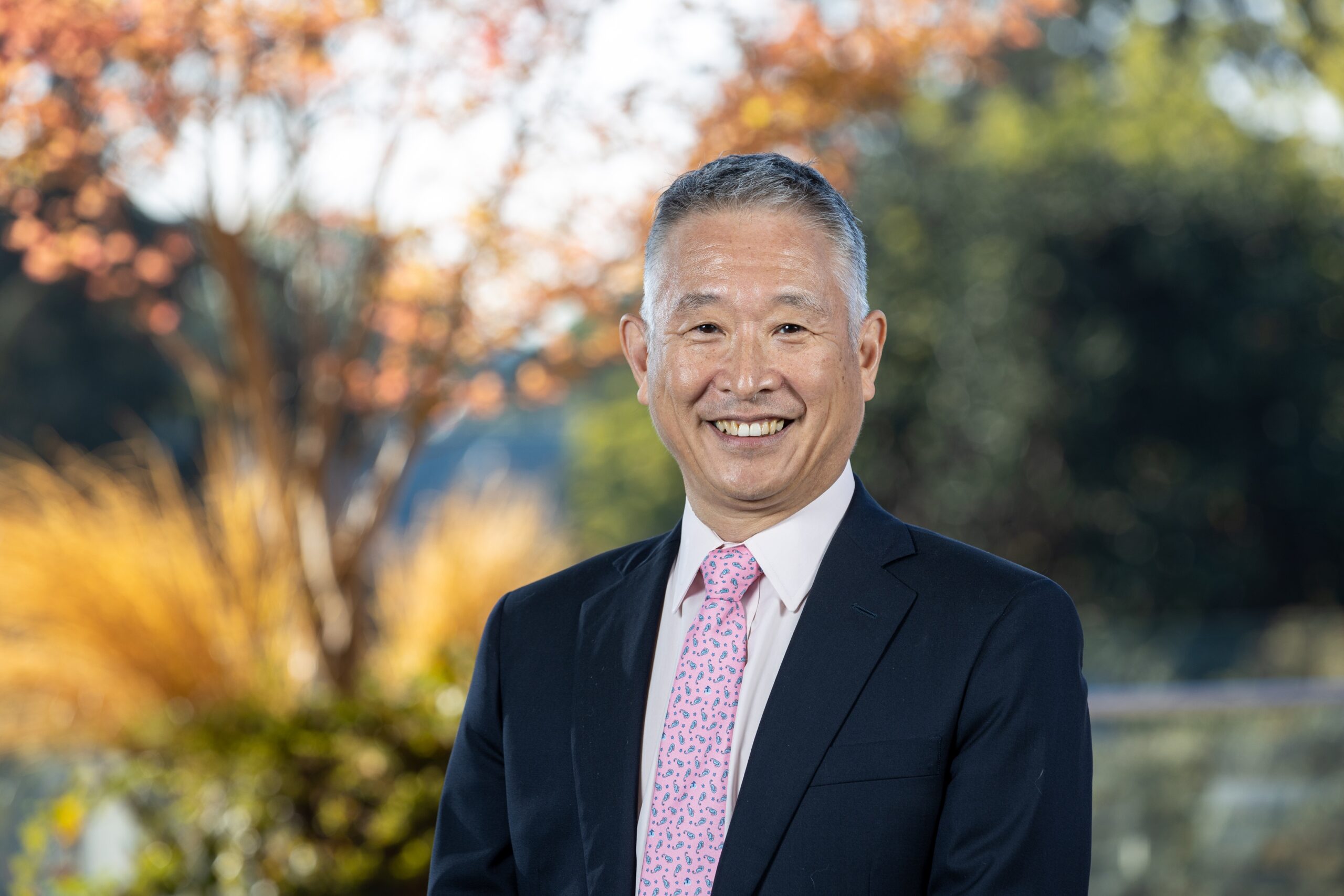
Charles M.C. Lee retires from the Foster School of Business after a career defined by curiosity, scholarship and a deep commitment to his students. His final year brought one more meaningful honor: the 2026 PACCAR Award for Excellence in Teaching, selected by Foster MBA students. “I’m grateful for them,” Lee says. “They’re a great group, and I will miss them.”
How do you approach teaching something as complex as investing?
I like to think of it like this: I’m here to teach students how to fish, not to give them a fish.
In my class, we use quantitative screens to identify stocks. [A quantitative screen in accounting uses numerical data, mathematical models, and preset financial filters to value financial assets and inform investment decisions.] Students often want to know exactly what is on my own screen. But I tell them that if I simply gave it to them, they would think that specific screen was the answer.
However, these screens change all the time. Students must learn why the pieces are there so they can build custom screens (likely better than mine).
And that’s exactly what they did. For their final projects, they built their own stock screens, and some of them were amazing. As a teacher, that’s the outcome you hope for. You want students to understand it well enough to do it themselves, even better than their teacher.
Your research has spanned accounting, finance and behavioral economics. What has kept you curious?
I do valuation—figuring out how much companies are worth. That wakes me up every morning.
But I also like figuring out why people make systematic mistakes repeatedly in stock market settings. My thesis advisor was Richard Thaler, and my area of interest is behavioral economics.
Accounting is interesting because it provides a useful laboratory for observing those mistakes: how people treat accounting information and whether they handle it appropriately. It allows you to answer many of the questions behavioral economists ask, but can’t answer without a detailed understanding of companies.
One thing we see is that investors tend to overweight salient but less informative signals. They’re attracted to stocks with a good story, a big name, and flashy marketing, rather than stocks with clear data that will be good investments in both the short and long term.
That’s essentially what I teach in Alphanomics: smart value investing. It’s not about finding cheap stocks or hot companies. It’s about finding good companies at good prices.
Why does understanding accounting matter beyond investing?
Accounting is the language of business. When you understand the language better, your world is bigger. You see more.
Whether you’re inside a company or outside looking at its financials, you see things that you wouldn’t otherwise see without core accounting knowledge. There is so much information you can get just by looking at a company’s financial statements if you’re financially literate and know what to look for.
After years of teaching and industry experience, what advice would you give to students beginning a Foster MBA?
Congratulations! You’ve picked a great place.
This is the time to explore. Your opportunity to look at things with new eyes is one of the most precious things about the MBA experience. Think a little deeper. Read a little broader. Explore a little wider.
I spent several years in industry managing money, and after a couple of years, my CEO asked how I was doing. I told him I missed being a professor because I missed thinking deeply. I didn’t have the opportunity to thoroughly explore and solve problems in industry. I just had to keep producing.
When you step out of that work conveyor belt and into an MBA environment, you have this amazing opportunity to stay still for a moment and look at the world.
Lastly, the Pacific Northwest is such a beautiful place. Go for walks. Feel the cold air of the Pacific Ocean. Explore places like the Seattle Arboretum.
An MBA program can be like drinking from a fire hose, but the Arboretum is right nearby when you want to pause. Go to the mountains. Go to the islands. Explore the campus.
Don’t just hang out at the business school.
What did receiving the PACCAR Award mean to you?
It was very touching. We work hard at teaching, so it’s just really cool that the students went out of their way to do this. It feels great to know they wanted to say thank you.
I’m grateful for them. They’re a great group, and I will miss them.