

When Uttara Ananthakrishnan received the 2025 ISS Gordon B. Davis Young Scholar Award, it was more than a professional milestone. It was a moment of validation for her research, her voice, and her focus on how technology shapes society.
As Assistant Professor of Information Systems at the University of Washington Foster School of Business, she studies the intersection of AI, big data, user-generated content, and the unintended consequences of technology. A former analyst at Google, she has long focused on how digital platforms are both shaped and challenged by the humans who use them.
“This work wasn’t considered popular until a few years ago,” she says. “There wasn’t as much focus on second-order effects of technology firms. Now we’re finally zooming out to consider the broader societal impacts. It’s incredibly meaningful to know that this kind of research matters.”
Ananthakrishnan recently returned to the Foster School of Business in Seattle after two years at Carnegie Mellon, bringing new energy, expertise, and perspective to the classroom.
Research at the intersection of AI, tech and humanity
Uttara Ananthakrishnan’s academic work spans everything from fake reviews to AI-generated content to data licensing. One of her recent collaborations involved analyzing thousands of user reviews for a Seattle-based fashion rental company. Though originally intended as a consumer tool, the project ended up improving quality control on the back end. It became a practical application with measurable impact.
“That didn’t become a paper, but they implemented it,” she says. “It made their processes more efficient, and that’s the kind of real-world effect I want my research to have.”
Lately, she’s been thinking about the flood of “AI slop” content on platforms like Pinterest and TikTok, and the implications for creativity, credibility, and digital clutter.
“People don’t want to be inspired by a machine,” she says. “They want to know another person actually did the thing: grew the plant, made the recipe, wore the outfit. That human connection still matters.” She shares the example of Pinterest users who tried to shop for a houseplant they saw in their feed, only to learn that it was AI generated and that type of plant doesn’t even exist.
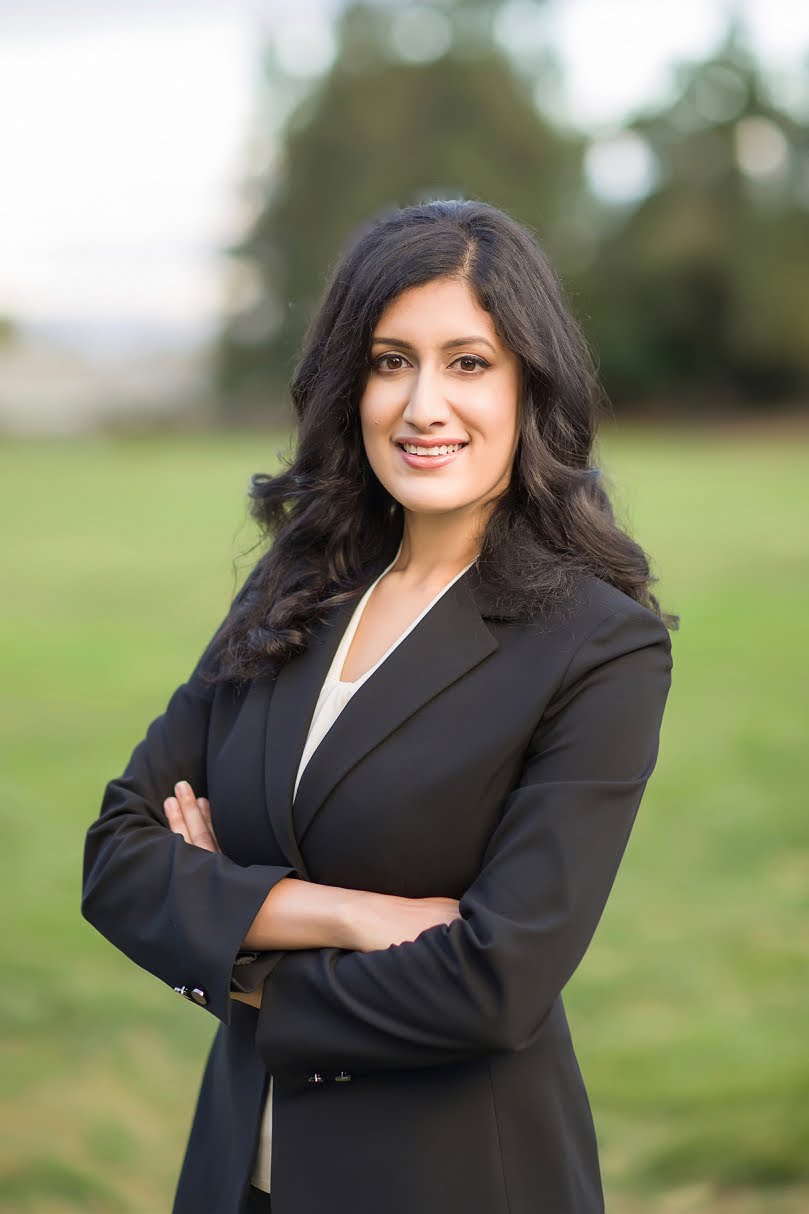
“People don’t want to be inspired by a machine. They want to know another person actually did the thing: grew the plant, made the recipe, wore the outfit. That human connection still matters.”—Uttara Ananthakrishnan
Other big questions she’s exploring include how platforms will govern user-generated content going forward, who owns the data that trains large language models (LLMs), and how businesses can differentiate themselves in a sea of algorithmically generated noise.
“I think we’re going to see the return of experts,” she says. “Brand, credibility, and authenticity will become even more important in helping people filter out low-quality content.”
Bringing AI research into the classroom at Foster
At Foster, Uttara Ananthakrishnan teaches Managing Digital Transformation, a course she’s led for more than a decade. Each class focuses on how technology is transforming a specific industry, from streaming services and hospitality to retail and healthcare.
“We talk about real-world challenges, like why grocery is so hard to digitize, or how Netflix caught the industry off guard,” she says. Students write strategy memos, analyze past inflection points, and practice presenting persuasive, forward-looking ideas.
She’s also developing a new elective focused on AI for managers. While many of Foster’s Information Systems and Operations Management (ISOM) faculty explore the technical side of AI, she focuses on strategy, leadership, and how to build businesses that use AI responsibly.
“Business students don’t need to build the LLM,” she says. “They need to know how to use it, how to make money with it, and how to lead with it.”
For Ananthakrishnan, teaching and research feed into each other. And returning to Foster—and Seattle’s tech ecosystem—creates more opportunities to connect with alumni, industry leaders, and rising students alike.
“The energy in Seattle and the University of Washington is unmatched,” she says. “Seattle is the perfect place to explore what comes next.”
Learn more about the Master of Science in Information Systems at the University of Washington Foster School of Business.
Editor’s Note: The ISS Gordon B. Davis Young Scholar Award is awarded by informs, the Institute for Operations Research and the Management Sciences. The award is named in honor of University of Minnesota professor, Gordon Davis, who was part of the founding fathers of the information systems discipline. It recognizes and honors young scholars who are on a path towards making outstanding intellectual contributions to the information systems discipline. Past University of Washington recipients include 2024 recipient Mingwen Yang, Foster School of Business Assistant Professor of Information Systems.