

Bad Bunny built one of the biggest music careers in the world without changing a word of his music for a mainstream American audience. For Esther Uduehi, that kind of growth without compromise is difficult and rare, and her newest research about diversity in marketing explains why.
“He pretty much only speaks in Spanish when addressing mainstream crowds, sticks with his brand of music, and doesn’t shy away from that,” says Uduehi, assistant professor of marketing and international business at the University of Washington’s Foster School of Business. “He’s turning on its head the idea of what diversity means.”
Her latest research paper, “When Diversity Backfires,” finds that when mainstream brands expand their marketing to reach new audiences, consumers tend to celebrate them for it. Uduehi and her co-authors found that when brands built for marginalized communities do the same, consumers often accuse them of selling out.
The paper, which was based on Uduehi’s PhD dissertation, was published in the Journal of Consumer Research in 2025 and co-authored by Americus Reed (Wharton School), Julian Saint Clair and Mitch Hamilton (Loyola Marymount University).
When going bigger means selling out
The pattern plays out vividly in two examples that Uduehi has been thinking about since 2017. That year, Shea Moisture, a hair care company founded to celebrate and serve women of African descent, released a campaign featuring a white woman’s hair journey. The backlash was severe. Consumers questioned whether the brand’s products would even still work for Black hair, and whether the company was abandoning the community that had built it. The campaign never went mainstream.
That same year, L’Oréal launched its own multicultural diversity campaign. Consumers praised it.
“They were both companies moving toward a more multicultural audience,” Uduehi says. “One was seen as being authentic. The other was seen as selling out.”
The difference is rooted in what a brand’s origins signal to consumers. When a brand focused on non-marginalized consumers diversifies its marketing, that reads as welcome growth. But when a brand built for a marginalized community does the same, its core consumers often read the shift as a change in priorities, even a signal that the brand is chasing profit at the expense of the people it was made for. Uduehi calls this the “sellout effect.” Her studies find that Black consumers in particular respond with significantly lower brand evaluations and less willingness to engage when a marginalized-focused brand makes this kind of pivot.
“I found it counterintuitive that diversity would backfire for the companies that are viewed as marginalized-focused or diverse — and how that word becomes a weapon used against their own interests,” Uduehi says. “It actually makes it more difficult for them to think about who they can be, how they can grow.”
She remembers, as a child, going to Walmart or Target and not being able to find hair care products made for her. Brands like Carol’s Daughter and Shea Moisture were built to fill exactly that gap, and watching them grow felt like progress.
But Uduehi’s research revealed a troubling barrier. The very qualities that made those brands meaningful to their communities, their founding mission, their values, their identity — also made it harder for them to grow. Trying to expand meant risking the trust of the consumers they were built to serve.
“What’s the incentive to create that kind of company,” she asks, “if you’re not incentivized to keep going?”
Brands that want to keep going, and growing, can’t lose sight of their origins. A founding mission to serve a marginalized community isn’t a marketing posture; it’s a promise. And when brands break that promise in pursuit of a broader audience, consumers notice. Sustainable growth can’t leave behind the communities that made these brands matter in the first place.
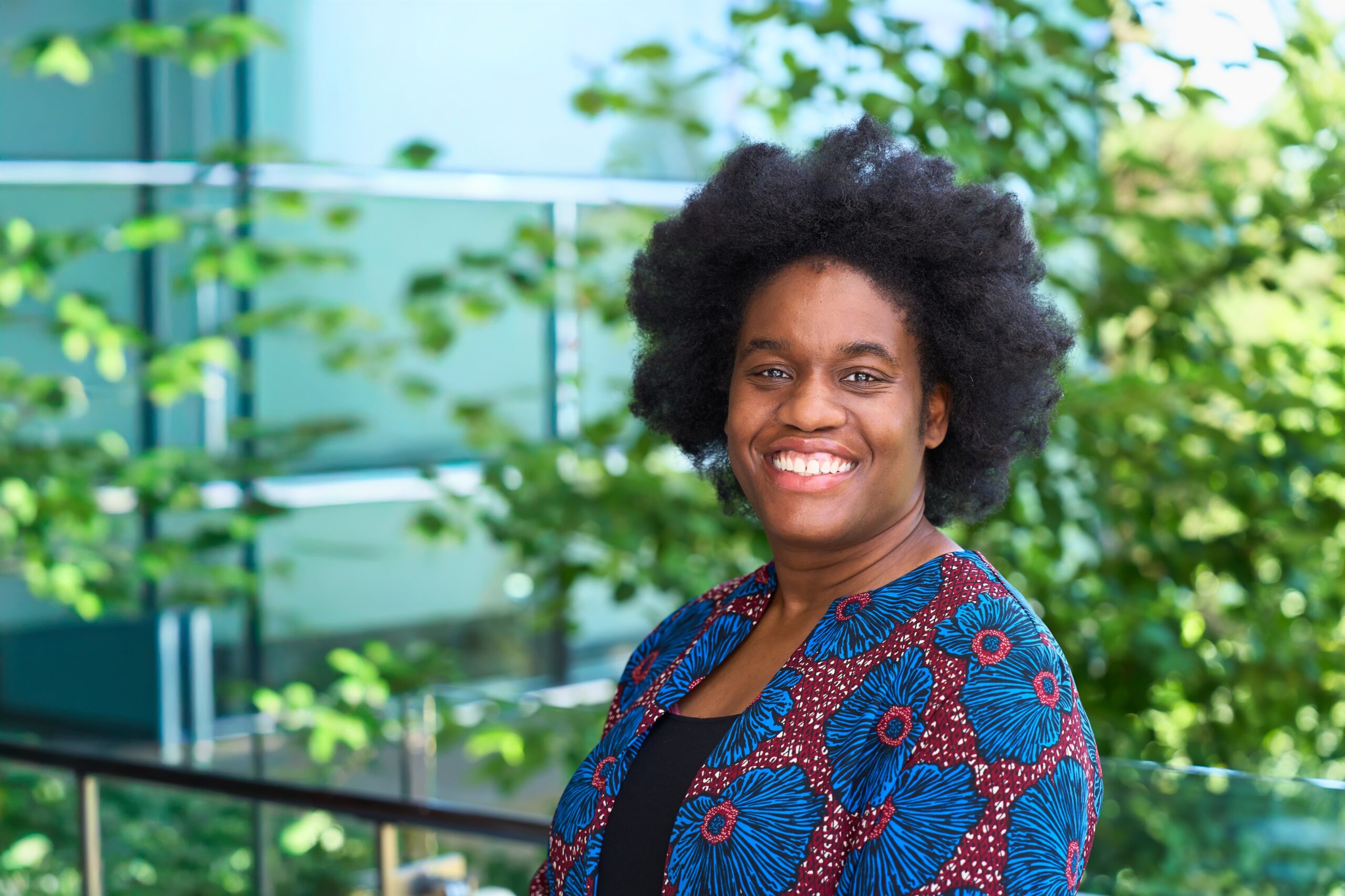
“I found it counterintuitive that diversity would backfire for the companies that are viewed as marginalized-focused or diverse — and how that word becomes a weapon used against their own interests.”—Esther Uduehi
Bad Bunny, a different set of rules
This is where Bad Bunny moves from cultural phenomenon to genuine case study. Rather than adapting to reach a mainstream American audience, he built an enormous global following by staying true to his origins. His popularity soared across Latin America and beyond, and when the United States eventually came calling, he answered on his own terms. He has refused to tour in the U.S., and when he agreed to perform at the Super Bowl, he did so on one condition: the entire performance would be in Spanish. His album Debí Tirar Más Fotos made history at the 2026 Grammy Awards, becoming the first predominantly Spanish-language album to win Album of the Year.
“He had the power to do that because he has millions of fans around the world,” Uduehi explains. “America isn’t the center of the world. Not touring here wasn’t going to make it so that you couldn’t have a profitable career. Worst case scenario, he’s hugely popular in Argentina, Colombia, Brazil, Chile, Mexico. America needs to get on board, or we get left behind.”
His remarkable story isn’t exactly a blueprint that brands can follow, but it does reinforce one thing: don’t leave your audience behind in pursuit of a bigger one.
Esther Uduehi on Why Diversity and Power Are Always Part of Marketing
Uduehi is clear that diversity in marketing is not an independent research topic; rather, diversity and power are part of all marketing research.
“It is incorporated into the work, whether we like it or not,” she says.
She argues that diversity and power shape what consumers feel, buy, and trust, whether brands choose to reckon with them directly or not. Similarly, diversity is not a topic of this particular moment in history.
“It’s always important,” she says. “There’s always something going on. And it’s the role of the researcher to understand what the interesting issues are within that larger idea.”
Uduehi compares them to pricing: The researcher who studies pricing isn’t suddenly considered timely because tariffs are in the news. Pricing is always relevant. Diversity and power are no different.
A paper written with Aaron Barnes (University of Louisville) that has been conditionally accepted at Journal of Public Policy and Marketing takes on the framing of diversity work itself, arguing that treating it as either “low-hanging fruit” or “forbidden fruit” is a distraction from building the structural legitimacy these questions deserve.
“It’s neither easy nor forbidden,” she says. “It’s just timeless, and it requires the same dimensionality we’d bring to any other complex problem in marketing.”
Read the research in the Journal of Consumer Research.
Esther Uduehi is Assistant Professor of Marketing and International Business at the Foster School of Business. She recently received the American Marketing Association BrandingSIG Young Scholar Award.