

On a sunny summer afternoon, Hongyu Chen (MS ‘24) stood on the Founders Hall fifth-floor patio, taking in the view of Mount Rainier from the University of Washington campus. Now a PhD student at the University of Florida, he had returned to Seattle for the 2026 FIFA World Cup, and the opportunity to cheer on his favorite teams, reconnect with classmates, and revisit the campus where a one-year master’s changed the course of his life.
Hongyu enrolled in the University of Washington Foster School of Business Master of Science in Information Systems (MSIS) program after completing his undergraduate studies at The Chinese University of Hong Kong, Shenzhen. He hoped to sharpen his skills, expand his network, and grow a career in tech. What he didn’t expect was how profoundly the faculty and students would shape his future.
At Foster, Hongyu found professors who welcomed him into research projects, classmates who inspired him with their experiences, and a city that became one of his favorite places in the world. Those relationships opened doors he never imagined, including co-authoring a research paper with Foster faculty and presenting at academic conferences.
Today, Hongyu researches AI, algorithms, and their impact on society. Looking back, he credits his journey not only to what he learned in the MSIS but to the Foster faculty who invested in his potential.
During his visit back to Seattle, we caught up with Hongyu to reflect on the opportunities that shaped his Foster experience and continue to influence his path today.
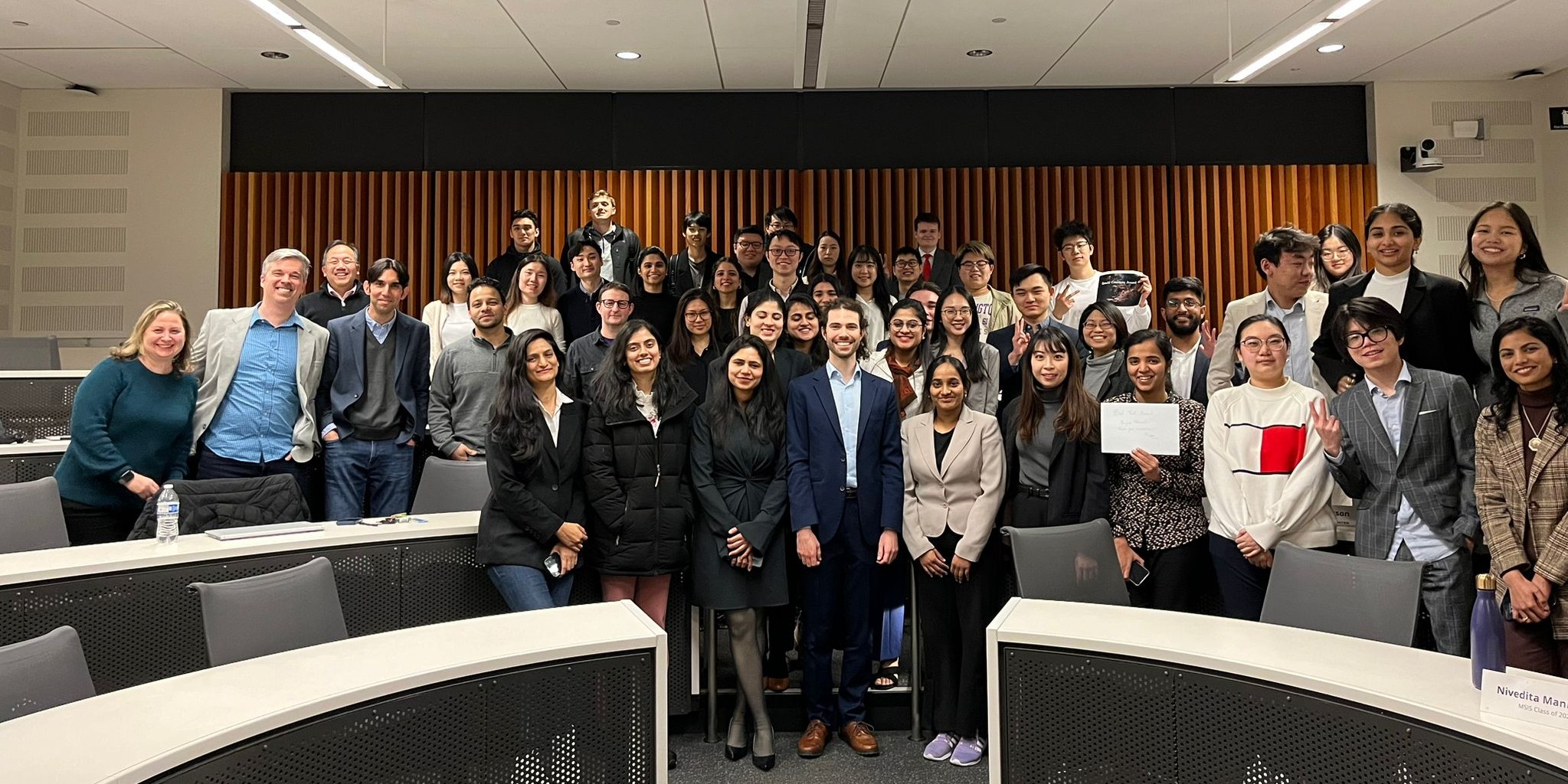
Hongyu Chen (front row, second from right) together with his Master of Science in Information Systems classmates during MSIS Demo Day 2024, led by Léonard Boussioux, Assistant Professor of Information Systems and Operations Management.
What drew you to the Foster Master’s in Information Systems program?
Hongyu Chen: Several things attracted me to the Foster School and the Master of Science in Information Systems. One was the program’s strong connections with Seattle technology companies. I knew those relationships would be valuable for networking and job hunting. As a student, you can reach out to Foster alumni, learn about what companies are looking for, understand future hiring plans, and get advice about the skills you should develop.
I was also excited by the diversity of the MSIS program and the Foster School. I wanted to study alongside classmates from different countries, regions, and professional backgrounds because I knew I could learn from their experiences.
The other reason was more personal: I really love Seattle. I’ve always been a fan of Bruce Lee, who attended the University of Washington, so there was something special about studying here. Once I arrived, I discovered it was an incredible city to live in.
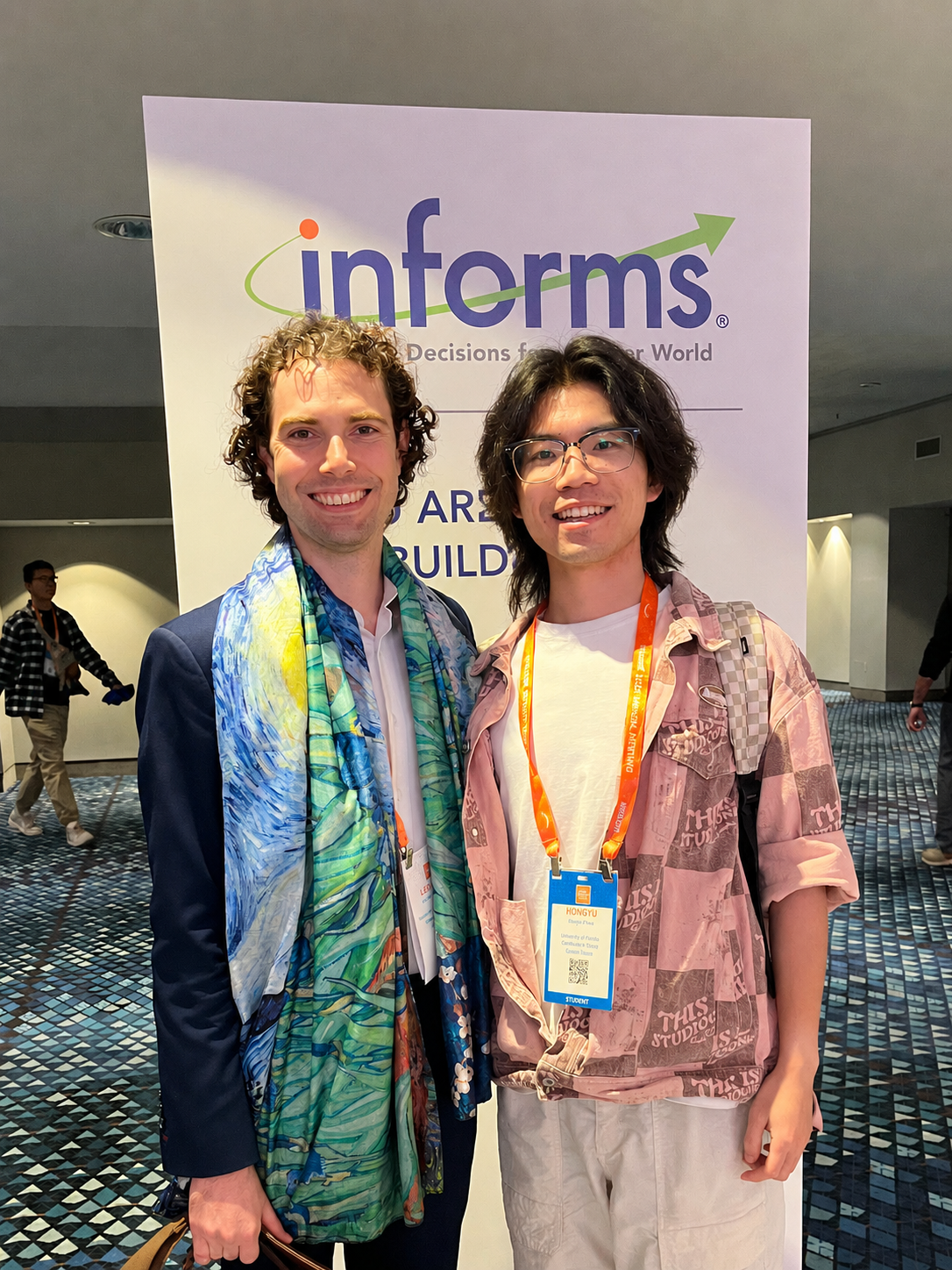
Hongyu Chen with Foster Professor Léonard Boussioux at the INFORMS conference, where Chen presented research he co-authored with Foster faculty.
Looking back, what surprised you most about the program?
Hongyu Chen: I didn’t expect how much I would learn from my classmates. We were organized into teams, and every project brought together people with different skills and knowledge. We had classmates from countries such as the U.S., Vietnam, and India with backgrounds in product management, software development, and finance. We also had classmates with deep experience in AI and product management in Japan and Taiwan.
Working together meant we weren’t just learning from professors; we were constantly learning from each other. Everyone brought a different perspective, and that made every project much richer.
I also didn’t expect how helpful the Foster School’s Career Center would be. During my first summer quarter, I met with Jack Chung, one of Foster’s career coaches, almost every week. He helped me improve my resume, prepare for interviews, strengthen my LinkedIn profile, and develop networking skills that I still use today. Those lessons helped me land a job at an AI start-up, and, later, when I interviewed for PhD programs.
Today, you’re pursuing a PhD at the University of Florida. What inspired that decision?
Hongyu Chen: After earning my MSIS from Foster, I got a great job at an AI start-up. But I soon realized I’m an interest-driven person. Every time I learn something new or solve a research problem, I feel a real sense of achievement and happiness. In industry, most of the time you’re working on what the company needs. In academia, I can pursue the questions that genuinely interest me. That’s when I knew I wanted to pursue a PhD.
Becoming a professor has been my dream since I was a child, and pursuing a PhD is an important step toward that goal. Foster helped me discover that this path was possible.
Foster faculty are known for being accessible. How did that impact your time in the program?
Hongyu Chen: At other universities, opportunities to collaborate with faculty aren’t always easy to find. In the MSIS program, you can simply reach out to professors, discuss your ideas, and they’ll encourage you to develop those ideas into research projects or papers. The class sizes are small, so it’s much easier to connect with them.
There was a time when I reached out to Professor Léonard Boussioux with questions about the future of AI and large language models (LLMs). He was very happy to recommend research papers and share emerging techniques in the field. Those conversations became very important later when I was applying to PhD programs because I had experience discussing current research topics with faculty.
How did a class project become published research?
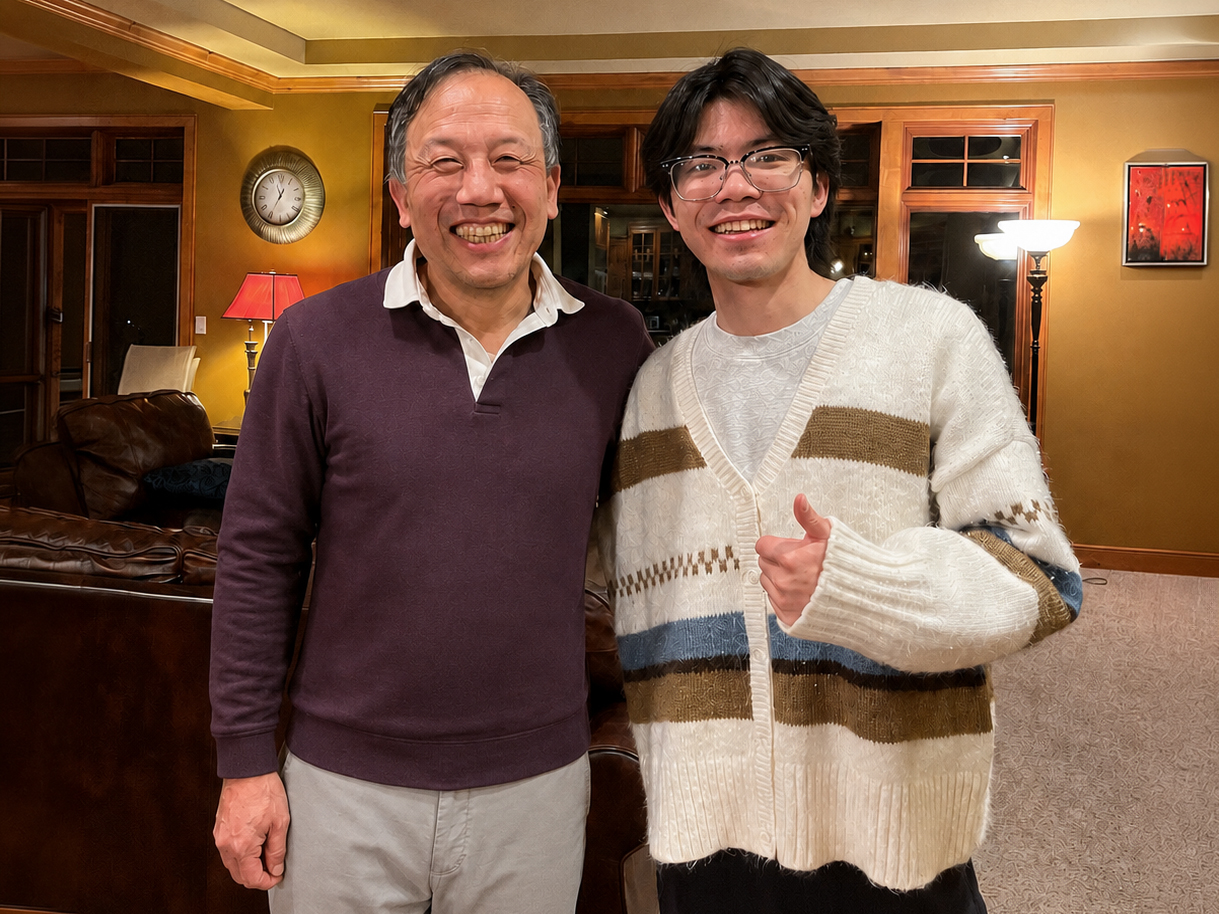
Hongyu Chen with Foster Professor Ming Fan, whose mentorship and support helped Chen pursue research opportunities and prepare for doctoral study.
Hongyu Chen: It all started in Professor Léonard’s Generative AI course, which every MSIS student takes. One of the class projects involved fine-tuning an LLM to build a chatbot. Foster Professor Ming Fan, who also teaches in the program, became interested in the techniques I used because they were closely related to his own research, and he invited me to join his research team.
My undergraduate coursework in deep learning, along with my prior research experience, gave me a strong technical foundation and allowed me to get up to speed on the project quickly.
That opportunity eventually evolved into a research collaboration with Foster Professors Ming Fan, Léonard Boussioux, and Apurva Jain to explore how LLMs can support supply chain decision-making. It was exciting because it’s an area that’s becoming increasingly important, and our work was among the early research exploring how these technologies could be applied.
Working on that project allowed me to experience academic research firsthand. I learned how research is conducted, collaborated with outstanding faculty, presented our work at conferences, and became a co-author on the paper. The project played a major role in preparing me for doctoral study.
Editor’s note: Hongyu co-authored the research paper, “Socratic Iterative Reasoning: Enhancing LLM Decision-making in the Beer Game Supply Chain,” with Foster faculty Ming Fan, Léonard Boussioux, and Apurva Jain following his work in the MSIS program.
“His intuition for AI was excellent, and he was a power user throughout the course, always going above and beyond the material I taught,” said Léonard Boussioux, Assistant Professor of Information Systems and Operations Management, Foster School of Business. “I joked that he was building AI-powered prototypes for breakfast; it wasn’t much of an exaggeration.”
Professor Ming Fan became an important mentor. How did he influence your journey?
Hongyu Chen: Professor Ming, who also taught in the MSIS program, was the first person I told that I wanted to pursue a PhD. He immediately told me he would support me. He introduced me to professors from other universities at conferences, wrote recommendation letters for me, and taught me how to think like a researcher. He also shared big-picture advice on becoming a researcher. He unlocked many opportunities for me, and I’m very grateful for his support.
Professor Léonard Boussioux also played an important role. How did he help you grow?
Hongyu Chen: Professor Léonard helped me become both a better researcher and a better communicator.
In December 2025, I presented our paper at a conference for the first time. It was my first time speaking in front of around 50 people, and afterward, Léonard gave me detailed feedback on my presentation. I worked on his suggestions, and when I presented the same paper again a few months later, I did a much better job. His feedback helped improve my presentation skills and my confidence.
He also encouraged discussions about new developments in AI and was always willing to recommend papers and share ideas. Those conversations were incredibly valuable as I continued preparing for graduate research.
“Hongyu stood out for his engineering skills, his speed of execution, and his desire to build tools that help others,” added Boussioux. “The quality of his prototypes impressed me, and he became the missing piece we needed to build a complex pipeline for testing how the latest AI models handle decision-making under uncertainty. He was incredibly responsive and autonomous, which made him a pleasure to work with. Watching him present our joint work at an international conference was a proud moment for me. He always had the instincts of a researcher, and I’m so glad he’s pursuing an academic path.”
Seattle became more than a place to study. What made it feel like home?
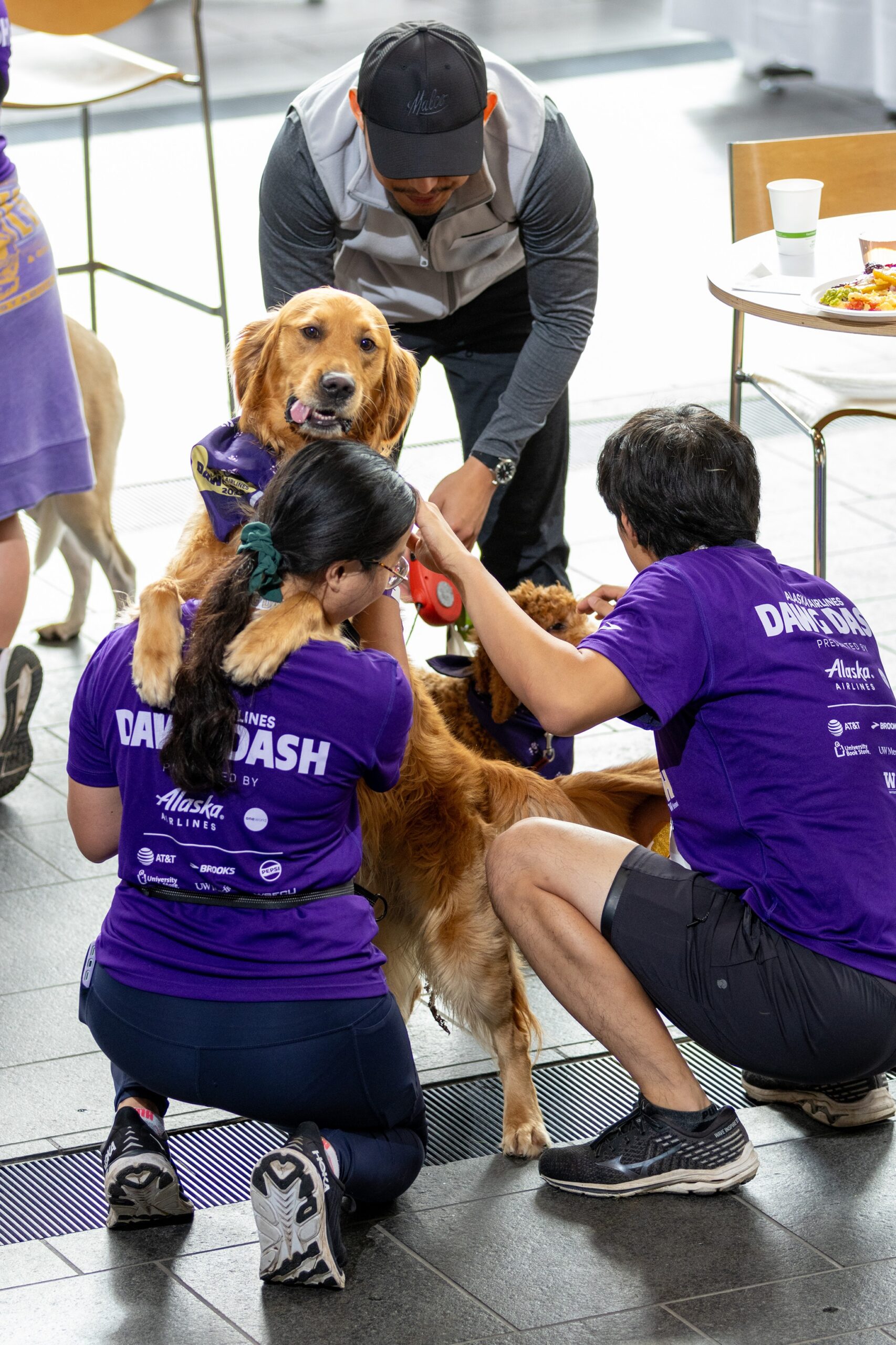
After the Alaska Airlines Dawg Dash 5K, Hongyu Chen and friends enjoy some time with the event’s four-legged participants. One of his favorite UW experiences, Dawg Dash reflects the kind of campus involvement Hongyu encourages students to embrace.
Hongyu Chen: The friendships I made. Some of my favorite memories are simply exploring Seattle with classmates. I remember my first visit to Pike Place Market with friends from the MSIS program. We explored the city together, tried new restaurants, and learned about each other’s cultures.
Outside of class, I also joined a board game group where I met students from across the University of Washington, many from the Allen School. Every Friday night, we’d get together, play games, and have conversations that helped me learn about different industries and roles.
I loved participating in the Alaska Airlines Dawg Dash 5K and the MSIS Brunch that followed, where students brought their dogs to campus, as well as the many social and networking activities organized by the MSIS program. Those events made it easy to meet people and feel connected to the Foster and University of Washington communities.
What advice would you give someone considering the Foster MSIS program?
Hongyu Chen: Never be afraid to reach out to professors, classmates, and, especially, alumni. Foster alumni are generous and always offer career advice grounded in real industry experience.
I also encourage students to participate in as many campus activities as possible. Those experiences are genuinely fun, and they’re where you’ll network, build friendships, and create memories that stay with you long after graduation.
The more you engage with the people around you on campus, the more opportunities you’ll discover.
Cover Photo: Hongyu Chen and Dean Frank Hodge at the 2024 graduation ceremony for the Master of Science in Information Systems program.