

Meet Gulshat Mardanshina, a hard-working business analytics student and a Foster School of Business fashionista. She began her 12-month Master of Science in Business Analytics (MSBA) in summer 2025, bringing her passion for technology and learning (plus a dash of fashion) to the heart of the Pacific Northwest.
Choosing to study business analytics in Seattle was a no-brainer for Mardanshina, thanks to Foster’s connections with companies like Salesforce, Amazon, T-Mobile, and Boeing, to name a few.
“I decided to choose an MSBA in Seattle because the University of Washington itself is a big university with years of history,” she says. “It’s the perfect blend of practical knowledge and strong bonds between campus and future opportunities.”
Foster’s MSBA program is rigorous. Other similar programs around the country are 18 months long, but the Foster MSBA program is 12 months. The shorter program duration (and lower tuition costs) is one of many reasons people choose Foster to grow their careers. Program graduates go on to pursue jobs as technical producers, data and marketing analysts, and program managers in the Seattle area and across the U.S.
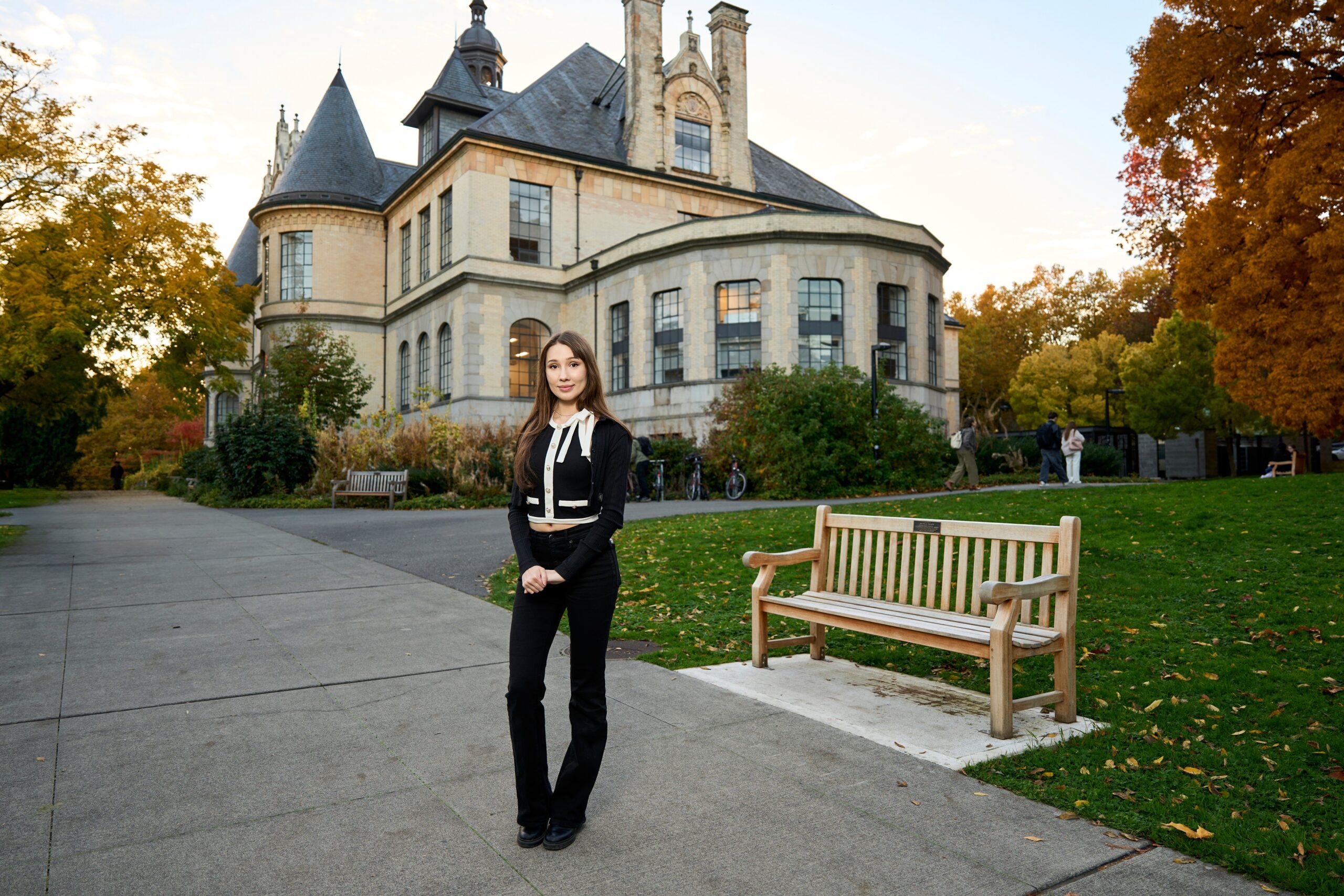
For MSBA student Gulshat Mardanshina, daily life at Foster blends intensive analytics coursework with the energy of studying in Seattle, where classroom learning and career opportunity feel closely connected.
Breakfast with a side of DataCamp
Mardanshina tends to spend her mornings like any other student: studying, talking with her family, checking Canva, eating breakfast, and preparing for class.
However, to study well, she knows she must dress well. Mardanshina brings a European fashion sensibility to the classroom that contrasts with Seattle’s typical polar style of puffer coats, hoodies, hiking shoes, and pajama bottoms. (While she’s learning to embrace the unique style of the Pacific Northwest, she won’t be wearing socks with sandals anytime soon. A stylish, business casual outfit is one of many ways Mardanshina gains the confidence to code like a pro.)
Before leaving for campus, Mardanshina practices data and coding skills on DataCamp. The site offers real-world applications and interactive courses to help students master programming languages like Python and Power BI. All MSBA students get a free DataCamp subscription. It’s integrated into many classes and students can use it to pursue additional training in areas of special interest. Students can also gain additional certifications through DataCamp to coincide with their MSBA degree.
“I am only in my second quarter in the MSBA program, but I feel that I have improved a lot,” Mardanshina shares. DataCamp, along with her courses, is helping her grow. “Previously, I didn’t do Python, but currently, I’m confident in my skills, which are improving every day.”
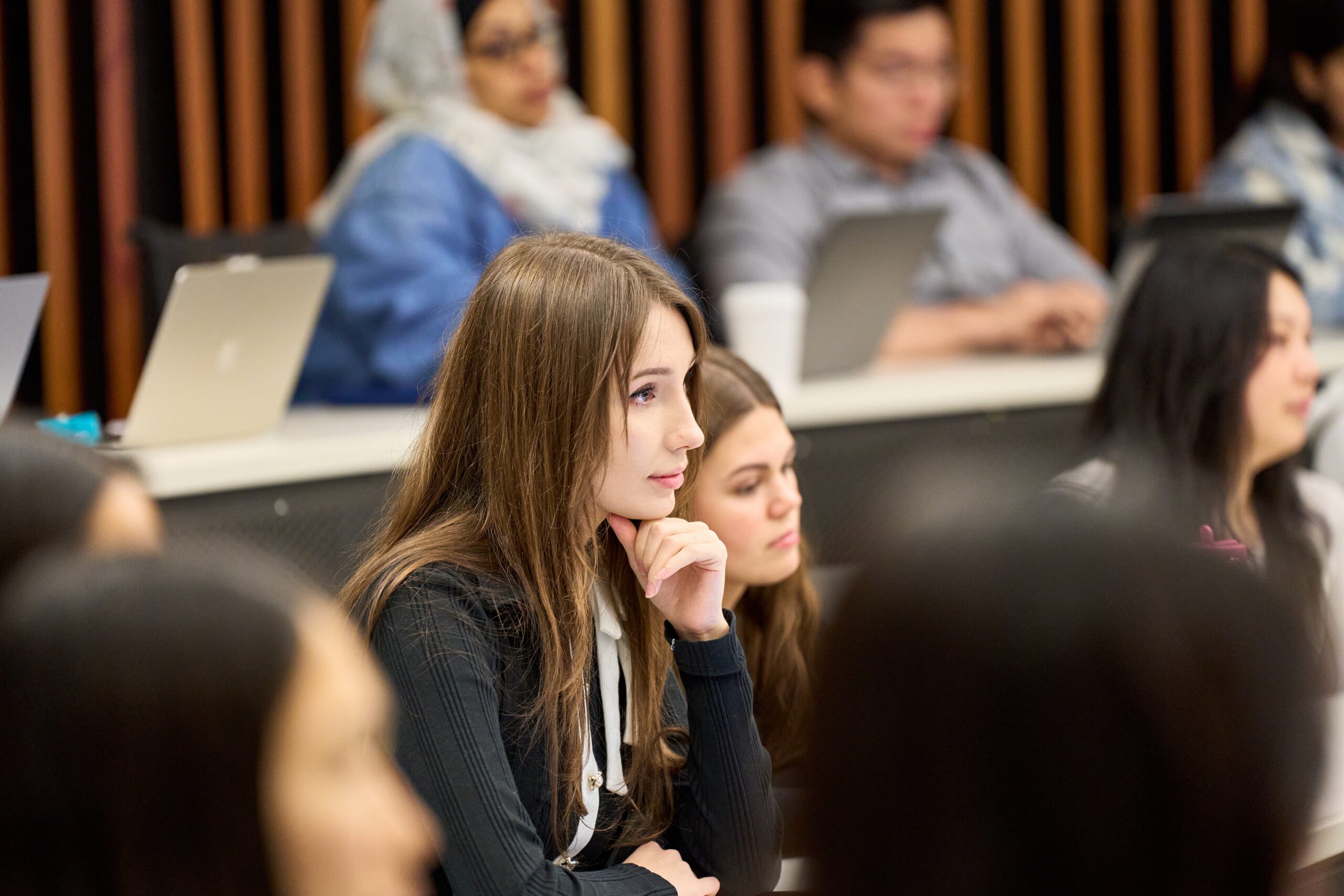
In the 12-month MSBA program, Gulshat Mardanshina spends much of her time in class building practical skills in areas like Python, machine learning, AI, and customer analytics; skills she’s gaining faster than she expected.
Business connections start in the MSBA classroom
After studying each day on campus in the Foster Business Library or Odegaard Undergraduate Library, Mardanshina prepares for her classes, which take place three days a week. Customer Analytics, Machine Learning Methods & AI, and Supply Chain Management currently fill her evening schedule.
During classes, faculty share valuable insights and practical experience in solving real-world issues that students will soon encounter in the workplace. Program alumni are also frequent visitors to the MSBA classroom. They speak at networking events and panel discussions, sharing career advice and job-hunting tips with current students.
“In our Business Analytics Leaders Series, alumni who work in the industry come to class and share their projects and what the key objectives are in their jobs. They provide excellent examples, bringing their own datasets, clearly stating the business question, and demonstrating how they helped inform a decision using the dataset.”
“Students frequently work on team projects that involve real-world data, where we need to clean datasets, visualize the data, and interpret our findings. Every experience related to real business problems [that our alumni can share] helps to deepen our understanding of business analytics.”
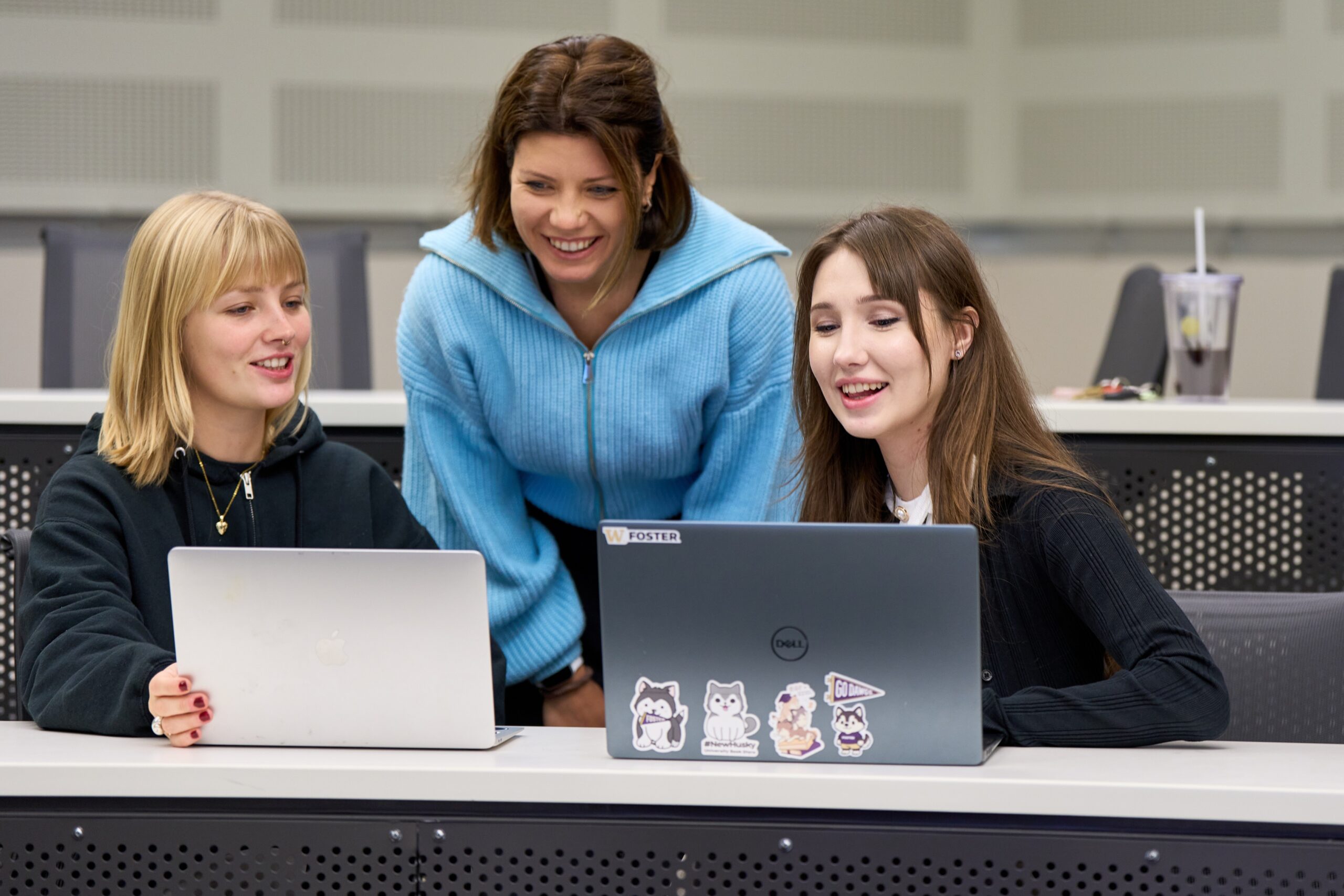
Team-based projects are a core part of the MSBA experience, giving students frequent opportunities to work with real datasets, learn from peers with diverse backgrounds, and practice communicating insights clearly.
Learning directly from industry mentors and peers
Students also have opportunities to connect with professionals on a deeper level through the MSBA Mentorship Program. These conversations offer students a space to explore career paths, ask candid questions, and receive guidance from mentors who are well-versed in the business analytics industry. Mardanshina is a mentee of Arjun Abbey, a senior data analyst at NITS Solutions and a 2022 Foster MSBA graduate.
“I’ve formed many professional relationships,” she says. “Foster frequently invites guests and recruiters from diverse industries to meet with students and discuss career opportunities. I’m collecting my contacts on LinkedIn to use in the future!”
“There’s a huge network of University of Washington alumni who work in the industry; that network helps students build the right connections. I have already received a lot of valuable feedback from them about career paths. I’ve also made friends in this cohort. They come from diverse fields, including finance, project management, and analytics. To be honest, it still keeps surprising me how many impressive, enthusiastic people study in the MSBA program.”
Translating classroom learning into real-world skills
There’s only so much that can be learned through textbooks or worksheets. At Foster, every class, project, and presentation directly translates into real-world job skills.
“The professors are excellent,” Mardanshina shares. “They always try to support us as practically as possible. For example, they teach us based on interview questions or encourage us to code quickly, as that is what is expected of us from big tech companies and virtually every employer.”
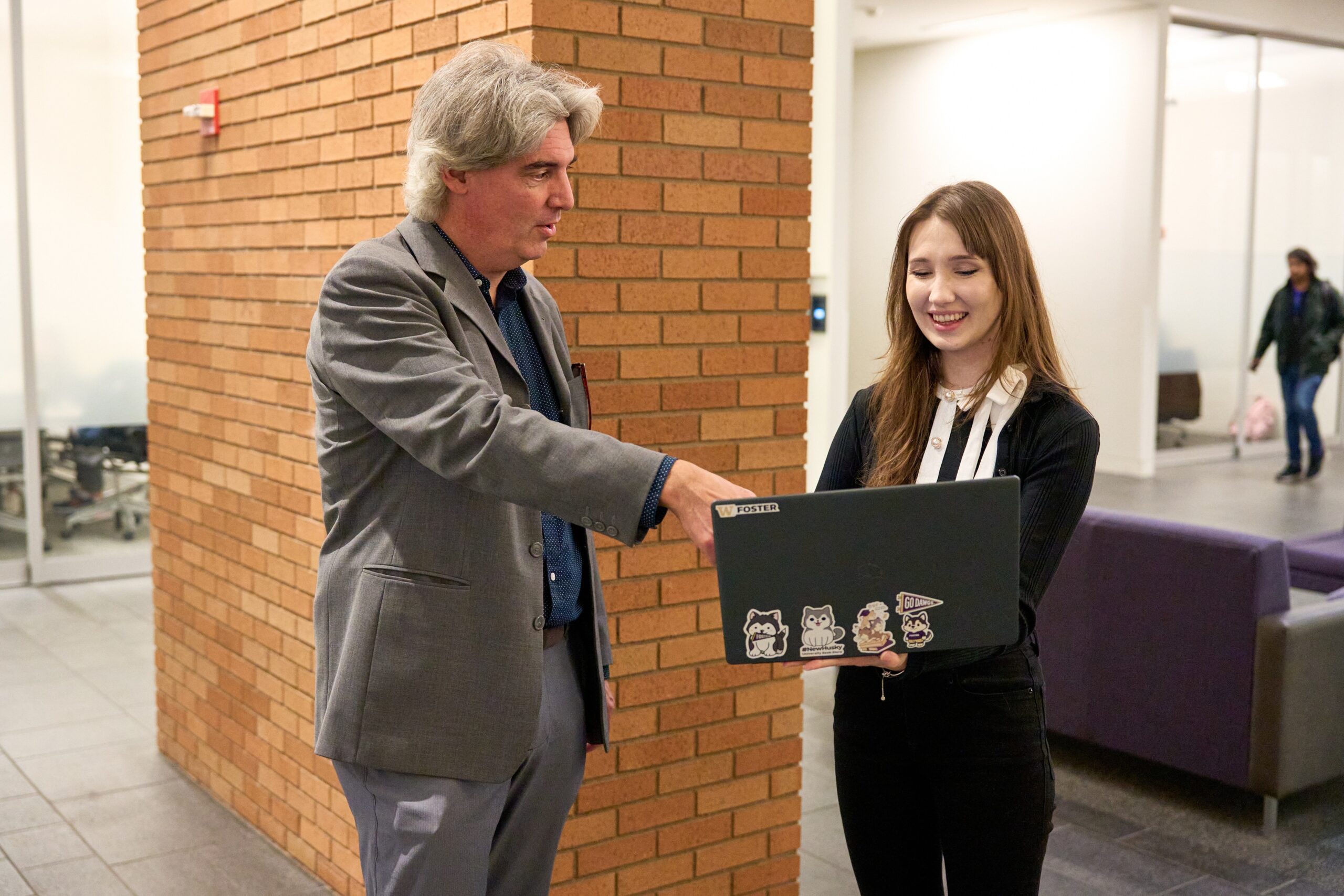
Faculty like Professor Oliver Rutz help translate analytics theory into real-world decision-making, reinforcing Foster’s emphasis on applied learning and employer-relevant skills.
Building new connections in Seattle
There’s much to love about being a student in Seattle: towering mountain ranges, proximity to the Pacific Ocean, and the many recreation opportunities, ranging from hiking and kayaking to festivals and the extensive bike path network. Over the past few months, Mardanshina has become well-acquainted with all that the city has to offer. She is taking full advantage of its prime location to try new activities and experience local culture.
Mardanshina is a fan of “city vibes,” often spending her time downtown to shop at Sephora and pick up Starbucks. Similarly, the University Village (U Village) shopping center is “an absolutely beautiful place” within walking distance of campus, where she shops, hangs out with friends, and visits Molly Moons Homemade Ice Cream.
“I also love to go grocery shopping, specifically at Trader Joe’s, after rigorous classes like Machine Learning Methods and AI. I like their colorful designs, rotating products, and new snacks. The interesting foods and displays help my mind rest and have a little fun.”
It’s during these moments between classes that Mardanshina spends some much-deserved downtime with friends. And what better way to take a break than experiencing the mountains, lakes, and bustling neighborhoods of Seattle?
“I meet up with classmates to visit local restaurants. I love to try local kitchens here. Seattle is rich in food from various cultures, with a strong emphasis on Asian cuisine. Shout out to hot pot places! I also enjoy Mexican cuisine here. Besides restaurants, we do hikes. I have already visited Olympic National Park and Mount Rainier National Park; both are amazing. After such exposure to nature, you return as a whole new person.”
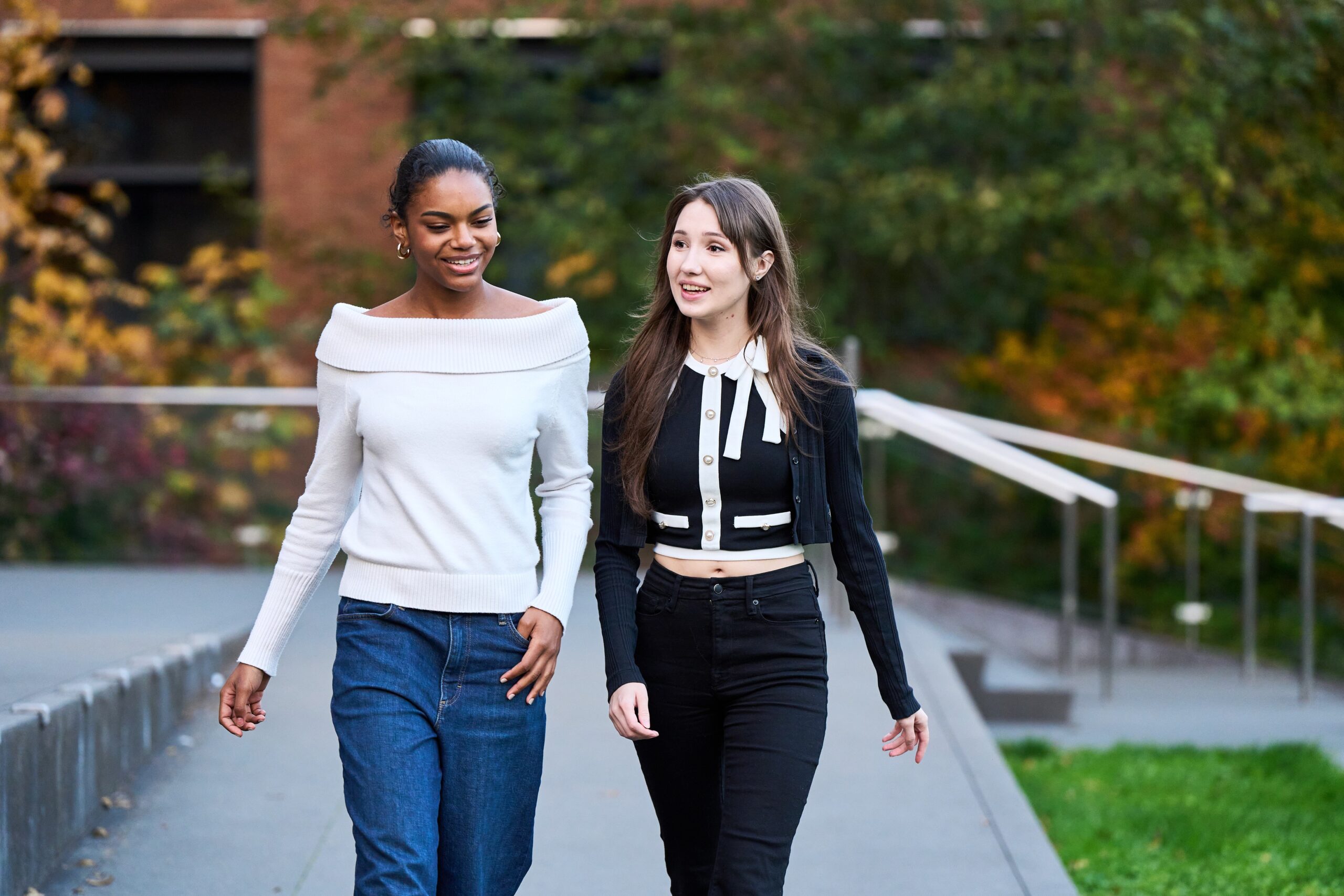
Making new connections on campus: Gulshat Mardanshina chats with Kya Baker, a University of Washington undergraduate student and the writer behind this story, proving that networking at Foster can start with a good conversation.
Seattle fashion with a bit of flair
When it comes to fashion options, Mardanshina is striving to mesh her European-influenced style with the Seattle weather. In winter, you’ll typically find her in a long wool-blend trench coat and sturdy boots, often paired with a stylish purse.
Although she prefers a more sophisticated business look, Mardanshina can appreciate the relaxed and practical fashions she encounters on campus and throughout the Pacific Northwest.
“We have lots of rain here and a big hiking culture. People choose amazing sport sets from Lululemon or Alo, which I enjoy watching when I go to the gym. When I visit downtown, I see many tech workers who typically prefer expensive yet durable equipment, like hiking boots from On, Arc’teryx jackets, and Patagonia vests.”
“I still try to keep my elegant style even in these conditions because I mentally feel good in these clothes, even if I differ from everyone else. However, people who love comfortable clothes will appreciate the University of Washington’s campus style, as students, staff, and faculty often prefer comfort over formality.”

Outfit of the day, MSBA edition: Gulshat Mardanshina brings confidence to campus, pairing rigorous analytics coursework with a personal style that helps her feel ready to code, learn, and lead.
The broader MSBA experience
While fashion is part of her routine, the bulk of Mardanshina’s days are shaped by coursework, team projects, learning from mentors, networking, and the practical demands of the MSBA program. It’s the pace of daily life in the MSBA program.
As she moves through the MSBA program, Mardanshina is gaining both analytical depth and professional support, plus a broad network. Her time at Foster reflects what makes the program unique: rigorous, practical coursework; mentors and alumni who offer real-world perspective and connections; and a community invested in student success. With that momentum behind her, she’s shaping a clear and intentional path ahead.
Learn more about the MSBA program here.
Writer Kya Baker is a University of Washington undergraduate student pursuing a Bachelor’s degree in Journalism and Public Interest Communication. She also serves as the Content and Copywriting Assistant for the Foster School of Business.