

Nearly a decade after completing the Global Executive MBA at the University of Washington Foster School of Business, Yoichi Takagi (MBA ’18) still draws on lessons from his time in the MBA. After returning to Japan after graduation, he gradually took on broader responsibilities at Hitachi. Today, he is based in Santa Clara, California, where he serves as Chief Human Resources Officer at Hitachi Cyber and oversees HR governance for Hitachi Systems’ international operations.
Hitachi supported Takagi’s Global Executive MBA as part of its broader efforts to develop global talent. That experience continues to shape the way he works, collaborates, and contributes across a global organization. We recently spoke with Takagi to learn about his year in Seattle and the MBA lessons that have stayed with him ever since.
Why was it the right time in your career to pursue an MBA?
In 2016, I was an assistant manager in HR at Hitachi and had gained experience across a variety of roles and business areas. But I realized that if I wanted to contribute more directly to business decisions and work alongside senior leadership, my HR expertise alone wouldn’t be enough. I wanted to better understand the broader business landscape.
I wasn’t simply interested in learning finance, strategy, marketing, and operations as separate subjects. I wanted to understand how business leaders connect those disciplines to make decisions and lead organizations.
What attracted me to the Foster School of Business Global Executive MBA was the opportunity to learn with experienced professionals from around the world. The small cohort, close relationships with classmates and faculty, and intensive one-year format created an environment where learning extended well beyond the classroom.
The MBA became much more than an opportunity to earn a degree. It was a turning point that helped me move from thinking primarily as an HR specialist to taking a broader business perspective.
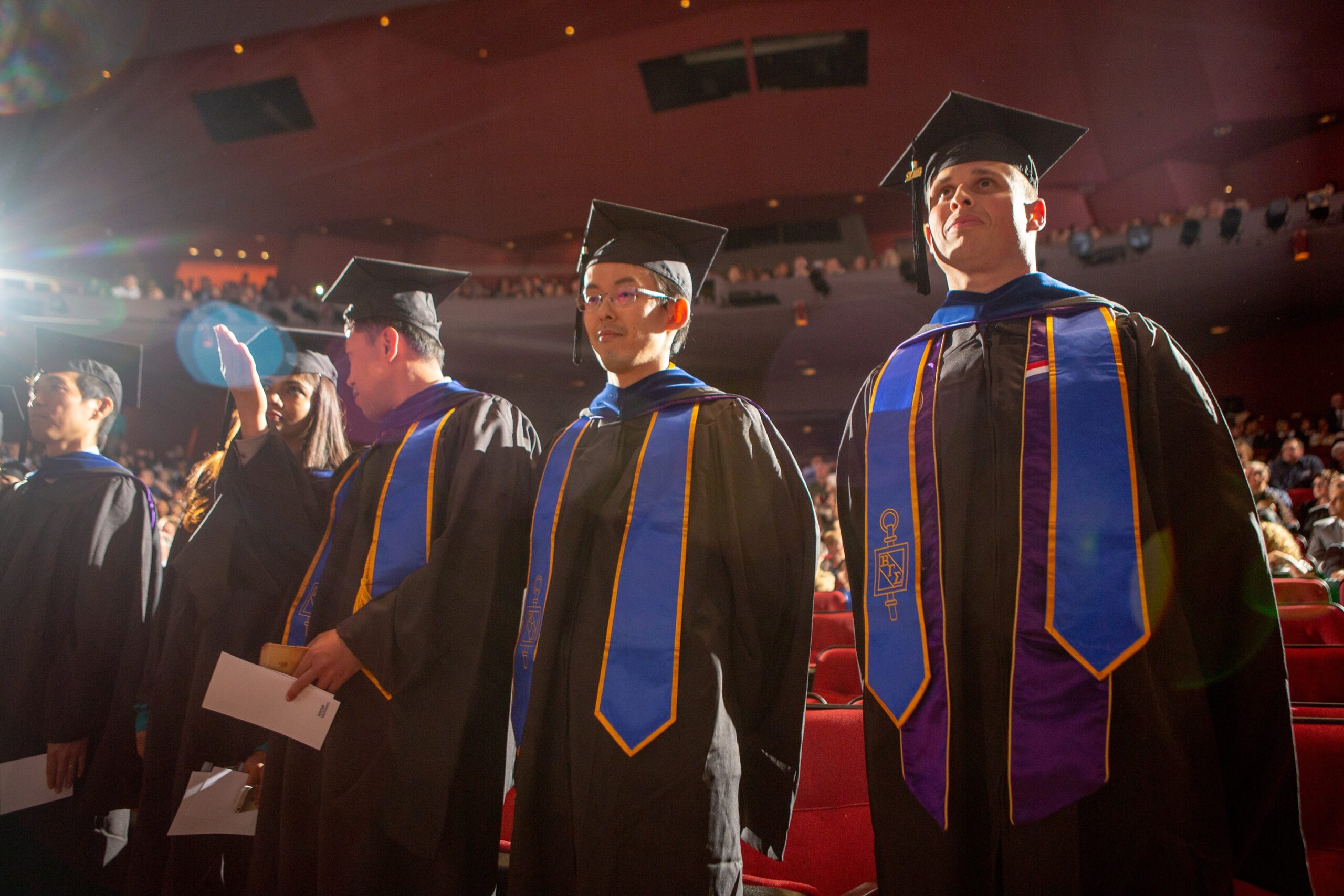
Yoichi Takagi (center) stands with classmates during the University of Washington Foster School of Business Global Executive MBA graduation ceremony. Nearly a decade later, he says the relationships he built with his cohort continue to shape the way he leads global teams at Hitachi.
Hitachi supported your participation in the Foster Global Executive MBA. What did that opportunity make possible, for both you and the company?
At that time, Hitachi was placing greater emphasis on developing employees who could contribute to the company’s global business by providing opportunities to study at business schools overseas. As globalization accelerated, the company recognized the importance of people who could work across cultures, understand different perspectives, and help organizations navigate change.
Through several conversations with my manager and senior HR leaders, I came to recognize that although I had built a foundation in HR, I still had much to learn in terms of broader management perspective and global mindset. The Global Executive MBA became an important opportunity for me to develop in those areas with the company’s support.
The value of the experience went beyond knowledge. The MBA helped me become more comfortable working with people from different cultures, industries, and backgrounds, and more aware of the value of bringing those perspectives together. After graduation, I took on broader responsibilities in Japan, including organizational transformation, leadership development, and labor management. Today, I work with multinational leadership teams on business transformation and organizational development as CHRO of Hitachi Cyber.
I also hope the value of the experience has extended beyond my own career. I have tried to bring what I learned back into my day-to-day work with teams, whether by sharing different perspectives, supporting colleagues, or contributing to leadership development. In that sense, I hope the experience has had a positive impact beyond myself, even if in a modest way.
You highlighted gaining a broader perspective. How did the MBA change the way you think about leadership?
The biggest influence wasn’t a single class. It was learning alongside classmates from different countries, industries, and professional backgrounds.
Our cohort included leaders from finance, energy, the military, and many other fields. Even when people worked in similar industries, their assumptions and approaches could vary widely depending on their country, culture, or professional experience.
One thing surprised me. The more I talked with classmates, the more I realized that what I considered “common sense” wasn’t necessarily common at all. The same business challenge could produce completely different solutions depending on who was sitting around the table.
Those conversations also challenged me to think about what I could contribute. Working with people with different expertise encouraged me to better understand the value of my own perspective and how I could add to the discussion.
That experience influenced how I think about leadership. I no longer see leadership as having the right answer. I see it as bringing diverse perspectives together, drawing out each person’s strengths, and helping the team make better decisions. That is something I try to keep in mind in my work with multinational teams.
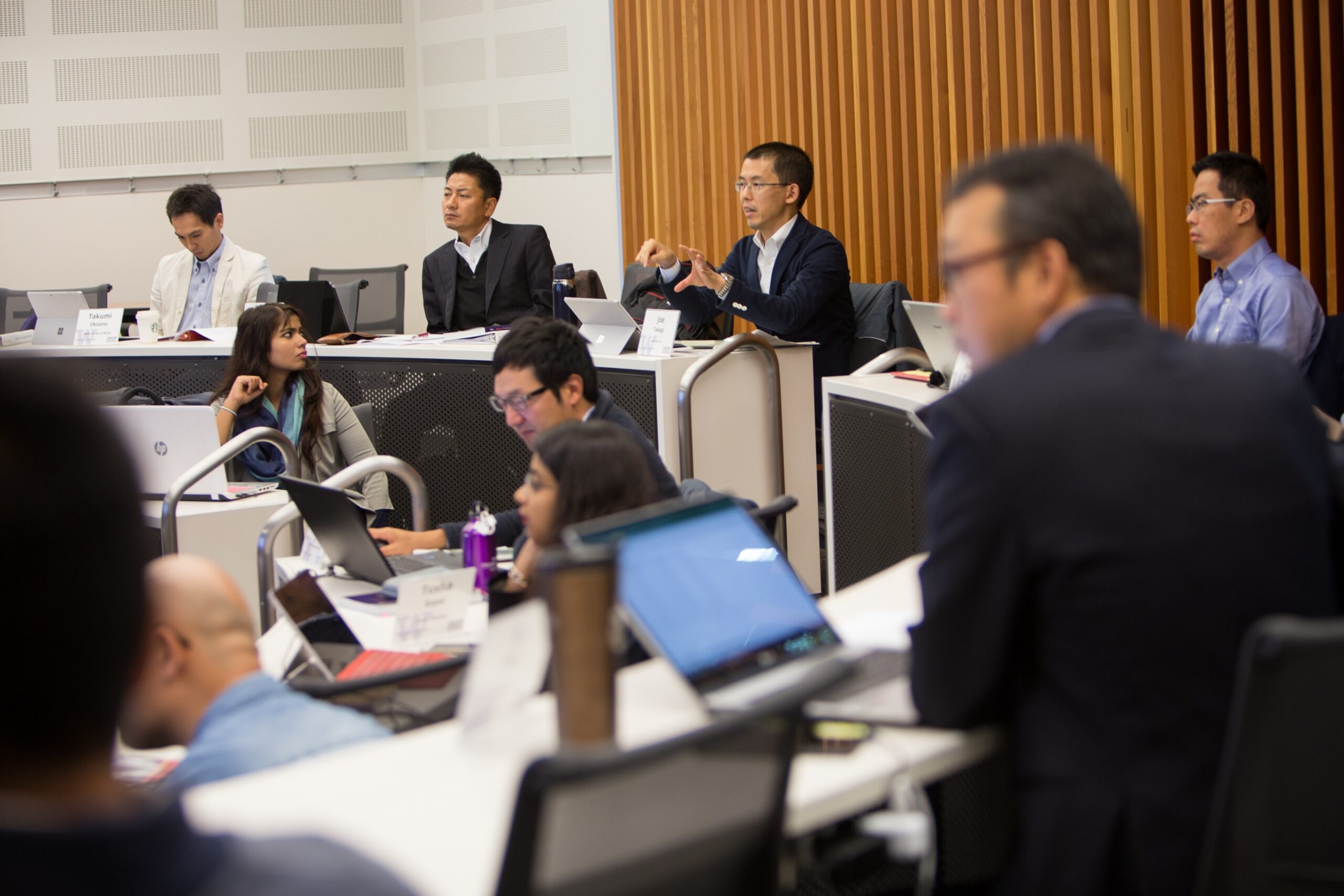
During the Global Executive MBA, Yoichi Takagi learned alongside professionals from around the world. He says those conversations challenged his assumptions and continue to influence his work leading multinational teams at Hitachi.
Your career has taken you from Japan to California. Where do you see the influence of the MBA in your work today?
After completing the Global Executive MBA, my career expanded more in scope and perspective than in title. When I returned to Japan, I took on broader responsibilities involving organizational transformation, leadership development, HR systems, and labor management. My focus gradually shifted from HR operations to broader business growth and management challenges.
Today, I’m based in Santa Clara, California, serving as CHRO of Hitachi Cyber while also supporting the global business and talent development of Hitachi Systems in Japan. Across both roles, my work centers on helping organizations grow through people, leadership, and strategy.
But, I wouldn’t say the MBA directly changed my career. It changed how I saw my own potential.
Before the Foster School, I mainly thought about growing as an HR specialist. The MBA expanded my perspective and helped me become more open to global opportunities and transformation work that I might have hesitated to take on before.
It wasn’t simply a bridge to my next position. It gave me the opportunity to rethink who I wanted to become as a leader and what value I wanted to create throughout my career.
What made the Foster Global Executive MBA experience memorable?
The Seattle location was one of the reasons I chose the Foster School. It was exciting to spend a year in a city where companies like Amazon, Expedia, and Microsoft are constantly redefining technology, while Boeing represents more than a century of engineering and manufacturing excellence. Seattle itself became part of the classroom.
One week we might visit an innovative technology company, and the next we’d be learning from leaders in aerospace or another established industry. Those experiences made the concepts we discussed in class much more tangible. They also reinforced something I’ve carried with me ever since: there isn’t one model for successful leadership or one path to innovation.
Those lessons didn’t stop when class ended. Walking through the city, meeting people from different industries, and experiencing the region’s culture gave me a broader appreciation for how business, technology, and community intersect. It became clear to me that growth begins when you’re willing to step outside what’s familiar.
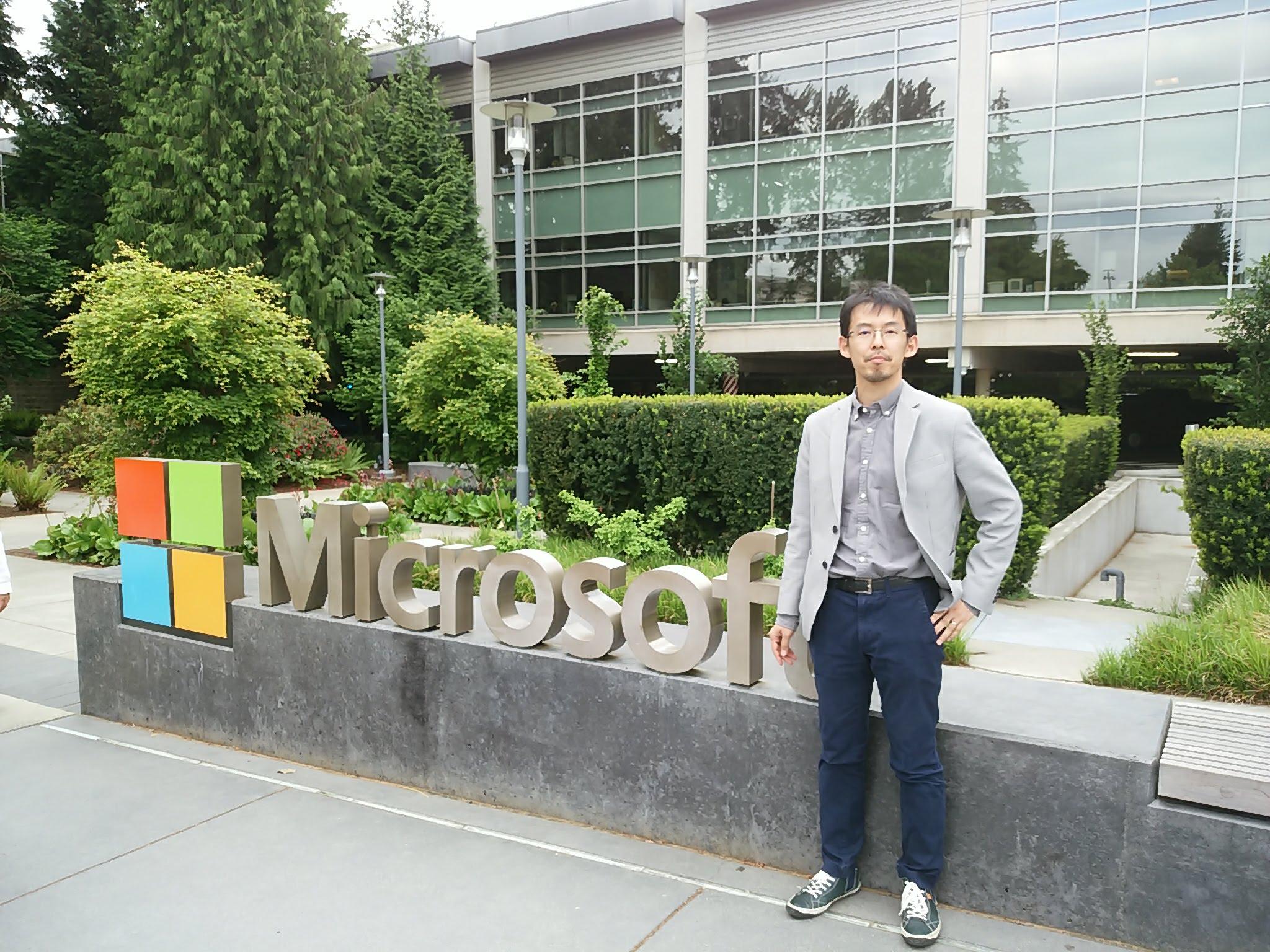
Yoichi Takagi visits Microsoft headquarters in Redmond during his year in the Foster School’s Global Executive MBA. Company visits throughout the program gave students firsthand exposure to the leadership and innovation shaping the Seattle business community.
Your family joined you in Seattle. What do you remember most about that experience?
Bringing my wife, daughter, and son to Seattle was one of the best decisions we made. The experience became something we shared, not something I experienced on my own.
My daughter attended Clyde Hill Elementary School in the Seattle suburb of Bellevue, where she was exposed to children from many different countries and cultures. Through school and daily life in the community, we had opportunities to connect with other families as well. Those experiences helped us see Seattle more as residents than as short-term visitors.
Some of my favorite memories are actually very ordinary. On weekends, we sometimes explored nearby places such as Mount Rainier and Redmond, and I occasionally joined classmates for meals or cultural events, including a Holi festival. I also watched my daughter adjust to a completely new environment and learn English in Kindergarten. Those experiences gave our family a more personal appreciation for different cultures and ways of life.
When I think about that year, I remember much more than earning an MBA. I remember the people we met, the friendships we built, and the perspective our family gained by living abroad together.
Learn more about the Global Executive MBA at the University of Washington Foster School of Business in Seattle.