

Earlier in her career, Vidusi Saraf (MBA ‘25) wanted to move closer to where decisions are made. Before making that shift, she worked in equity research at J.P. Morgan, focusing on financial analysis of publicly listed companies.
“While I valued the rigor and analytical depth of the role, I wanted to move closer to internal decision-making, where finance plays a direct role in shaping strategy and execution,” she says.
That goal led her to pursue a one-year Global Executive MBA (GEMBA) at the Foster School of Business and, ultimately, to pivot into a role within one of the largest data center ecosystems at Meta.
“The Foster Global Executive MBA program was pivotal in enabling that transition,” Saraf says. “One of its biggest contributions was exposing me to the technology industry from multiple angles—leadership, marketing, engineering, product strategy, and long-term vision—and helping me connect those perspectives back to finance and strategy.”
She credits both her academic experience and the people at Foster for expanding her understanding of organizations.
“Learning directly from professionals deeply rooted in Big Tech, alongside insights from a diverse and experienced MBA cohort, gave me a much more holistic understanding of how large technology organizations operate,” she says.
“That exposure played a meaningful role in helping me pivot into a corporate finance and strategy role within the technology sector.”
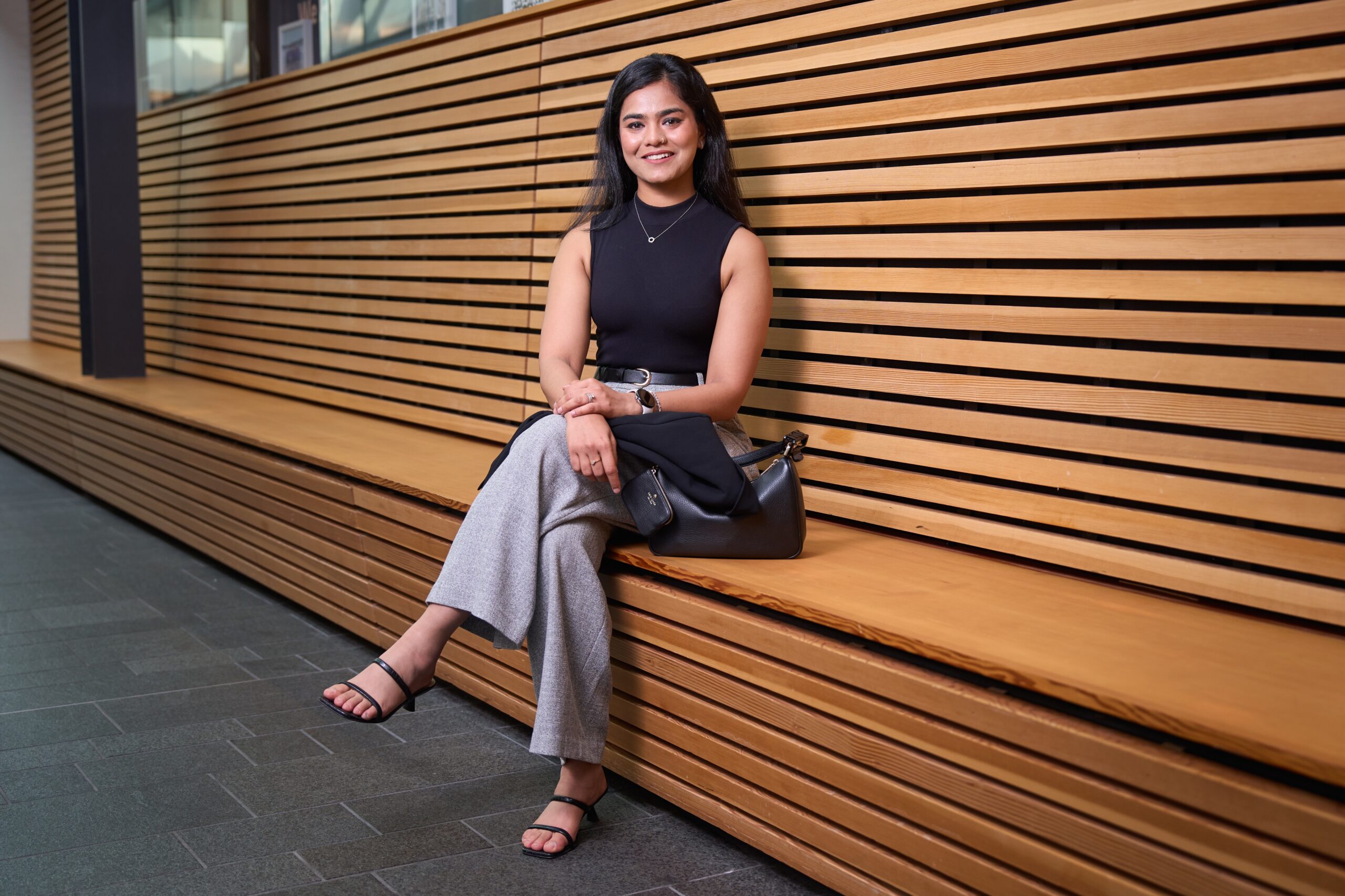
Vidusi Saraf Saraf credits Foster’s MBA Career Management with helping bring her MBA experience to life, connecting classroom learning to career strategy.
Applying Finance on a Global Scale
Today, Saraf’s role reflects the kind of impact she set out to have.
“My role sits at the intersection of finance, strategy, and large-scale infrastructure planning,” she says. “I support financial planning and analysis for a global data center portfolio, as well as long-term investment decisions, by building financial models, evaluating trade-offs across multiple infrastructure options, while partnering closely with engineering and operations teams.”
“On a day-to-day basis, my work focuses on understanding how capital is being deployed across data centers that are being built and operated around the world,” she says.
“My team and I provide strategic insights into where we see risks and opportunities in data center capital expenditure and how we expect it to trend in the near future,” she continues. “In parallel, we build long-term financial models to assess different strategic paths to meet future demand while comparing the risks, trade-offs, and opportunities across those options.”
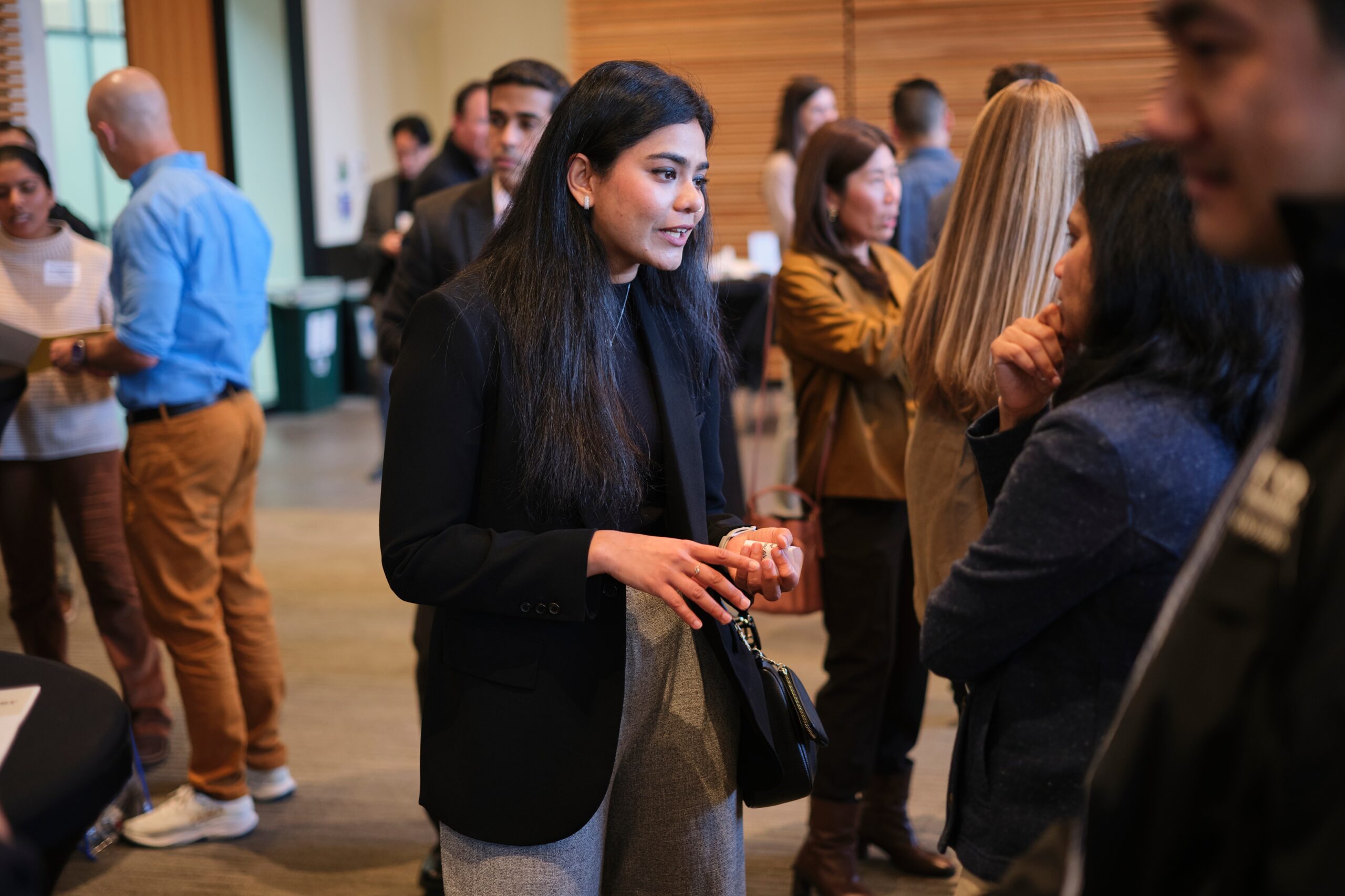
Vidusi Saraf shares her Global Executive MBA journey and career transition into big tech with current MBA students at the April 2026 Foster MBA Career Mixer.
Foster Career Coaching as the Turning Point
While the Global Executive MBA program deepened her perspective, Saraf emphasizes that execution was just as important.
“Foster’s Career Management team was a critical partner throughout my transition,” she says. “They helped me translate my prior experience into a narrative that resonated with corporate finance and strategy roles.”
She sees career coaching and mentoring as central to the overall Foster MBA experience.
“The role of Career Management in the MBA experience is just as important as the academic curriculum itself,” she says. “While the classroom builds theory and application, Career Services helps bring those learnings to life through how you position yourself, tell your story, and make strategic career decisions.”
From the beginning, that support was consistent and structured.
“From the very start of the program, I was assigned a career coach, but by the end, it felt like the entire Career team was personally invested in my success,” she says. “Whether through one-on-one coaching, the mentoring program, industry treks, mock interviews, or thoughtfully designed networking opportunities, their support was consistent, encouraging, and deeply human.”
For Saraf, what stood out most was how personalized the MBA career coaching experience felt.
“Every conversation was tailored to my individual journey,” she says. “I followed much of their advice throughout the program, which helped me bring structure and focus to my job search, use my time effectively, and move forward with clarity and confidence.”
“I’m incredibly grateful to have worked with a team that genuinely wants its students to succeed,” she adds. “Their coaching was truly a cornerstone of my MBA experience.”
With the Global Executive MBA, Saraf set out to move from analyzing decisions to shaping them.
Today, she’s doing exactly that: working at the intersection of finance and strategy, where her work helps inform how and where large-scale AI infrastructure investments are made globally.
Learn about the Global Executive MBA at the Foster School of Business.