

Breaking into more technical, AI-driven roles isn’t always a matter of ambition or aptitude. For professionals without a traditional engineering or computer science background, those doors can remain stubbornly closed, even after years of working alongside technical teams.
Annabelle Brown wanted to move closer to data, analytics, and AI. Rather than waiting for the right opportunity to appear, she chose a different path: she enrolled in the Foster School of Business Master of Science in Information Systems (MSIS) program to build the technical foundation and credibility those roles demand.
The decision to pursue the Foster MSIS changed the trajectory of her career.
Brown (MS ’25) is now an Engineering Analyst and Technical Project Manager at DB Engineering, where she works at the intersection of analytics, AI, and the built environment. Before MSIS, her role focused on communications, marketing, and project coordination. Through the program, she gained the technical grounding and confidence to pivot into a more technical role—without leaving her organization or starting over.
In this edited Q&A, Brown reflects on how that transition unfolded, what made Foster different from other programs she considered, and how the Foster MSIS supported a meaningful shift in scope and responsibility.
Let’s start with you. What’s the connective tissue across your career so far?
Annabelle Brown: Over the last five years, I’ve fallen in love with enabling teams to make data-driven decisions. That curiosity has taken me across a wide range of products and teams, and it’s taught me how to step into unfamiliar spaces and help translate between technical teams and leadership. At the core of my work is the same goal: helping people make better decisions.
You were looking to evolve. What prompted that pivot?
Annabelle Brown: I was looking to find a more technical role in a new industry and was having trouble making this double jump. I had a mentor who helped me step back and see that this wasn’t about starting over; it was about giving myself the tools to move forward.
So, I changed industries first and took a role in line with my previous experience. Next, I enrolled in Foster’s MSIS program to grow my skills and knowledge. Then, I grew into the role I wanted without needing to leave my company.
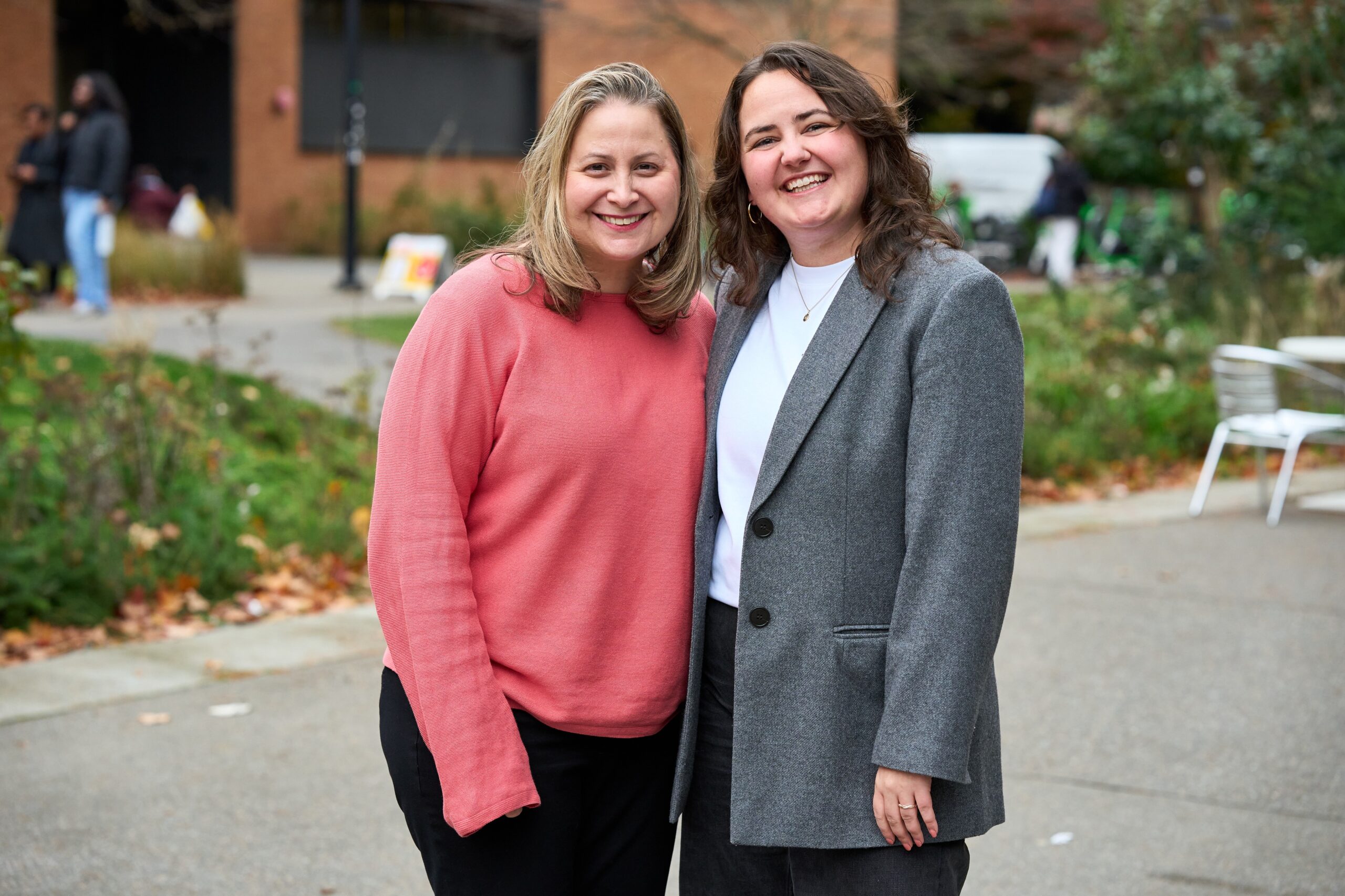
Annabelle Brown with Tal Lev, Assistant Dean of Specialty Masters Programs. Brown credits Foster’s MSIS staff and career team for providing hands-on support throughout her transition into a technical role.
When you researched MSIS programs, what made Foster stand out?
Editor’s note: Rather than filtering candidates based on academic background, Foster’s MSIS program evaluates applicants on professional experience, curiosity, and readiness to grow. It’s an approach that attracts students with diverse backgrounds and perspectives.
Annabelle Brown: The very first conversations felt different. When I spoke with Foster, the focus wasn’t on what boxes I didn’t check and how I didn’t fit in; it was on my goals and where I wanted to go.
Other graduate school programs had very rigid academic prerequisites, and I didn’t feel like there was room for someone with my background. At Foster, I spoke with program staff, current students, and alumni, and what stood out immediately was the diversity of life experiences among the Foster MSIS community.
Importantly, my MSIS classmates were not coming straight out of undergrad, and as a cohort, we drew from each other’s career experiences during classroom discussions and projects. There were experienced technologists, as well as people from marketing, consulting, operations, and education.
I was also very honest about not wanting to go back to school alone, online. I wanted to be challenged, but I also wanted an in-person learning community that would support me through the process.
Why were FOSTER MSIS and MSIS Accelerate the right bridge for you?
Editor’s note: Foster offers the MSIS Accelerate program during the spring quarter. It’s designed for non-technical students to gain skills before the program begins. Admission to MSIS Accelerate equals admission to the MSIS program. You do not have to reapply to MSIS if you are accepted to MSIS Accelerate.
Annabelle Brown: Foster’s MSIS Accelerate was huge for me. It gave me the space to build foundations in Python, SQL, Cybersecurity, and systems thinking in a way that connected directly to how I was already working, without feeling like I was starting from zero.
I think people often assume learning technology is about memorizing everything. What MSIS Accelerate taught me, instead, was how to think: how to break problems down, understand systems, and ask better questions.
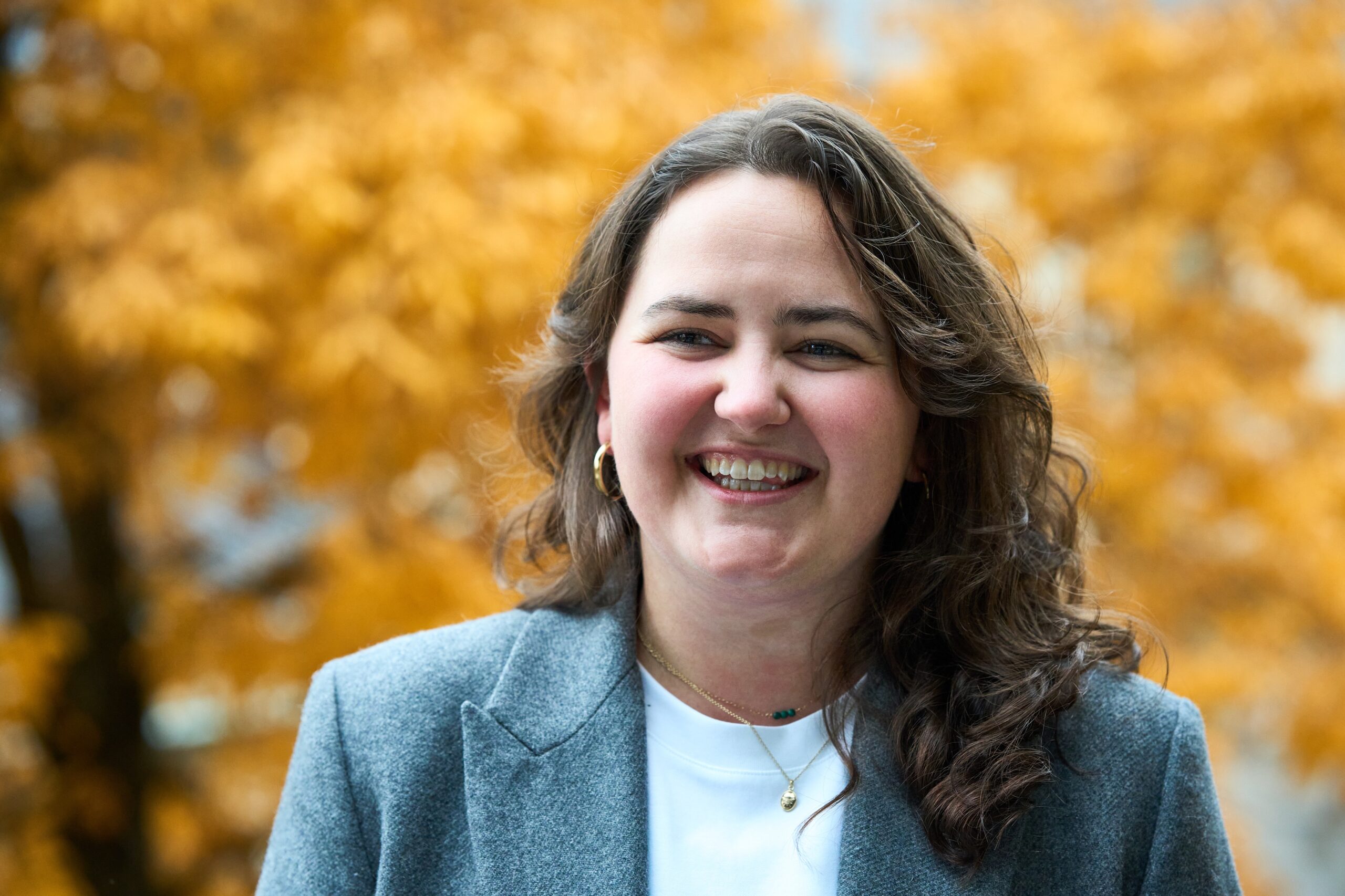
“The Foster MSIS didn’t just teach me technology. It taught me how to think.”—Annabelle Brown
Was there a faculty member who changed how you approach technical work?
Annabelle Brown: Associate Teaching Professor Manoj Parameswaran fundamentally shifted how I approach building things. He taught us how to think about applications like Lego sets.
Instead of starting a project by digging through a bin of 2,000 pieces and hoping inspiration strikes, you start by sketching where you want to end up. Then you break that vision into functional components and work backwards.
That approach helped me accept that I would never know every Lego piece, and that I didn’t need to. If I could clearly describe what I needed, I could delegate the memory and mastery of components to someone else and still build great things.
Over the program, I got to practice building new things using existing bricks. The moments when I realized I needed a truly unique piece were the moments I learned I was either doing something really wrong—or really right.
You’ve spoken highly of Foster’s staff and career management team. What did that support look like?
Annabelle Brown: The MSIS staff took the time to get to know me as a person, and that made all the difference.
Support showed up everywhere, from informal hallway conversations to last-minute mock interviews to candid discussions about navigating corporate politics. When recruiters reached out, the program staff and career team were immediately available to help me evaluate opportunities and think through next steps.
The MSIS wasn’t just about landing a job. It was about making good decisions. I watched the team do this for so many students: helping people pause, assess tradeoffs, and avoid rushing into roles that weren’t the right fit.
What’s something you learned in MSIS that changed how you show up at work?
Annabelle Brown: Almost immediately, what I was learning was relevant at work. The cybersecurity and AI classes were especially current. Every session started with what was happening globally: new threats, tools, and questions.
I’d walk into work the next day able to apply those concepts, whether that meant sharing insights about new attack vectors or leading a GenAI lunch-and-learn because I finally had the language and confidence to do so.
The biggest difference, though, was internal. I trust myself now more than I ever did before.
You have a refreshingly grounded take on AI. What question is on your mind now?
Annabelle Brown: I keep coming back to the phrase, “When you’re holding a hammer, everything looks like a nail.” AI can feel like a sledgehammer right now.
While it’s powerful, I worry about the rubble (trust, creativity, and leadership). Some things are delicate, and they deserve care. That awareness shapes how I approach my work and the conversations I have with teams.
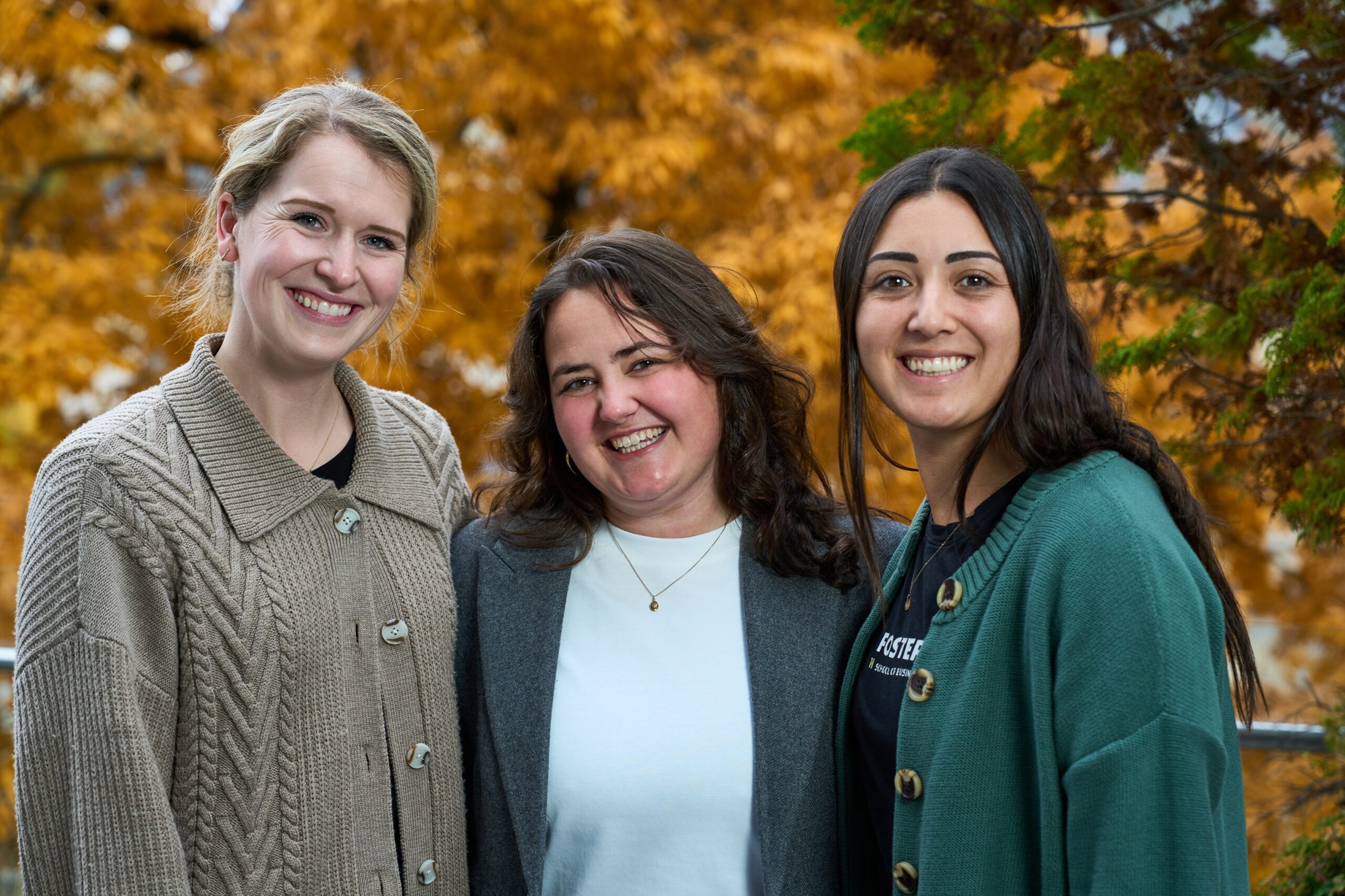
From student to alumni expert. Annabelle Brown (center) returned to campus for a Foster AI event and caught up with Sydney Donaldson (left), Director of Student Affairs – Specialty Master’s Programs, and Valerie Fetzer (right), Lead Academic Advisor – Specialty Master’s Programs, members of the team who supported her throughout the MSIS program.
The foster MSIS program is fast-paced. What did it look like for you?
Annabelle Brown: There really is enough time to live a full life while in the MSIS, even when it doesn’t always feel like it. I’d recommend making the most of your time as a student:
Work with your Foster mentor and learn from someone with real-life experience. Schedule career coaching sessions. Treat networking events and mixers like extra credit. And find something in your life that isn’t graded by a professor or a manager. That grounding is essential. I volunteered at the Seattle Public Library’s Homework Help Program, supporting K-12 students learning to read and multiply fractions, and it was always a highlight of my week (and a welcome break from thinking about my own homework).
My biggest advice is to accept the help people offer you. When someone offers to cook for you or run an errand, say yes! Your family, friends, and community want you to flourish.
For someone who’s considering a similar pivot, what do you want them to know?
Annabelle Brown: Curiosity, openness, and a desire for human connection will take you a long way.
In a world where we have GenAI at our fingertips, we don’t need more people thinking the same way. We need people with range: education and experience across disciplines.
Trying something new is hard, but it’s also incredibly rewarding. If you’re brave enough to be a beginner, the world is waiting for you.