

Walk around the University of Washington campus and, chances are, you’ll pass a building McKinstry helped bring to life. The Seattle-based construction and energy services firm has partnered with the university on projects for decades, quietly shaping the campus landscape while building relationships behind the scenes.
That long-standing partnership isn’t just institutional; it’s personal for Executive Vice President and Chief Client Officer Matt Allen (MBA 2023). Allen grew up attending games and events on campus. Years later, he returned not just as a contractor but as a student in the Foster School of Business Executive MBA program.
“The University of Washington has been part of my life in so many ways,” he says. “Pursuing the Executive MBA at Foster was a way to formalize a connection that was already personal. It was a logical choice.”
Today, Allen helps lead McKinstry’s national client strategy, bringing together teams focusing on energy efficiency, complex infrastructure, and sustainable growth. The company now employs more than 3,000 people and remains one of the region’s largest privately held firms.
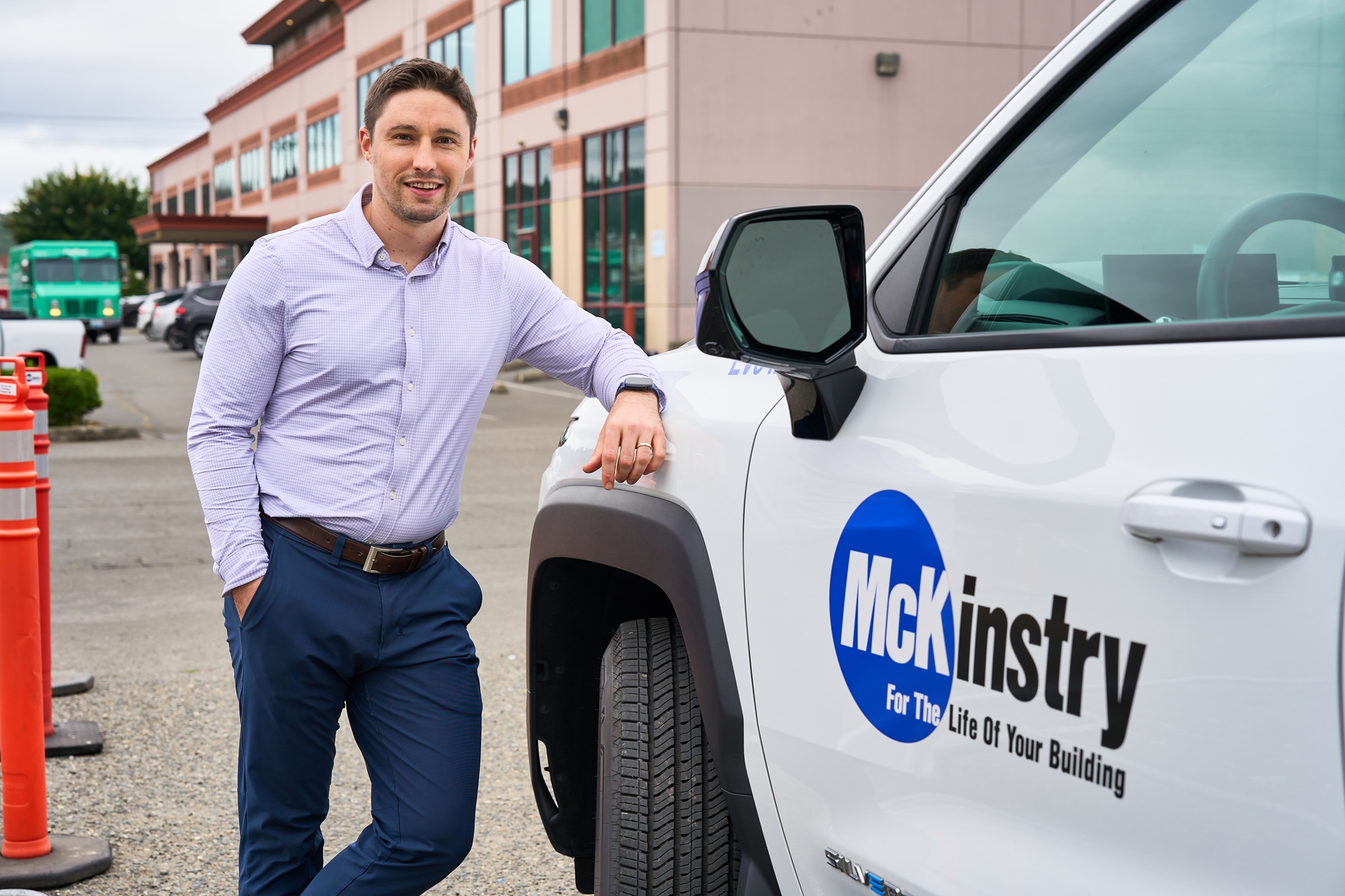
McKinstry recently took delivery of its 100th Chevrolet Silverado EV. Each electric truck is upfitted to meet trade-specific needs in the field, advancing the company’s commitment to decarbonization and sustainability.
managing complex projects and client relationships
At McKinstry, Allen oversees client success across a broad portfolio that includes mechanical systems, decarbonization initiatives, energy retrofits, and long-term facilities management. It’s work that requires both technical fluency and strong partnerships.
“Our business and the partnerships we form are built on relationships, trust, innovation, and accountability,” he says. “When we demonstrate a genuine commitment to the communities where our clients operate, it naturally builds trust and strengthens those relationships.”
partnering with foster and supporting community development
Allen has been instrumental in helping deepen McKinstry’s involvement with the Foster School of Business. The company is a longtime partner of Foster’s Consulting and Business Development Center (CBDC) and the Ascend Seattle program, focusing on helping small and diverse businesses scale.
“McKinstry is committed to supporting and uplifting small and diverse local businesses, and we have shown that commitment through vendor diversity initiatives and engagement with external organizations and institutions,” he says. “Foster’s CBDC and Ascend Seattle are both perfectly aligned with the programmatic focus on identifying potential business partners in construction and our vision in building up local MWDBEs (Minority, Women, and Disadvantaged Business Enterprises) to drive impactful change.”
Since 2021, McKinstry has sponsored local MWDBEs to participate in Ascend Seattle and continues to support the program’s Market Access Council. “This has been a powerful network allowing McKinstry to tap into and provide best practices, benchmarking, and programmatic support,” Allen says.
But the value of those relationships goes beyond business. “We rely on organizations like the CBDC and Ascend Seattle to support our vendor diversity growth, diverse business partners, and clients,” he adds. “We’re proud to partner with organizations that reflect our values and mission in the communities where we do business.”
From Founders Hall to the Burke Museum, McKinstry projects across UW’s campus reflect the firm’s values of innovation, equity, and sustainability: values Matt Allen continues to champion in his leadership role.
connecting with the next generation of innovators
In addition to supporting small business development, McKinstry has long supported the Environmental Innovation Challenge, hosted by the Foster School’s Buerk Center for Entrepreneurship. It offers students the opportunity to pitch sustainability-focused business ideas. Many of their projects align directly with McKinstry’s work in the built environment.
“McKinstry has participated for many years as a sponsor of the Environmental Innovation Challenge by sending our experts to judge student projects,” Allen says. “Since 2023, nearly 15 percent of student projects have been related to the built environment. From AI-powered HVAC system sensors, to smart hardhats, to alternative solar panel materials, it’s exciting to see students interested in working alongside us to reduce the environmental impacts of our industry and develop solutions to the array of environmental problems the world faces.”
For McKinstry, the connection is strategic as well as meaningful. “It never hurts to have the McKinstry name connected to these smart, motivated students, who hopefully will be part of our future McKinstry talent pipeline. In other words, we’re hiring!” he concludes.
leadership, mentorship and a people-first culture
Allen’s leadership approach is rooted in McKinstry’s people-first culture. As an executive, he focuses on long-term strategy and building strong, mission-aligned teams. As a mentor, he focuses on broadening access and opportunity, especially for young people who might not yet see a place for themselves in the industry.
“I love mentorship and connecting with young people to help in their journey towards their personal and professional goals,” he explains. “I have been extremely fortunate in my life in so many ways, and having a diverse and broad spectrum of mentors has been one of the most important things for me. So, I always feel extra motivation to pay it forward in this area.”
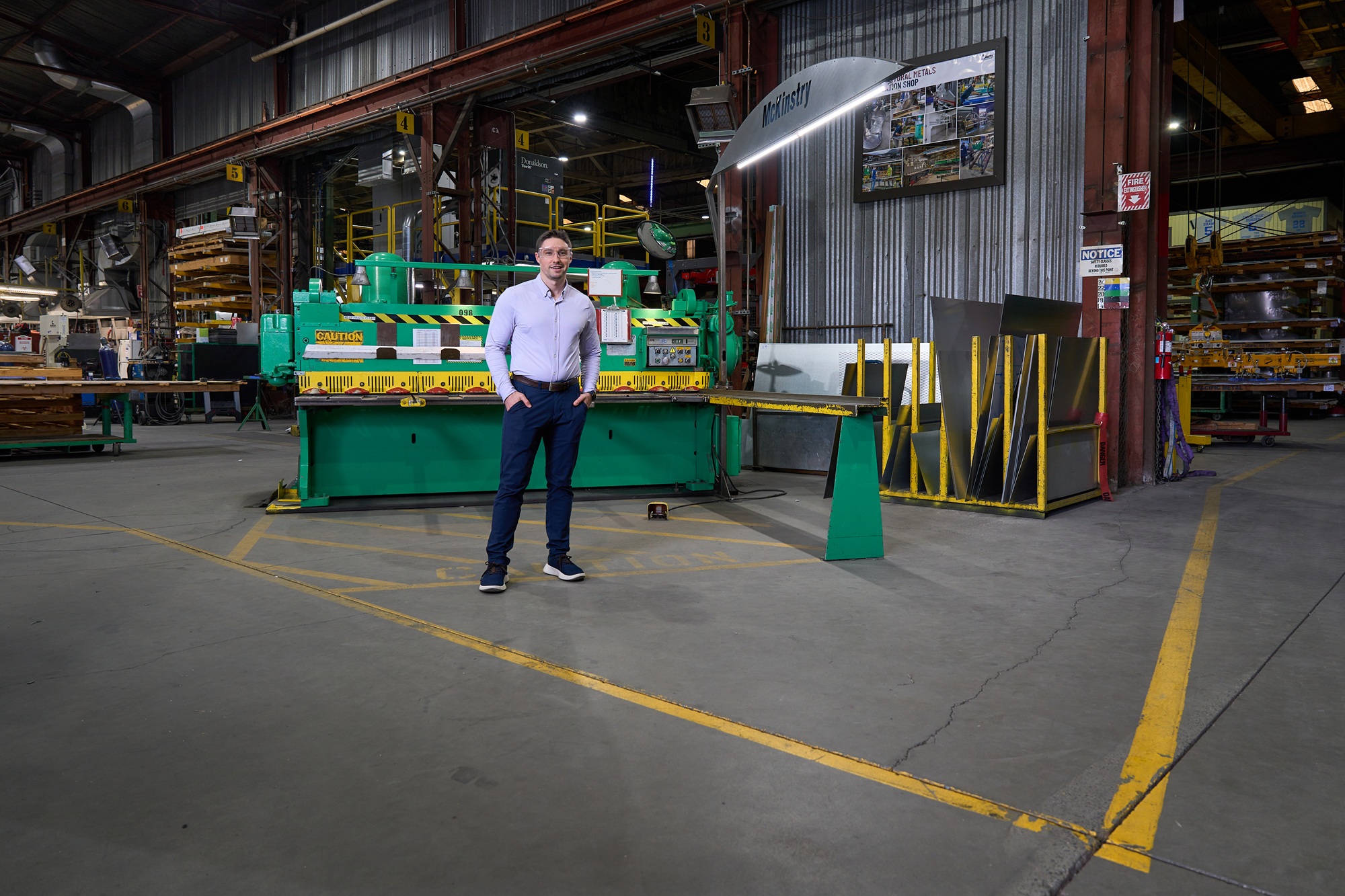
That culture of connection is visible throughout McKinstry’s operations, from workforce development programs to their Seattle headquarters, where a gym and basketball court sit just steps from the offices and fabrication spaces. “I played basketball all four years in college,” Allen says. “These days, it’s a way to get to know my colleagues and connect outside meetings and the shop floor.”

For the Allen family, purple and gold run deep. Three generations of Huskies have led McKinstry with innovation, tradition, and community impact. Here, Matt Allen and his father Dean Allen, together with McKinstry colleagues, share their Husky spirit by donating a McKinstry-built BBQ to the UW Biology Department—perfect for game day tailgates and the beloved pig roast.
matt allen on forging community impact
McKinstry’s commitment to its people also shows up in the projects it takes on, including its work on Founders Hall, the Foster School’s newest building. Designed with sustainability, flexibility, and student experience in mind, Founders Hall reflects McKinstry’s values: innovation, equity, and long-term impact.
Across campus, you’ll find another example of McKinstry’s work: the Burke Museum of Natural History and Culture. McKinstry provided mechanical, electrical, and fire protection on the facility, ensuring a sustainable and high-performance environment. McKinstry was also an early collaborator on the University of Washington (UW) Medicine Phase 3.2 project, where they integrated mechanical, electrical, and fire protection services on three floors of medical clinic space and five floors of research lab space. Not too far away is another McKinstry project, the University of Washington Center for Behavioral Health & Learning.
“Beyond our innovative design-build projects at the University of Washington, as well as our decarbonization work, I hope our community impact is remembered for truly fostering equitable and accessible opportunities,” Allen says. “Ultimately, we hope McKinstry’s legacy will include not just the physical structures we build, but also the human potential we help to cultivate within our communities.”
That sense of legacy runs deep. Matt Allen represents the third generation of family leadership at McKinstry, which was co-founded by his grandfather, George L. Allen (B. Eng. 1949), a member of the UW Construction Hall of Fame, and Merrill McKinstry. Today, the company is led by Matt’s father, Dean C. Allen (BS 1976), a proud Husky and longtime champion of sustainability and community impact.
“I’ve been incredibly fortunate to grow up around strong role models,” Allen reflects. “Watching my dad lead with vision and values has greatly influenced how I think about leadership, culture, and giving back.”
Allen saw Foster’s Executive MBA as a way to sharpen his skills and broaden his impact inside McKinstry and beyond. “I was at a point in my career where I wanted to deepen my strategic and financial acumen,” he says. “The Foster Executive MBA gave me frameworks and tools I use daily, and introduced me to a group of smart, motivated peers who still inspire me.”
Today, Allen continues to build on that experience, guiding McKinstry’s national growth strategy, mentoring emerging leaders, and deepening his connection to the Foster community. His relationship with the university has come full circle: from childhood memories on campus, to building its infrastructure, to earning his MBA.
Now raising a young family in Seattle, Allen says his goals for the company, the community, and his family are deeply intertwined. “I want to help create the kind of future I’d be proud to hand off to the next generation,” he says. “Being part of the Foster community is another way I get to do that.”
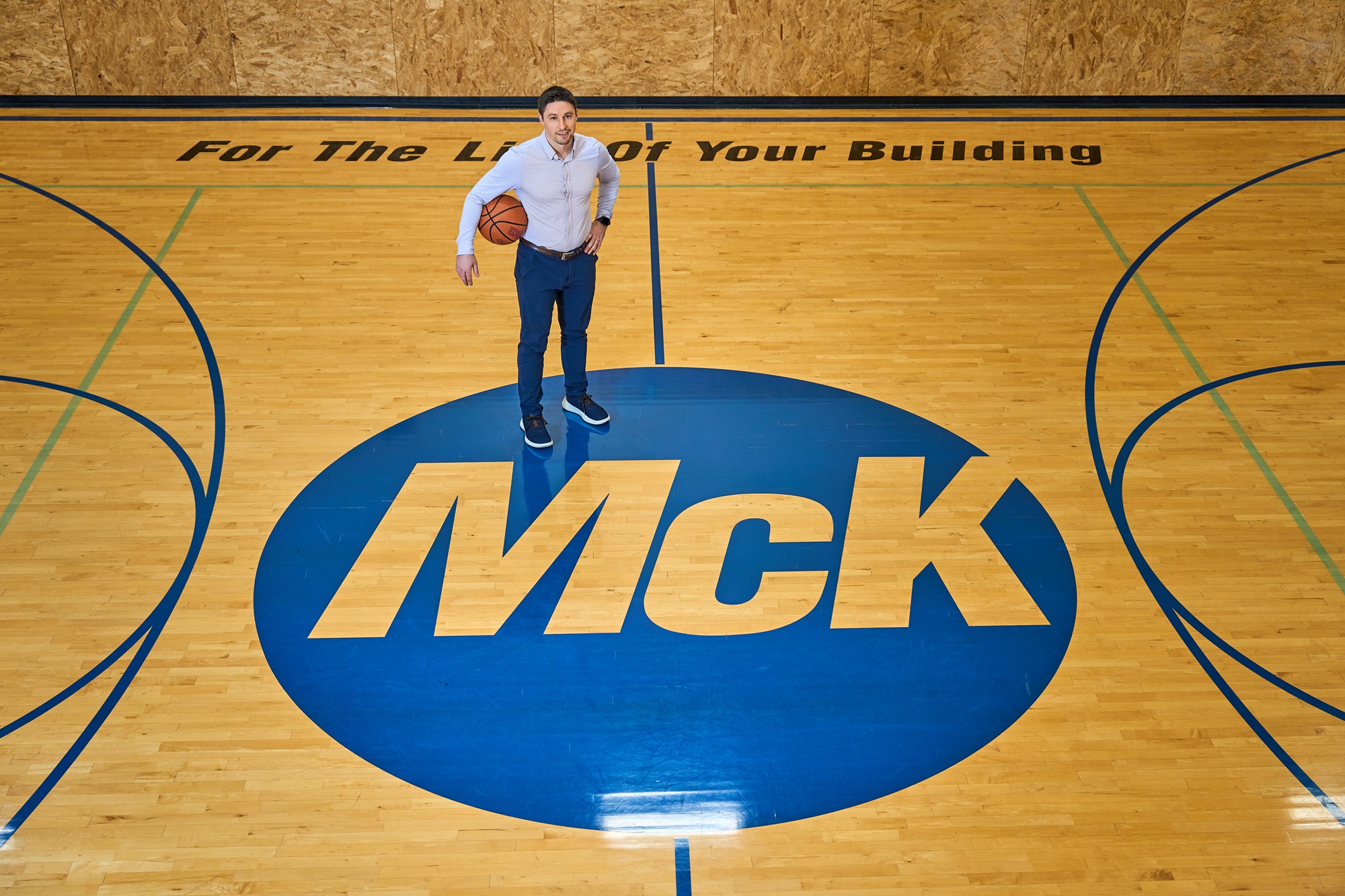
“Ultimately, we hope McKinstry’s legacy will include not just the physical structures we build, but also the human potential we help cultivate.”—Matt Allen