

Clyde D. Walker’s (BA 1977) remarkable career has reached for the stars, though his biggest impact has been felt here on Earth—and much of it at the University of Washington.
After capping his career leading HR at Continental Mills (now the Krusteaz Company), he now chairs the board of directors of First Choice Health, an organization he has served for nearly three decades.
Walker also maintains a long and abiding commitment to the University of Washington and the Foster School. His 11 years on the UW Alumni Association Board of Trustees culminated in his 2016-2017 presidency. And he currently chairs the Diversity, Equity and Inclusion (DEI) committee of the UW Foundation Board and serves on the Chancellor’s Advisory Board at UW Bothell.
At Foster, Walker recently joined the dean’s advisory board and also advises the Center for Leadership and Strategic Thinking. His own strategic leadership has shaped a school-wide initiative to create a more diverse, equitable and inclusive learning community. For his consistent and unwavering support of DEI at Foster—and especially the resilience and growth of its Black student and alumni communities—Walker will receive the 2023 Spratlen Legacy Award at this year’s Celebration of African American Alumni Achievement.
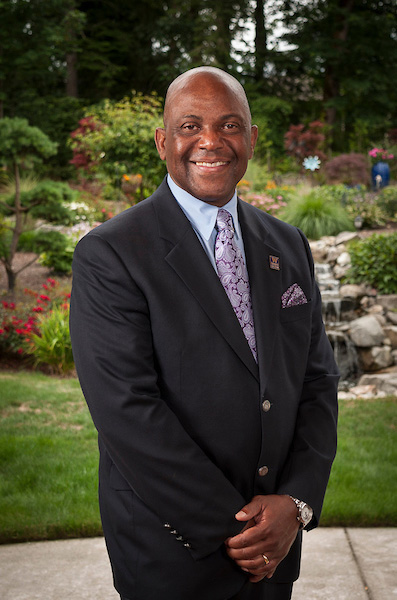
Clyde Walker during his UWAA presidency. Karen Orders Photography.
Strong foundation
Walker’s story begins in south central Los Angeles. He was fortunate to grow up in a household with two parents and five siblings. More importantly, he came from “a family of accountability,” he says, “a family that valued and prioritized education.”
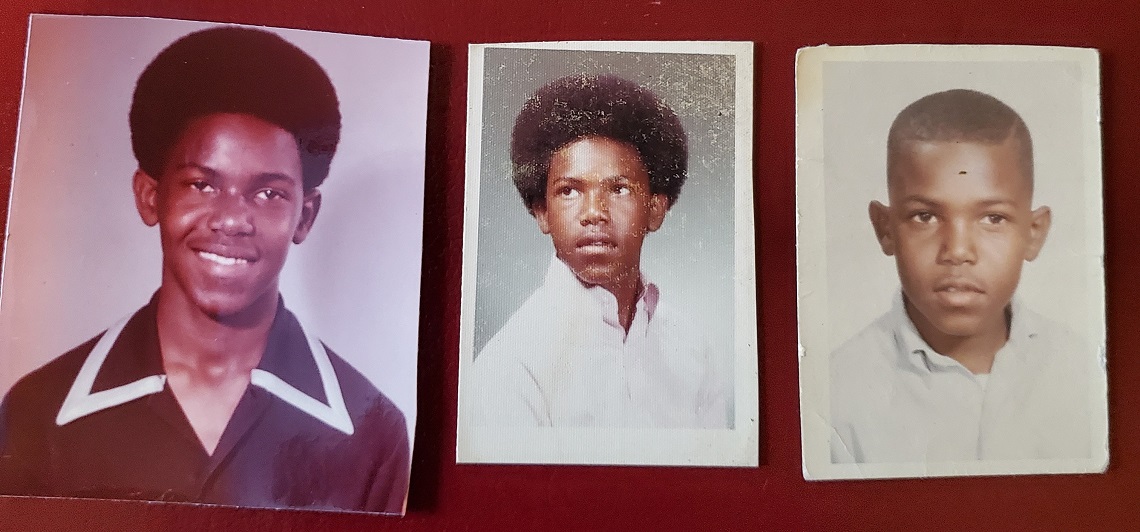
Walker, pictured at age 20, 18 and 11, is the product of a family dedicated to education.
The reason? Both parents had come of age in rural Alabama in the 1920s and ’30s, when little priority was made for educating Black children.
While raising the first four of Walker’s siblings, they made the bold decision to join the mass migration from the South to the West. In 1954, they moved from Alabama to Los Angeles in search of a better life for their family. Clyde Walker was born after they arrived.
His parents’ sacrifice “allowed me to take advantage of opportunities that a lot of other folks were not able to,” he says. “But it was really built on a strong work ethic, and it was built on doing what you said you were going to do, being reliable, and being dependable, and taking advantage of opportunities that were presented.”
Proof of concept
Perhaps the greatest opportunity of his life presented itself while Walker was just starting college at the UW. Or rather, a family friend named Marshall Porter presented it: an internship at the famed Jet Propulsion Laboratory that began the summer after his freshman year.
“JPL was really pushing diversity ahead of its time,” Walker says. “And so, they allowed an inner-city kid to come to the lab, to be surrounded by some of the world’s smartest people. But they made it safe, and they made it comfortable to be curious and to explore. And so, my career really started on the premise of curiosity. I was a curious child anyway, but the lab allowed me to pursue my curiosity.”
Non-linear trajectory
Walker says it has not always been easy, as a Black person, to navigate the business and academic environments he has encountered.
“It’s not always a meritocracy, regardless of what people say. There’s a premise that people of color have to work twice as hard to get half as far. And, at some level, that is absolutely true,” he says. “But my parents were clear with us: that’s not an excuse and that’s not a reason not to excel or not to try or not to do your absolute best.”
I don’t believe in giving back; I believe in paying forward. Because it’s not giving if people are willing to work for and earn what they get. Someone helped you get to where you are, so make sure you help the next person get to where they can realize their full potential.
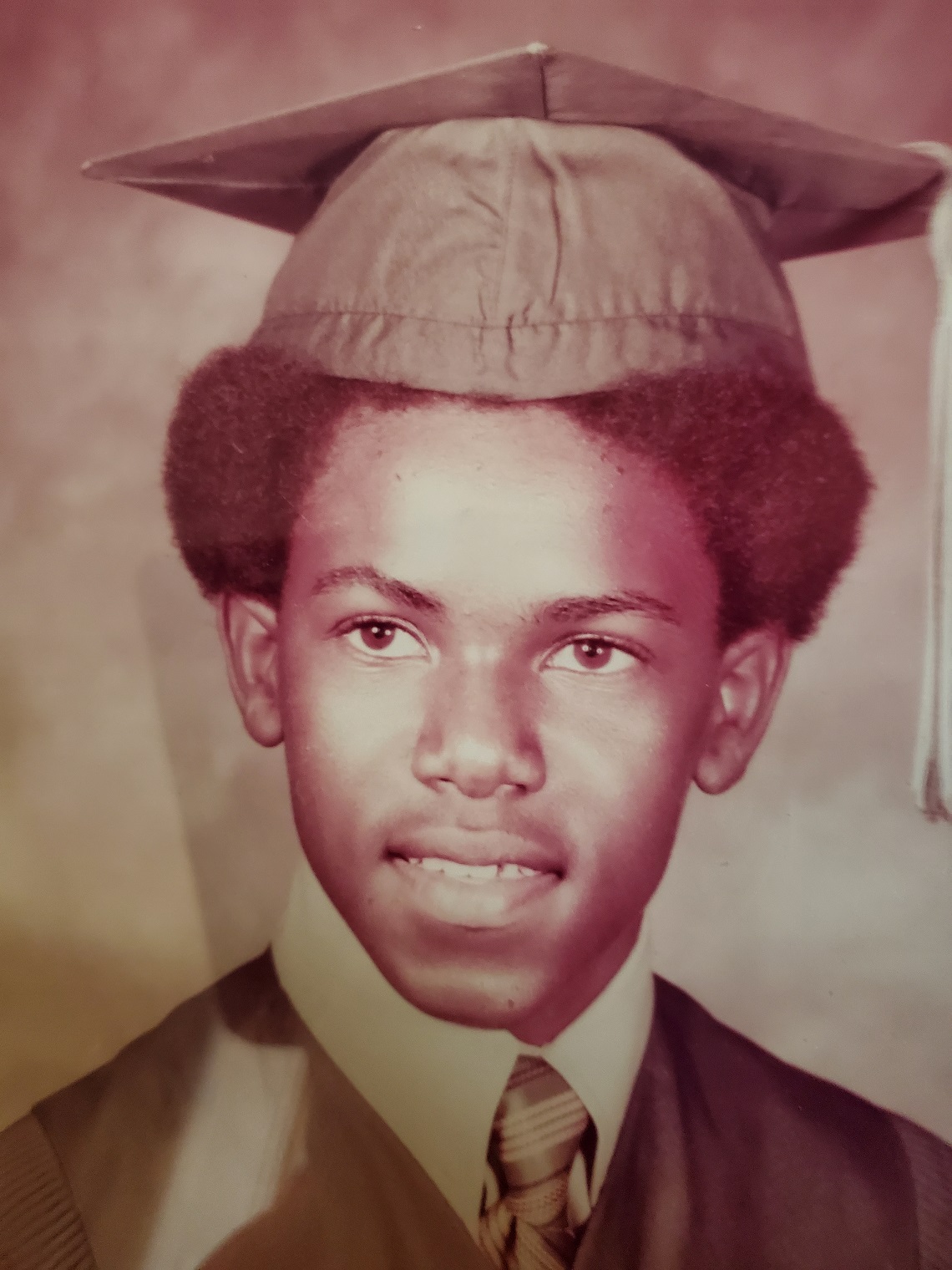
Walker at high school graduation, just months away from the UW Foster School.
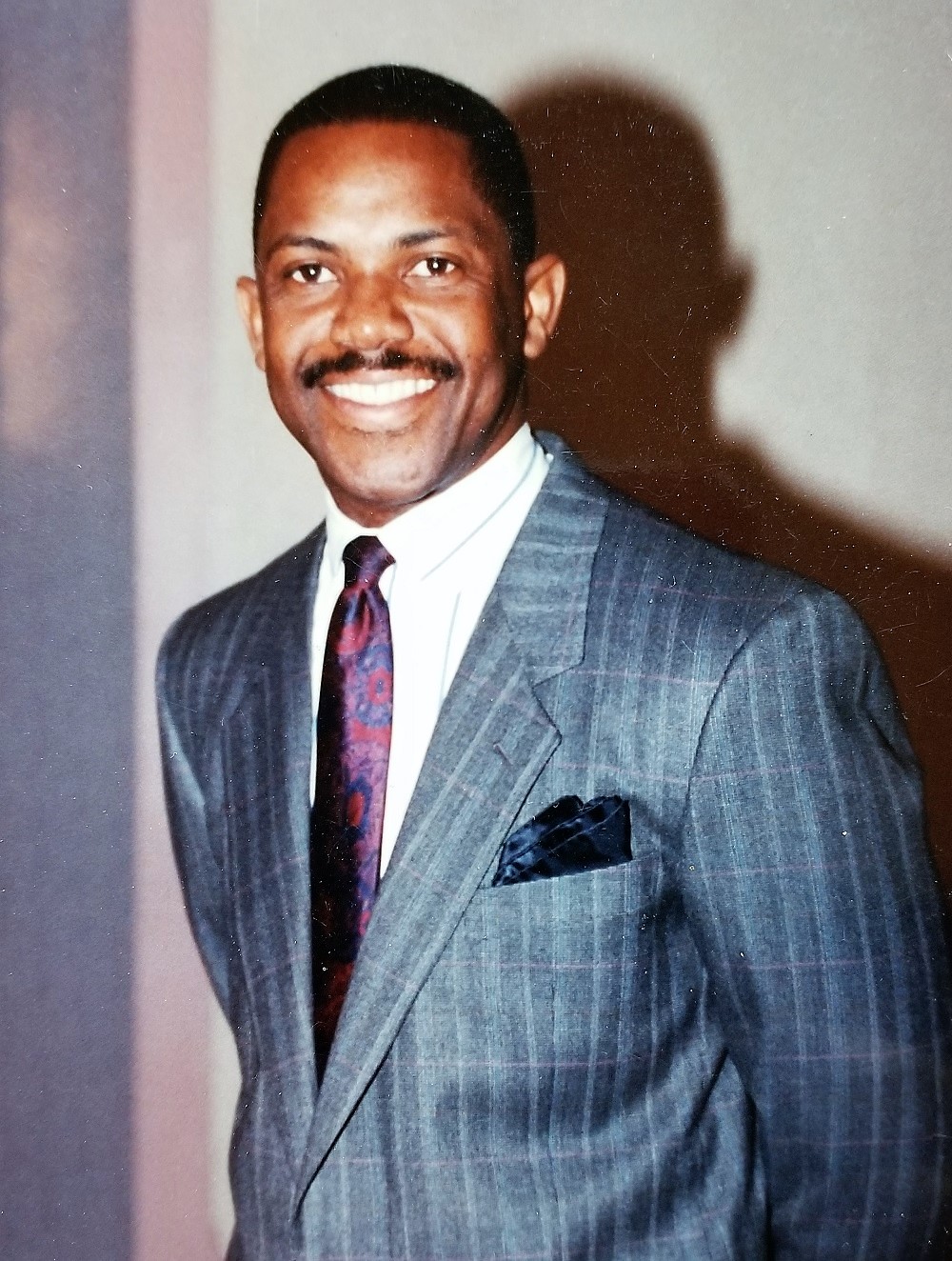
By 1986, Walker was already an established executive in the aerospace industry.
It takes a community
Clyde and Sherrelle Walker, his wife of 42 years, were raised with a shared philosophy of life. And they passed down their families’ foundational values to their own three grown daughters: Tiffani, a licensed attorney; Allison, a licensed architect; and Adrienne, a program manager (a proud father reports).
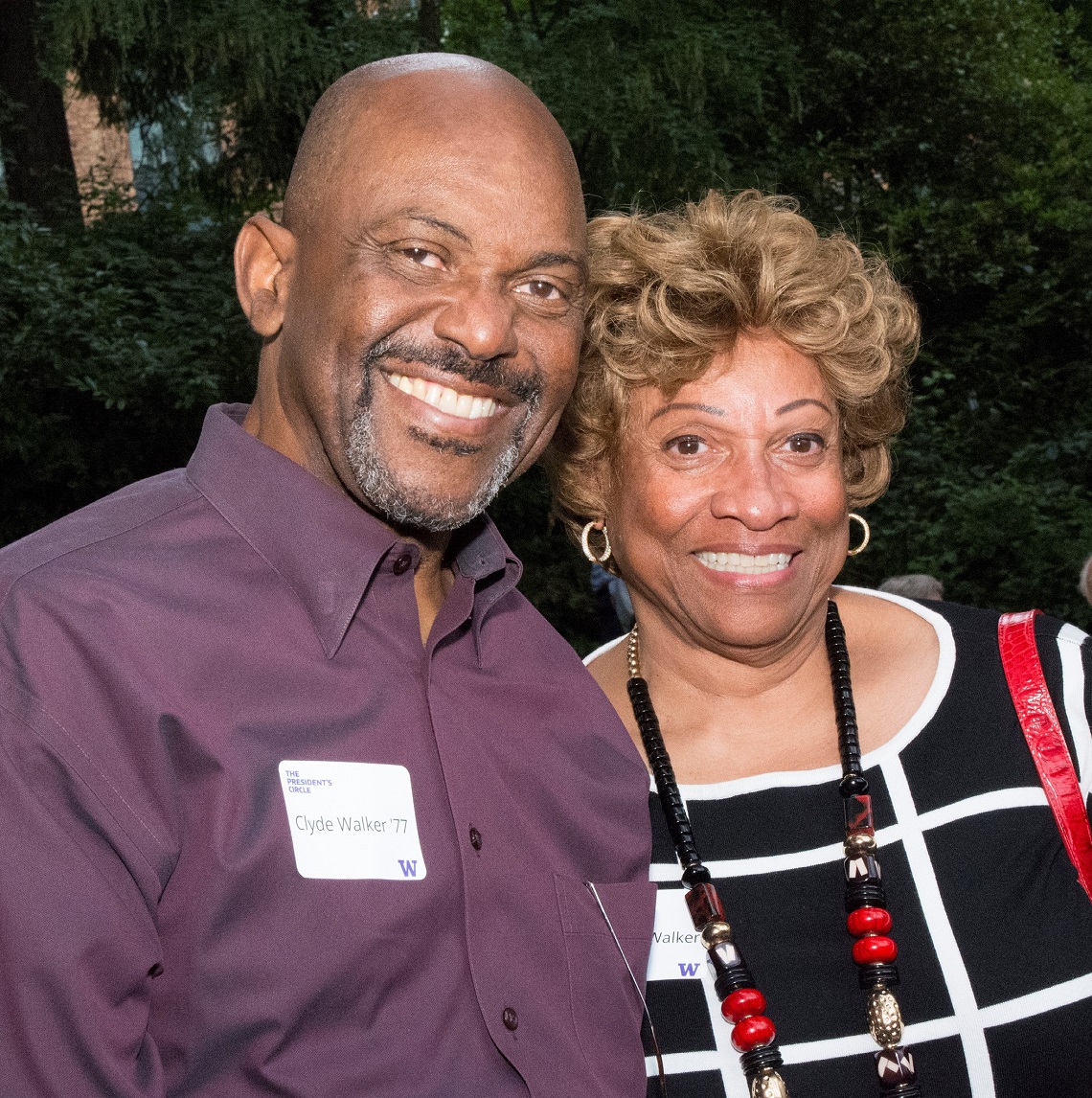
Clyde and Sherrelle Walker have maintained an unstoppable partnership through 42 years of marriage.
Clyde Walker’s number one piece of advice to young people—and especially to young Black people—is to fully understand and harness the value of community.
“My dad told me, when I was very young, if you want to be good at something, pay close attention to people who already are,” Walker says. “I’ve always followed that advice in terms of leaning on people’s expertise and knowledge to help me navigate and make decisions. Build a community. Rely on each other. Uplift each other. Support each other. But do it in a very honest, authentic way.”