

In Fall 2025, Nick O’Brien and his teammates made history by winning the University of Washington’s first NCAA Division I national championship in the College Cup final.
At the same time, O’Brien was completing a double major in accounting and finance while preparing for life after university.
As he nears graduation from the University of Washington, O’Brien finds himself weighing two very different futures: accepting a full-time offer in audit or continuing to pursue his dream of playing professional soccer.
“Winning the championship was unforgettable,” O’Brien says. “What stays with me even more are the habits behind it: accountability, discipline, resilience, and leadership. Those are the same qualities I relied on inside Foster classrooms.”
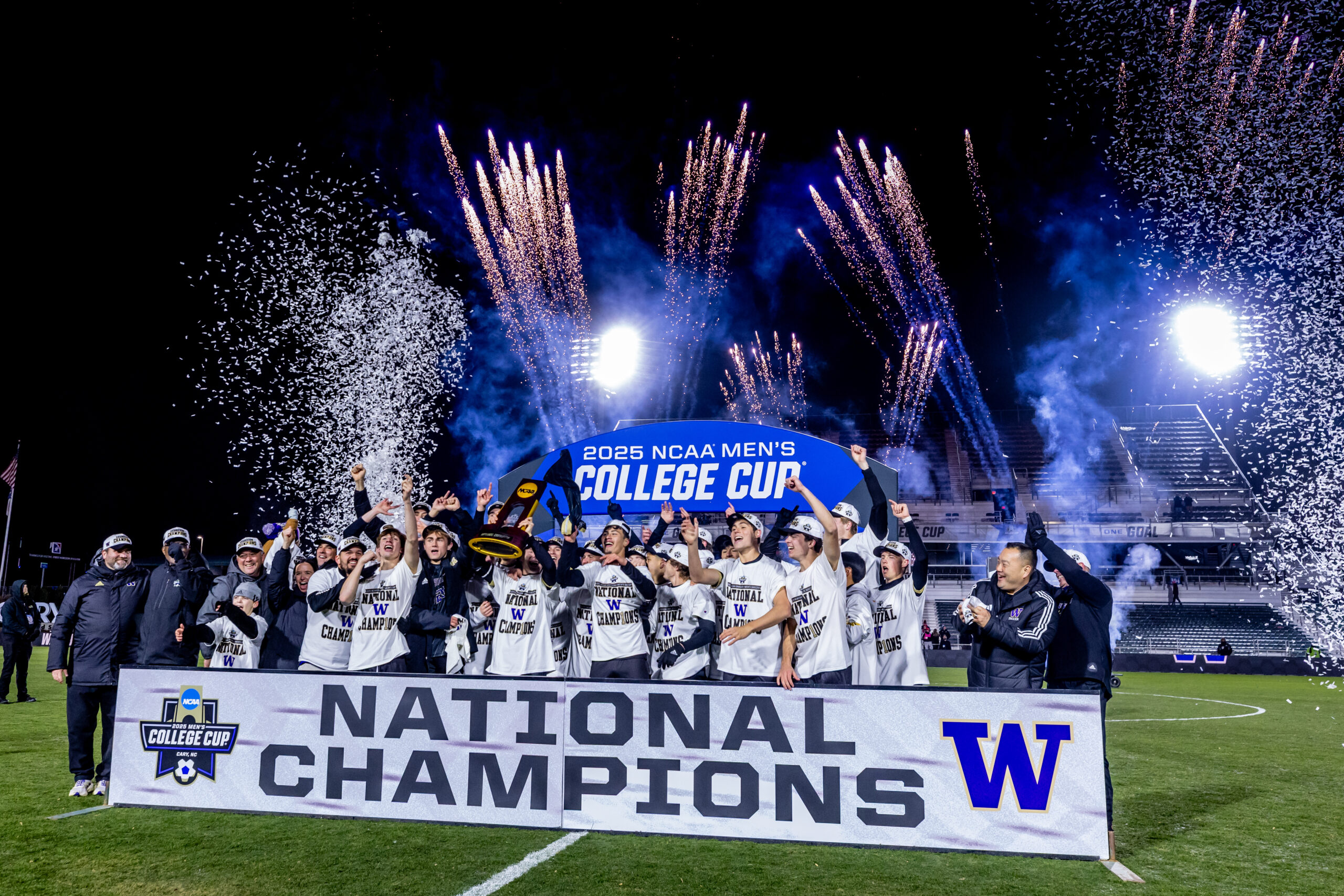
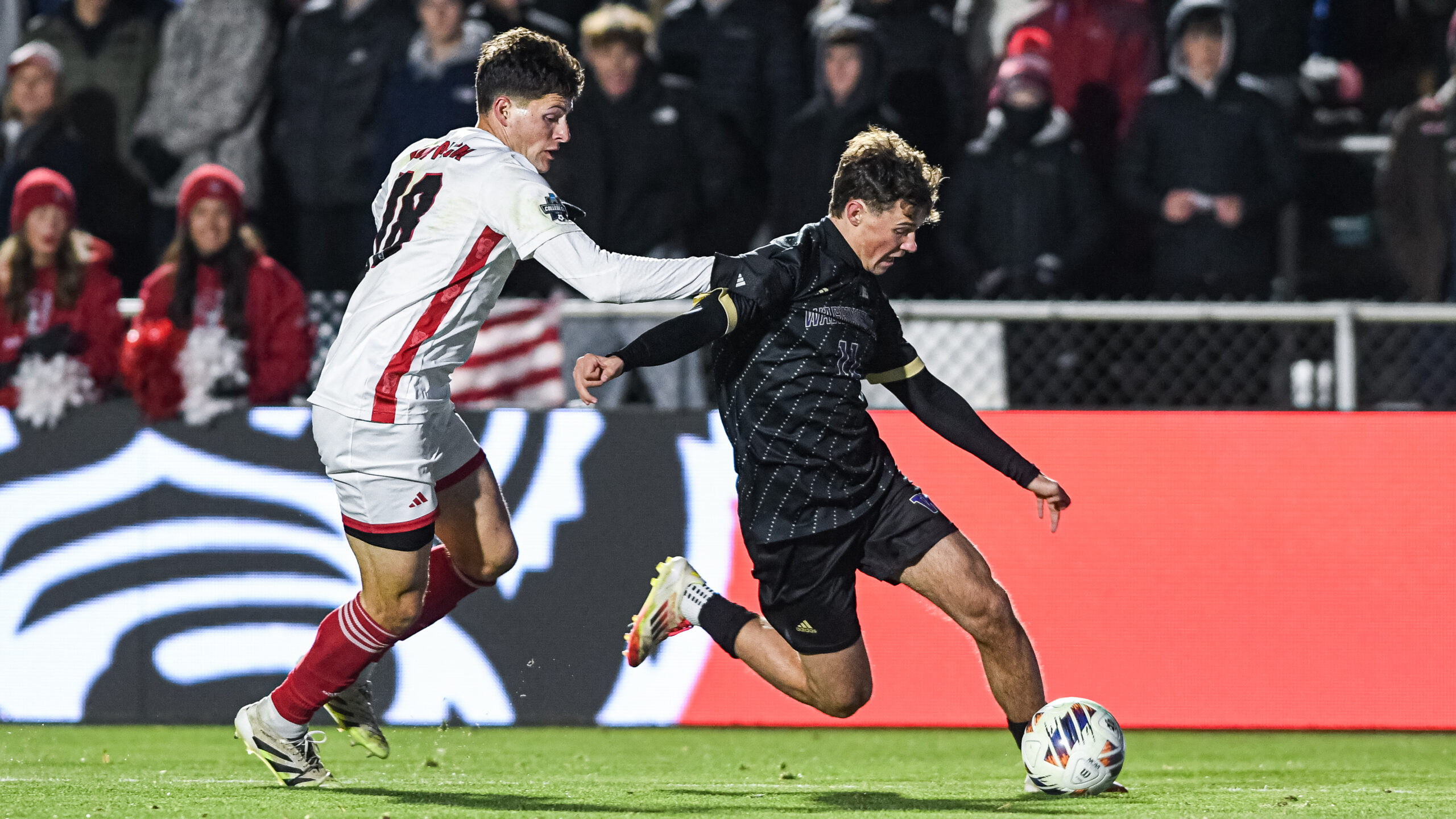
The University of Washington men’s soccer team defeats North Carolina State in the national championship 3-2 at the College Cup in Cary, NC on December 15, 2025. (Photography by Scott Eklund/Red Box Pictures)
Meeting standards on and off the field
For the past four years, O’Brien has balanced the demands of Division I athletics as a forward with the rigor of a Foster School of Business education. What made the difference, he says, was the professors who took the time to get to know him beyond the classroom.
When O’Brien first arrived at the University of Washington, he knew he would find strong academics and competitive soccer. What surprised him most was how personally invested the Foster faculty would become in his experience.
“Coming to a large public university, I didn’t know what to expect,” O’Brien says. “I honestly didn’t think I’d get to know any of my professors. What I learned from my time at Foster is that the teachers really want to get to know their students.”
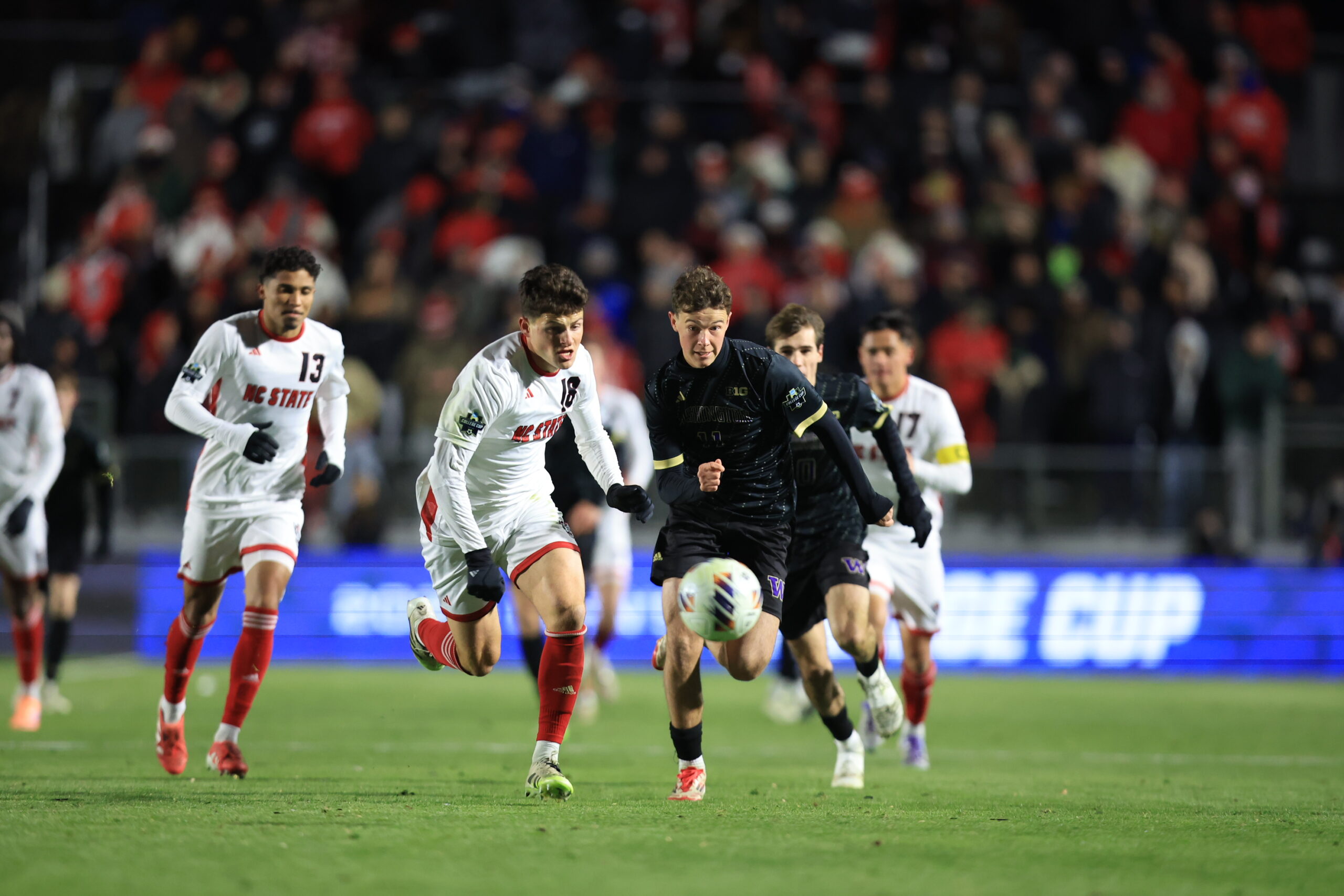
Nick O’Brien (center) in action during a soccer game.
Faculty support beyond the classroom
That support became essential as O’Brien juggled travel schedules, coursework, practices, and the pressures of competing at the highest collegiate level. Professors worked with him to navigate missed classes and demanding schedules while ensuring he remained fully engaged in the coursework.
“I communicate early whenever I know I’m going to be out of town, and I ask for help,” O’Brien says.
Faculty worked with O’Brien to navigate the logistics of competing across the country. Exams sometimes took place in hotel rooms or on the road between matches. Yet O’Brien says the expectations never changed.
“The standards remained the same,” O’Brien shares. “The professors just helped us find a way to meet them.”
During his sophomore year, O’Brien enrolled in Professor Tod Bergstrom’s Introduction to Law, a course he still considers formative.
“You don’t need to be the smartest person in the room to do well in his class,” O’Brien says. “It’s about responsibility and work ethic. Professor Bergstrom’s class reinforced that discipline and hard work translate. And Foster expects it.”
More importantly, O’Brien says Bergstrom understood the discipline required to succeed as a student-athlete.
“Nick is a remarkable example of what student-athletes can achieve,” Bergstrom says. “While excelling on the pitch as a member of the UW men’s soccer team, Nick has distinguished himself equally in the classroom, meeting the high standards of a Foster business education with the same drive and discipline he brings to his sport.”
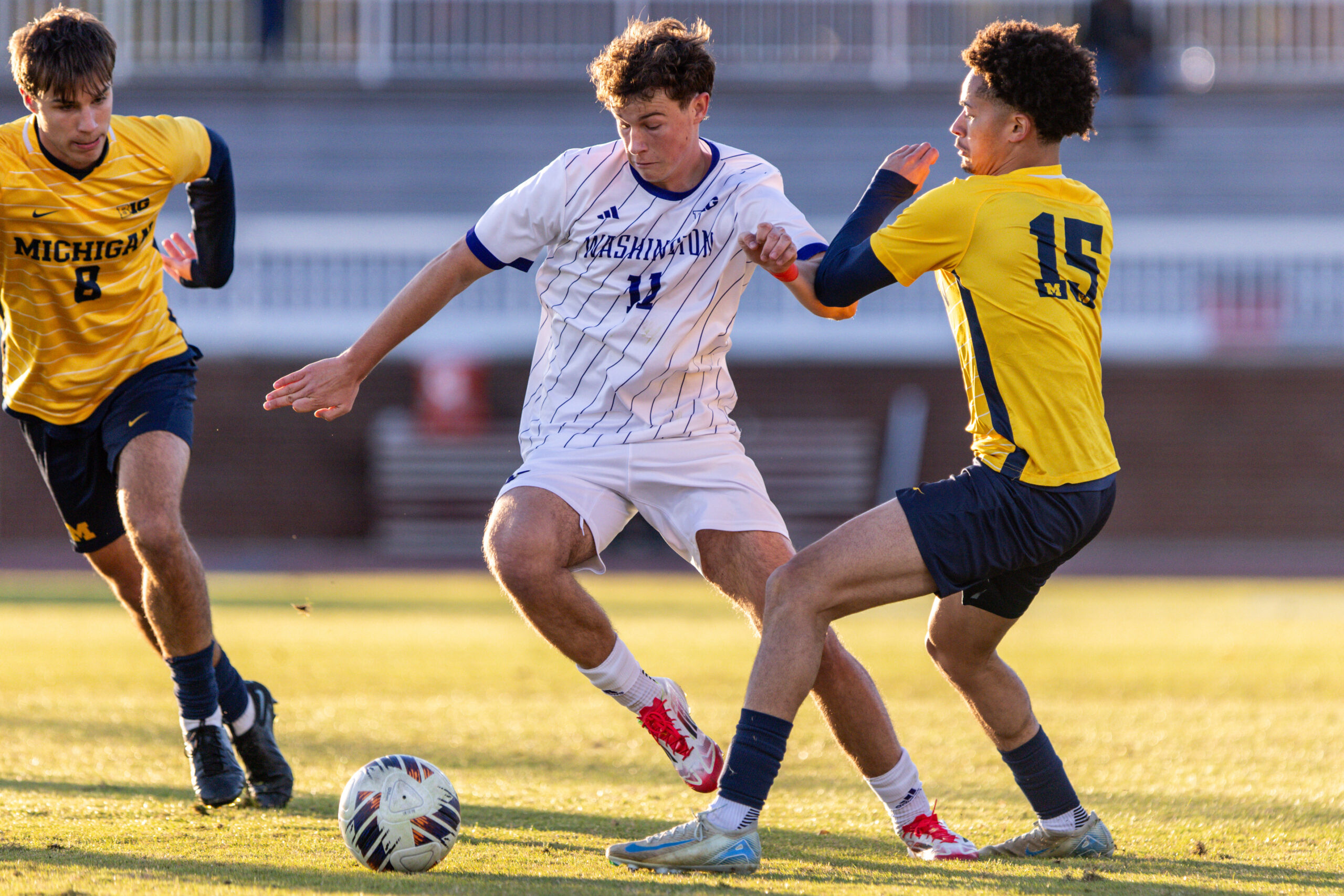
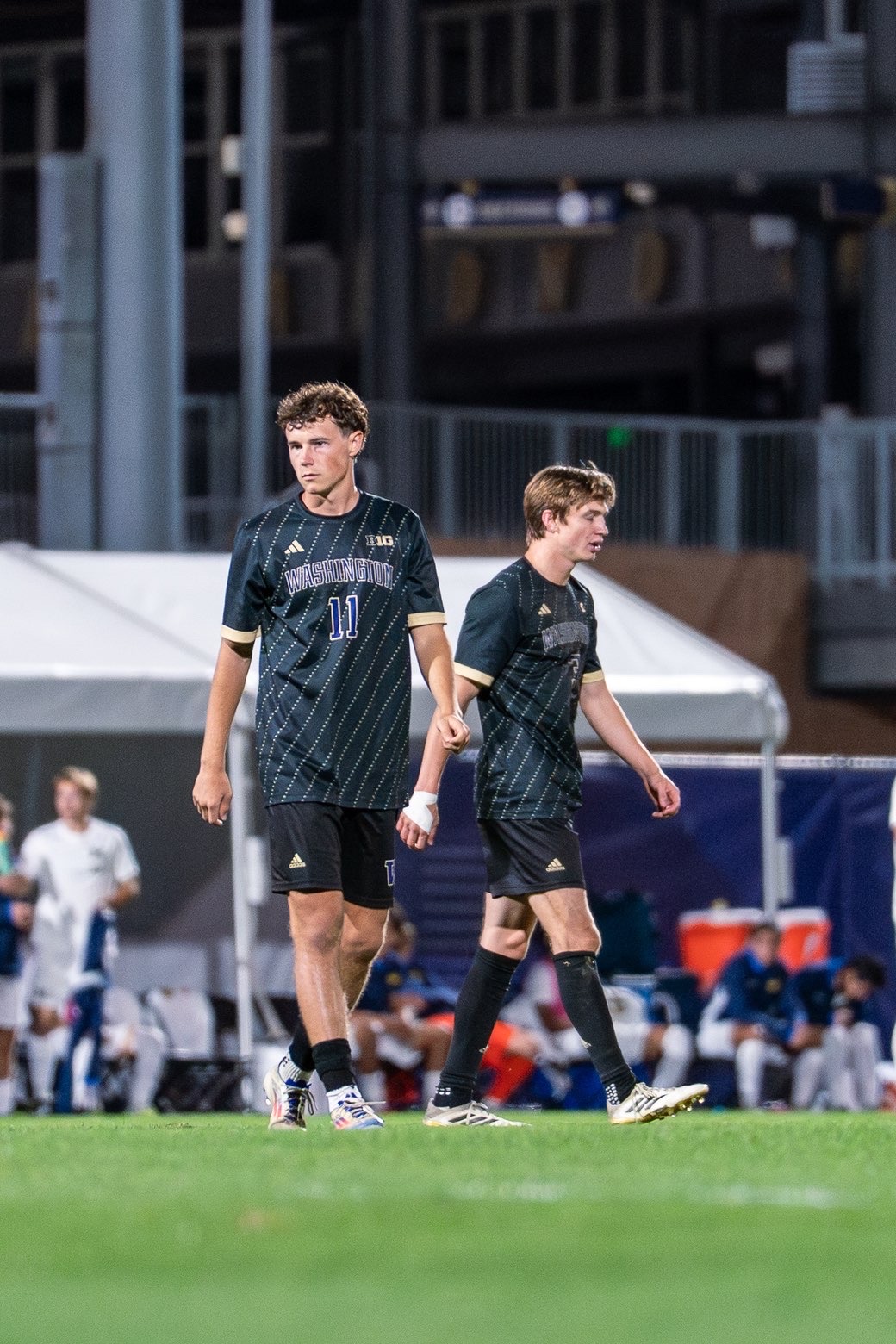
Game One of the Big Ten Men’s Soccer Tournament between Michigan and Washington on November 12, 2025 in College Park, Maryland. (Photo by Austin DeSisto/Big Ten/University Images via Getty Images)
Connecting with professors
By his senior year, the balancing act had become even more complex.
While the soccer team was in the middle of its historic championship run, O’Brien was enrolled in Investments with Professor Yang Song. A fellow soccer fan, Professor Song regularly checked in with O’Brien about both academics and athletics.
“During that quarter, I had weekly cross-country travel, was enrolled in three finance courses, and was processing the passing of a very close friend,” O’Brien says. “Those moments with Professor Song made me feel like I wasn’t just a name on a piece of paper or a student ID number. I’m a person, and I’m supported and cared for by my professors.”
After the Huskies won the national title, one of the first messages O’Brien saw was a congratulatory email from Song.
“Professor Song told us he had watched the game with his son and that he was so proud of us,” O’Brien says. “We sent back a photo of us with the championship trophy.”
For O’Brien, those small moments of connection reflected something larger about his undergraduate experience.
“When professors take the time to connect in personal ways, it makes a difference, especially when you’re trying to manage more than you thought possible.”
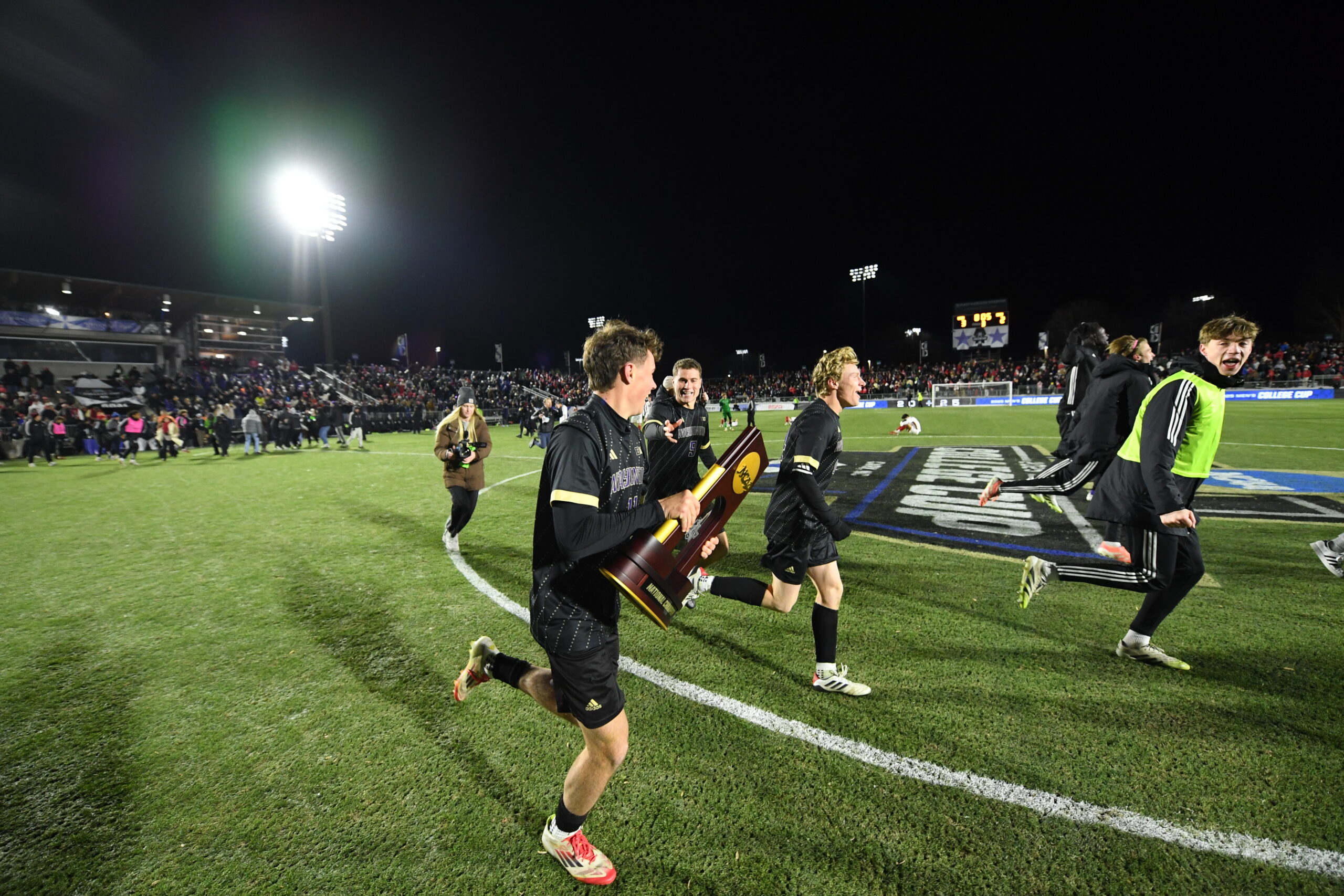
Nick O’Brien and his teammates celebrating with the NCAA Division I Men’s College Cup National Championship trophy.
The Power of personal connection
Soon after the championship season, O’Brien faced another challenge: ACL reconstruction surgery and meniscus repair.
While recovering from injury, he was enrolled in Professor Crystal Finkelstein’s Tax Accounting course.
“That whole experience was very challenging, both physically and mentally,” O’Brien shares. “But Professor Finkelstein was incredibly supportive throughout this process. She helped me stay on track academically while navigating doctor appointments, rehab, and the uncertainty that comes with injury.”
O’Brien emphasizes that faculty support never meant lowering expectations. “That combination of high expectations and genuine compassion defines Foster to me.”
Professor Finkelstein agrees.
“Supporting student-athletes means holding them to high academic standards while also recognizing the demands they face outside the classroom,” Finkelstein says. “When that balance is in place, students like Nick thrive in both, developing the resilience, communication, and leadership skills that position them to become thoughtful, adaptable leaders in their careers after graduation.”
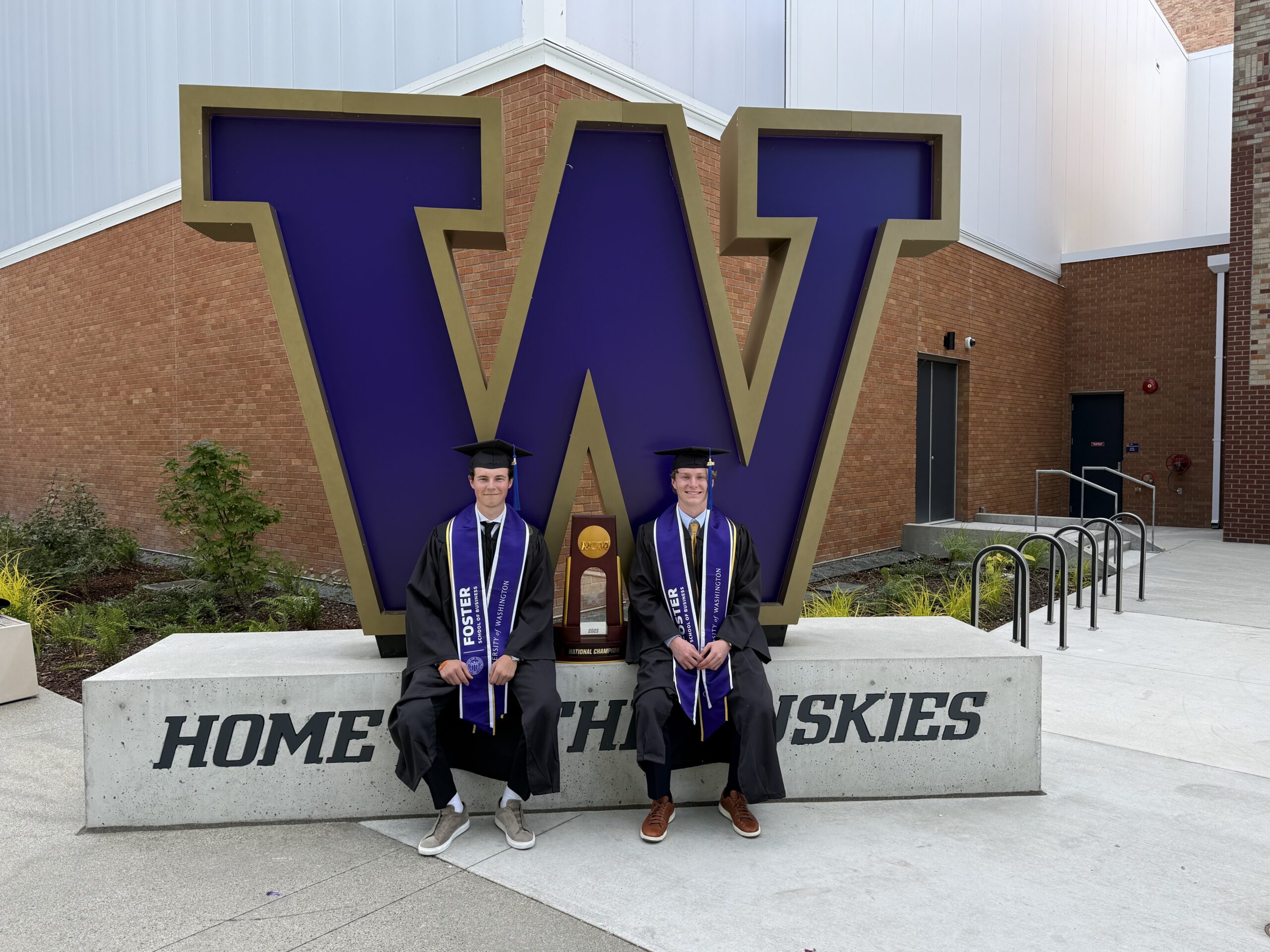
Nick O’Brien (left) and his teammate, Joe Dale (right), posing in front of the block W sign at their graduation.
Preparing for what comes next
As O’Brien prepares for life after graduation, he sees the impact of his classroom experiences extending beyond coursework.
During an internship in Audit & Assurance, he found himself drawing directly from lessons learned in the classroom.
“I remember sitting in my first client meeting thinking, ‘I’ve been trained for this,’” O’Brien reflects. “Not just technically, although Foster prepared me in that regard, but in how to think, how to ask questions, how to be accountable, and how to show up prepared.”
Even before graduating, O’Brien received a full-time offer in audit. Still, he has not given up on his goal of playing professional soccer.
“Right now, I’m focused on getting healthy and seeing where my future can take me,” he says.
The people behind the experience
When reflecting on his four years at the Foster School of Business, O’Brien does not return to championships or internships, but to the people who helped shape him along the way.
“It’s the people,” he says. “Professors who challenged me and checked in. Teammates who pushed me. Advisors who supported me. At Foster, we talk about ‘Better together. Better tomorrow.’ I’ve come to understand that it’s not just a motto. It’s something you feel in classrooms, on the field, and in moments when you need support the most.”
Over four years, those relationships helped O’Brien navigate a national championship, personal loss, injury, and the transition from student-athlete to young professional.
“Ten years down the line,” O’Brien says, “the connections I’ve made at Foster are what I’ll remember most.”