

Ask 10 marketing managers how to run an influencer campaign and you might get 10 different answers. Go big or go niche? Celebrities or creators? The disagreements aren’t just philosophical; the research itself has been pointing in different directions for years.
“Influencer marketing is a pretty mainstream part of the media mix, which would suggest that we understand how it works,” says Shailendra “Shelly” Pratap Jain, the Bret Wheat Endowed Professor of Marketing at the Foster School of Business. “But when we started this project, we realized that the empirical evidence was scattered and contradictory across individual studies.”
That led Jain and his co-authors — Mojtaba Barari of the University of Newcastle and Martin Eisend of the University of Vienna — to aggregate what the field knows, synthesizing 71 papers, 135 experiments, and 571 effect sizes in a meta-analysis published in the Journal of the Academy of Marketing Science.
Stepping back from single-study noise
A meta-analysis is, at its core, an attempt to see the forest for the trees.
“We took a step back from what we call single-study noise,” Jain explains, “and pooled the findings across these papers and experiments. This helped us quantify quite precisely how effective influencers are relative to other endorsement formats, how they work, and under what conditions they don’t work.”
The short answer to whether influencers are worth it: yes, and more than researchers expected.
Across all the experiments, influencers significantly boosted engagement, meaning likes, comments, shares, and word of mouth; and purchase intention, or what consumers say is the likelihood they’ll buy a product. They also outperformed three major alternatives: brand posts on social media, virtual influencers, and celebrities (more on that last one in a moment). Jain says that these results were surprising.
“Before the study, I regarded the use of influencers as an interesting persuasion phenomenon,” he said, “but the empirical patterns we observed were more robust and consequential than I had anticipated.”
The credibility paradox of going big
Conventional wisdom might suggest that bigger is always better; more followers means more reach, and more reach means more impact. The data tells a more complicated story.
Fame, it turns out, has a price.
“It’s a double-edged sword,” Jain says. “On one hand, you’re more visible, you’re more famous. On the other hand, consumers begin to infer motives. They say, you’re so big and so famous — you’re doing this because you’re commercially motivated. You’re getting a script from the sponsor.”
That skepticism chips away at the very authenticity that makes influencers effective in the first place.
The practical upshot is that follower count should be matched to campaign objectives.
“Large influencers serve to nudge consumers toward considering a purchase,” Jain says. “Small influencers engage: They generate conversation, participation. The audience feels authenticity. Then you get larger influencers to move them toward purchase.”
That persuasive power, Jain explains, stems partly from scale itself: A large following signals popularity and status, lending an influencer’s endorsements an authority that smaller creators, however trusted, can’t easily replicate.
For brands with the budget, the optimal strategy may be to use both in concert: smaller influencers to build a community around a product, larger ones to convert that interest into sales.
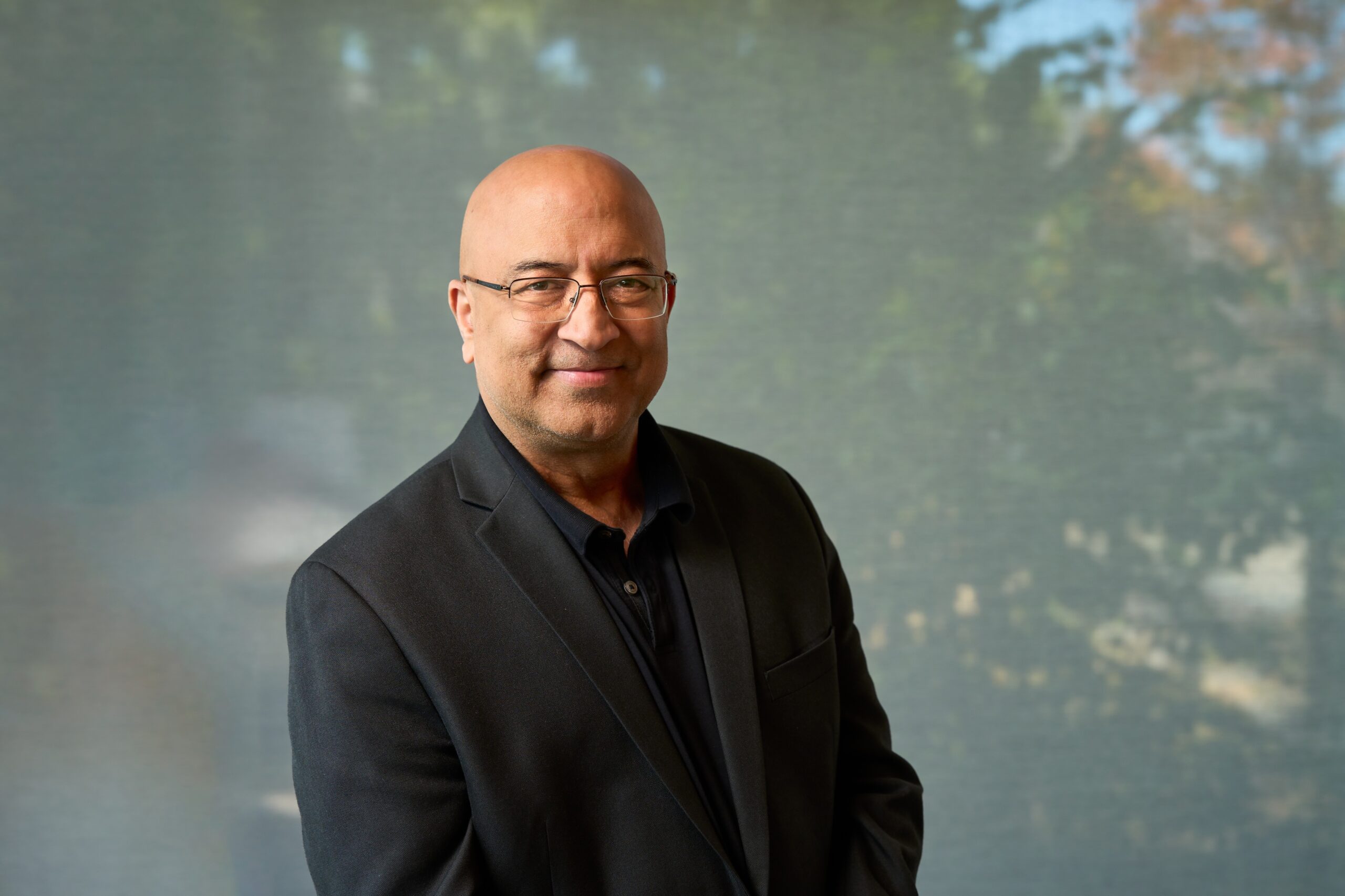
New research by Shailendra Pratap Jain reveals that follower count is a trade-off: larger influencers increase reach but can reduce perceived authenticity.
Rethinking the Value of Celebrity Endorsements
Social media influencers are a newer phenomenon in the world of marketing, but brands have long used celebrities, from movie stars to top athletes, to sell their goods. But can these influencers compete with the faces everyone recognizes? As it turns out, they can.
The meta-analysis finds that influencers beat celebrities on engagement, likely because the closeness audiences feel with influencers translates into more active participation. But celebrities don’t have an edge on purchase intention, either — the two groups were essentially tied. That’s a significant finding when you consider that influencers are almost always less expensive to retain.
Jain is careful not to declare celebrities obsolete. They bring their own halo effects, and for certain luxury or aspirational products, a celebrity’s personal brand can genuinely transfer onto the product. But the data suggests that, for many campaigns, paying a premium for celebrity endorsement may not deliver proportionally better results.
The Key to Fit: Product, Message, and Influencer
The research also offers guidance on matching influencers to products. The team distinguished between “search products,” items consumers can evaluate before buying, like electronics or appliances, and “experience products” that can only be fully judged after purchase, like a restaurant or a skincare regimen. Larger influencers are a better fit for search products; smaller influencers for experience goods.
The reasoning comes down to message style and influencer fit. For search products, objective claims and verifiable information do the heavy lifting, which makes credibility essential. A larger influencer who can speak authoritatively about specs, comparisons, and performance is well-suited to that task. For experience products, the work looks different.
“Brands should lean into sensory descriptions, narratives, and lifestyle fit,” Jain says. “A small influencer on TikTok might say: this phone fits into my routine, it really goes with my lifestyle.”
For experience products, the influencer’s lifestyle is part of the pitch, so the fit between who they are and what they’re selling matters as much as what they say.
Shailendra pratap jain brings Research into the MBA Classroom
Jain, who has been at Foster for 17 years and teaches the marketing core course across MBA programs, brings these findings directly into the classroom, though he’s deliberate about it.
“I’m letting the paper’s findings settle down, letting it sink in and become knowledge, before throwing it at students,” he says. “That’s my cautious way of approaching my own research.”
In the meantime, he uses the comparison between celebrities and influencers as a provocation. The idea that a well-chosen influencer might generate results comparable to a celebrity who commands a nine-figure fee tends to land hard with MBA students.
“You can see their eyes really open wider,” he says.
He’s also developing a case exercise in which MBA student teams choose influencer portfolios and content formats for hypothetical products, then use the paper’s framework to defend their choices and predict outcomes.

Shailendra Pratap Jain’s research points to a clear trade-off: scale increases visibility, but can weaken perceived authenticity.
Where the Research Goes Next
Jain sees the meta-analysis as a foundation, not a conclusion. The study captures short-term effects; almost nothing is known about how influencer marketing shapes brand equity or customer loyalty over the years. He’s also watching the rise of AI-driven influencers closely. His current research explores what he calls “predictive empathy,” the capacity for AI to anticipate consumer needs with attunement to emotional context. If AI influencers can develop that capability, the competitive dynamics with human influencers may shift dramatically.
He’s also turning his attention to brand transgressions and crisis communication to explore whether influencers can help a brand recover when it’s perceived to have wronged consumers.
While he digs into various new research directions, Jain hopes the meta-analysis gives marketers clearer guidance on where and how to deploy influencers.
“We were able to move from isolated findings to a generalizable set of findings that can be managerially useful,” Jain says. “That was the whole point.”
Read the research: “A meta-analysis of the effectiveness of social media influencers: Mechanisms and moderation” — Mojtaba Barari, Martin Eisend, and Shailendra Pratap Jain. Published in the Journal of the Academy of Marketing Science (2025).
Shailendra Pratap Jain is the Bret Wheat Endowed Professor of Marketing at the Foster School of Business. Learn more about Foster’s MBA programs.